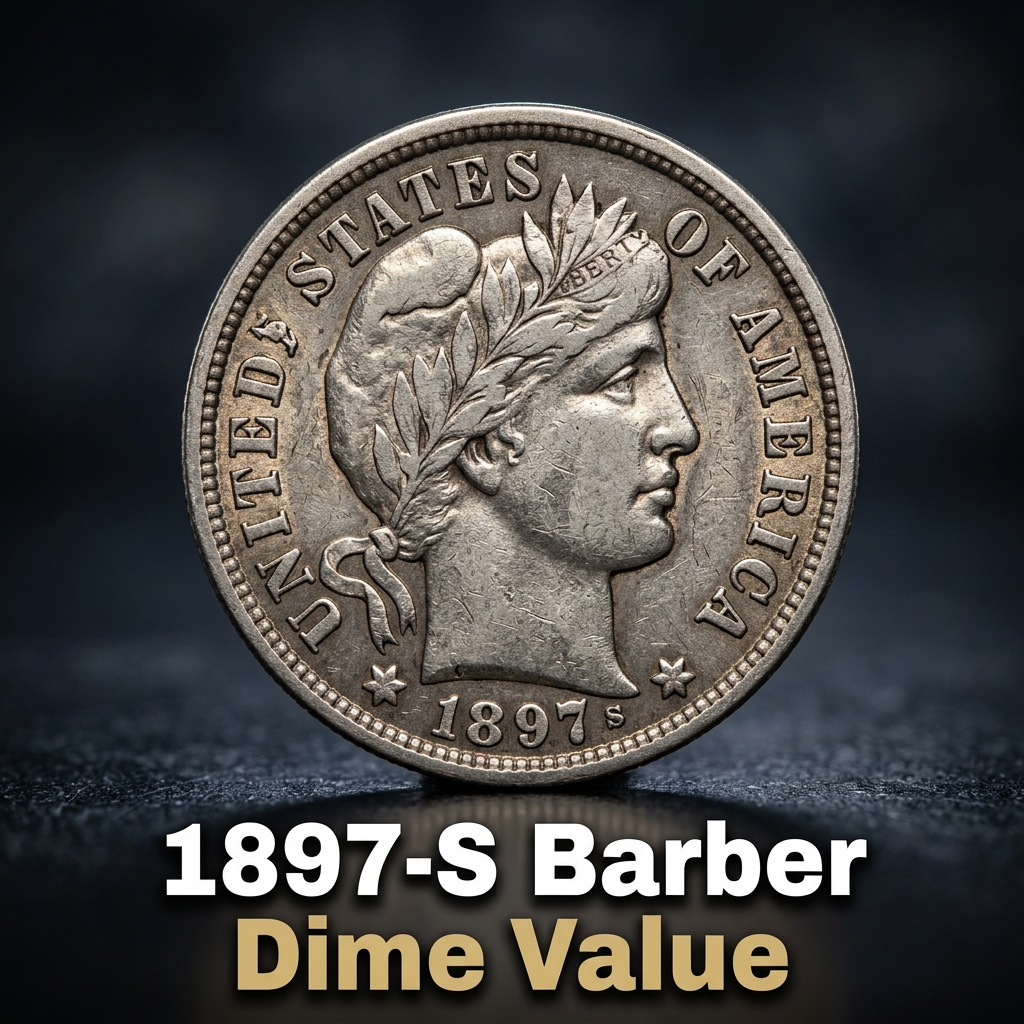
The 1897-S Barber Dime is worth anywhere from $15 in heavily worn condition to over $1,500 or more in higher mint state grades. If you’ve found one of these small silver coins tucked away in an old collection or inherited jar, you might be sitting on something genuinely valuable — and this guide will walk you through exactly what affects its price.
What Makes the 1897-S Barber Dime Special
The 1897-S Barber Dime was struck at the San Francisco Mint, identified by the small “S” mintmark on the reverse side of the coin just above the “E” in “ONE DIME.” Designed by Chief Engraver Charles E. Barber, this coin features Lady Liberty in a classical Roman helmet on the obverse. The series ran from 1892 to 1916, and the San Francisco issues from 1897 were produced in moderate quantities — making surviving examples in good condition harder to come by than you might expect.
What sets this coin apart from more common dates in the Barber Dime series is a combination of its age, silver content, and the fact that well-preserved specimens are increasingly scarce. Most circulated examples show heavy wear on Liberty’s hair and the word “LIBERTY” on her headband — a telltale sign of a coin that passed through many hands. If your coin still shows clear letters in “LIBERTY,” that’s already a good sign. If you’re unsure how to identify what you have, a coin identification app can help you confirm the date, mintmark, and overall grade before you do anything else.
1897-S Barber Dime Value by Grade
Coin value depends heavily on condition, or “grade,” which ranges from Poor (P-1) at the bottom to Mint State (MS-65 and above) at the top. Here’s a general breakdown of what the 1897-S Barber Dime is worth at various grades:
| Grade | Description | Estimated Value |
|---|---|---|
| G-4 (Good) | Heavy wear, outline visible | $15 – $25 |
| VG-8 (Very Good) | Some detail remains | $30 – $50 |
| F-12 (Fine) | Moderate wear, letters clear | $55 – $90 |
| VF-20 (Very Fine) | Light wear on high points | $100 – $180 |
| EF-40 (Extremely Fine) | Slight wear, sharp detail | $200 – $350 |
| MS-63 (Mint State) | Uncirculated, minor marks | $800 – $1,200 |
| MS-65 (Gem Mint State) | Exceptional luster, few flaws | $1,500+ |
For a more detailed look at current market prices and auction records, check out this complete guide to 1897 Barber Dime values across all mint marks and grades — it’s one of the most useful references available for this series.
How to Check the Grade of Your 1897-S Barber Dime
Grading old coins at home can be tricky, but there are a few things to look for. First, examine the word “LIBERTY” on Liberty’s headband — if all seven letters are clearly visible, your coin is likely in at least Fine (F-12) condition. In Good grade, that word is usually worn flat. Next, look at the hair above Liberty’s ear and the laurel wreath details. Well-struck San Francisco coins from this era often show crisp detail when not heavily circulated.
Use a loupe or magnifying glass to look for signs of cleaning. A coin that’s been harshly cleaned will show fine hairline scratches under magnification and may have an unnaturally bright or “washed out” look. Cleaned coins are worth significantly less than original-surface examples, even if they appear shinier to the naked eye.
If you want a quick, easy way to assess your coin before taking it to a dealer, CoinKnow is an excellent tool that uses your smartphone camera to scan coins and provide instant identification and estimated values — no numismatic experience required.
Silver Melt Value and Its Role in Pricing
Like all Barber Dimes, the 1897-S contains 90% silver and weighs 2.5 grams, giving it an actual silver weight (ASW) of 0.07234 troy ounces. At current silver prices around $28–$30 per troy ounce, the raw melt value of any Barber Dime is roughly $2.00 to $2.20.
For circulated examples in lower grades, the collector premium on the 1897-S pushes its value well above melt. You’ll rarely find a legitimate dealer selling this coin for anywhere near its silver melt price — there’s simply too much collector demand. This is what separates collectible coins from generic silver bullion, and it’s why knowing the specific date and mintmark on your dime matters so much.
CoinKnow makes it easy to cross-reference your coin’s silver value with its collector market value, so you always know which factor is driving the price higher on any given piece in your collection.
Where to Sell Your 1897-S Barber Dime
Once you know what you have, selling is straightforward. For coins in circulated grades (Good through Very Fine), online platforms like eBay, Heritage Auctions, or local coin shops are all solid options. For higher-grade or uncirculated examples, professional third-party grading through PCGS or NGC is strongly recommended. A graded, slabbed coin typically sells for a meaningful premium over raw coins of the same grade because buyers trust the certification.
Before you sell, always get at least two or three offers. Prices can vary significantly between dealers, and understanding your coin’s grade — even just roughly — helps you negotiate confidently. Apps like CoinKnow can give you that baseline knowledge before you walk into any shop or list anything online.
—
Frequently Asked Questions
Q: How many 1897-S Barber Dimes were made?
A: The San Francisco Mint produced approximately 5,825,000 Barber Dimes in 1897. While that sounds like a lot, over a century of circulation and attrition means surviving examples in collectible condition are far less common than the original mintage suggests.
Q: Is my 1897-S Barber Dime worth more if it’s been cleaned?
A: No — quite the opposite. Cleaning almost always reduces a coin’s value in the collector market. Even if a cleaned coin looks brighter, experienced collectors and dealers can spot it easily and will discount the price accordingly. Natural, original surfaces are always preferred.
Q: What’s the difference between the 1897 Philadelphia and 1897-S Barber Dime in terms of value?
A: The 1897 Philadelphia issue (no mintmark) was struck in larger numbers and is generally less valuable in lower grades. The 1897-S commands a modest premium over the Philadelphia issue across most grades, especially in Fine and Very Fine condition, due to slightly lower surviving populations.