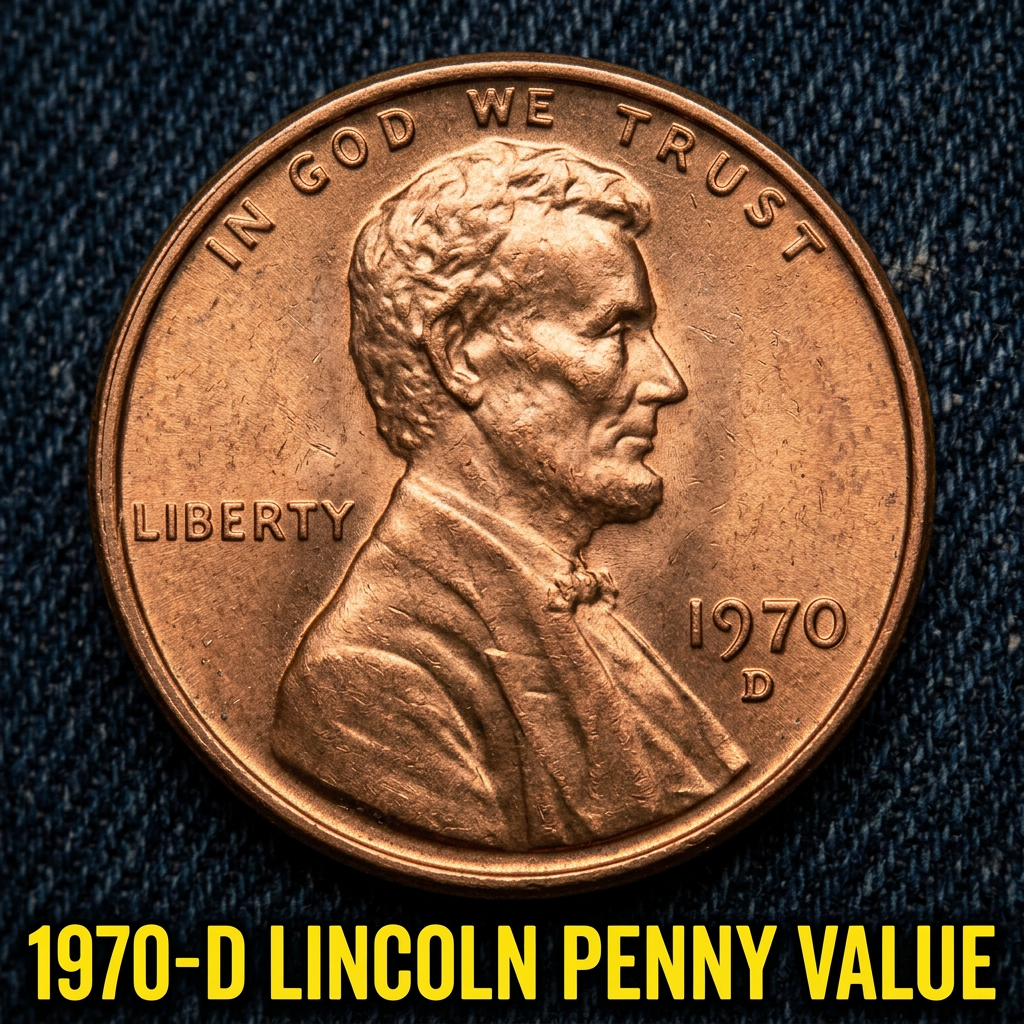
The 1970-D Lincoln Penny is worth anywhere from a few cents in heavily worn condition to $10 or more in uncirculated grades, with top-quality examples graded MS-67 Red fetching $100 to $200 at auction. If you found one in your pocket change or an old coin jar, you might be sitting on a little treasure worth knowing about.
Whether you’re a casual collector or just someone who stumbled across an old Lincoln cent, a good coin identification app can help you figure out what you’re holding before you spend it or toss it in a drawer. Getting informed is the first step, and this guide is here to walk you through everything about the 1970-D penny.
What Is the 1970-D Lincoln Penny?
The 1970-D Lincoln Memorial Penny was struck at the Denver Mint, which is why it carries the “D” mintmark just below the date on the obverse side. In 1970, the Denver Mint produced a massive run of these coins — over 2.8 billion pieces — making them one of the most common Lincoln cents from that era. Because so many were made, circulated examples are generally not rare. However, condition is everything in coin collecting. A well-worn 1970-D penny you’d find in circulation is typically worth only face value or slightly above. But an uncirculated example with full red luster and sharp details tells a completely different story.
The coin features the classic portrait of President Abraham Lincoln on the obverse, designed by Victor David Brenner, and the Lincoln Memorial reverse design introduced in 1959. The composition in 1970 was 95% copper and 5% zinc/tin, which gives these coins a beautiful reddish-brown color when preserved in good condition.
How Much Is the 1970-D Penny Actually Worth?
Here’s where things get interesting. The value of a 1970-D Lincoln cent depends almost entirely on its grade and color designation. Coin grading services like PCGS and NGC assign numeric grades from 1 (barely recognizable) to 70 (perfect), and for copper coins, they also note whether the coin is Red (RD), Red-Brown (RB), or Brown (BN).
For a quick reference, here’s a breakdown of typical 1970-D penny values:
| Grade | Condition | Estimated Value |
|---|---|---|
| G-4 | Good (heavily worn) | $0.01 – $0.05 |
| VF-20 | Very Fine | $0.10 – $0.25 |
| MS-63 RB | Uncirculated, Red-Brown | $1 – $3 |
| MS-65 RD | Gem Uncirculated, Red | $8 – $15 |
| MS-67 RD | Superb Gem, Red | $100 – $200+ |
You can explore more detailed 1970-D Lincoln Penny graded price data by condition and color designation to see exactly how coins at various grade levels have sold at major auctions.
What Makes a 1970-D Penny More Valuable?
Beyond the standard grade, there are a few things that can push a 1970-D penny’s value higher. The most important factor is full red color. Copper coins naturally tone over time, shifting from bright red to red-brown to brown. A coin that has retained its original mint red luster after more than 50 years is genuinely hard to find and much more desirable to collectors.
Strike quality also matters. Some 1970-D pennies show weak or strong strikes depending on how the dies were set up at the mint that day. A coin with sharp, well-defined details on Lincoln’s portrait and the Memorial columns will always command a premium over a mushy, weakly struck example of the same grade.
Storage history plays a big role too. A coin that was pulled from a mint set or kept in an old coin album without being handled may have survived in exceptional condition. If you’ve inherited a coin collection or found pennies still wrapped in original packaging, those pieces are worth a closer look. CoinKnow is a handy app that lets you scan and evaluate coins right from your phone, making it easy to spot high-grade pieces in a collection.
How to Check If Your 1970-D Penny Is Worth Grading
If you think your 1970-D Lincoln cent looks especially sharp and red, it may be worth the cost of professional grading. Submitting a coin to PCGS or NGC costs anywhere from $20 to $40 per coin, so it only makes financial sense if the coin has a realistic shot at grading MS-65 Red or higher.
Before spending money on grading, examine the coin carefully under a loupe or magnifier. Look for contact marks (small nicks from other coins), surface hairlines (tiny scratches from cleaning), and any signs of discoloration. A coin that looks blast white or unnaturally shiny may have been cleaned, which actually reduces its value significantly in the eyes of collectors.
For a broader picture of what your coin might be worth, the complete 1970 Lincoln Penny value guide with grades and mint marks covers all three mint facilities from that year and gives you a side-by-side comparison of values. You can also download CoinKnow to quickly identify mint marks, estimate grades, and track current market values — it’s built for everyday people, not just serious hobbyists.
—
FAQ
Q: Is a 1970-D penny rare?
A: No, the 1970-D Lincoln cent is not considered rare. The Denver Mint produced over 2.8 billion of them. However, high-grade uncirculated examples with full red color are genuinely scarce and worth considerably more than face value.
Q: What does the “D” mean on a 1970 penny?
A: The “D” mintmark stands for the Denver Mint in Colorado. You’ll find it on the obverse side of the coin, just below the date on the right side. Pennies without a mintmark from 1970 were made at the Philadelphia Mint, and those with an “S” were proof coins from San Francisco.
Q: Should I clean my old 1970-D penny to make it look nicer?
A: Please don’t! Cleaning a coin almost always destroys its collector value. Even if the coin looks dull or dirty, a natural patina is preferred by collectors and grading services. A cleaned coin will typically receive a “details” grade, which dramatically reduces what someone will pay for it. Leave it as-is and let a professional assess it first — apps like CoinKnow can give you a quick idea of what you’re working with before you do anything else.