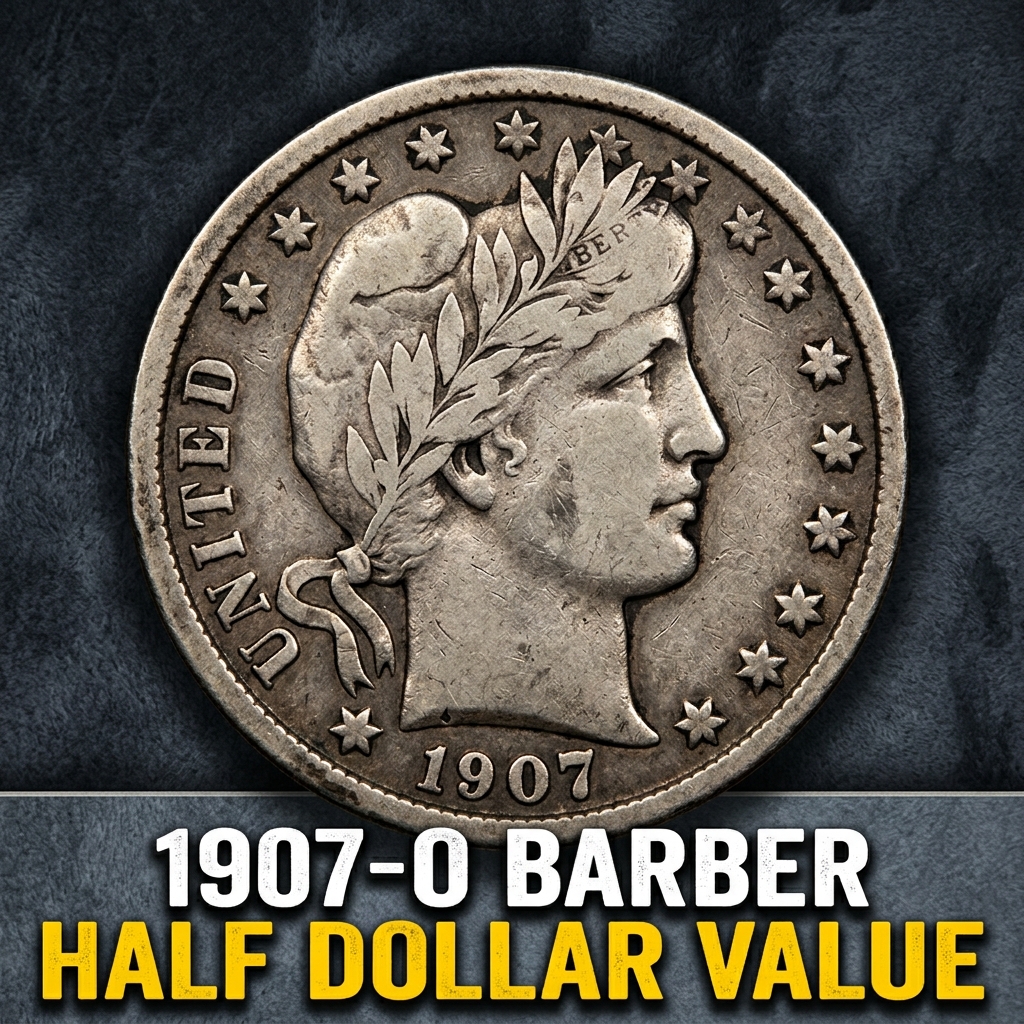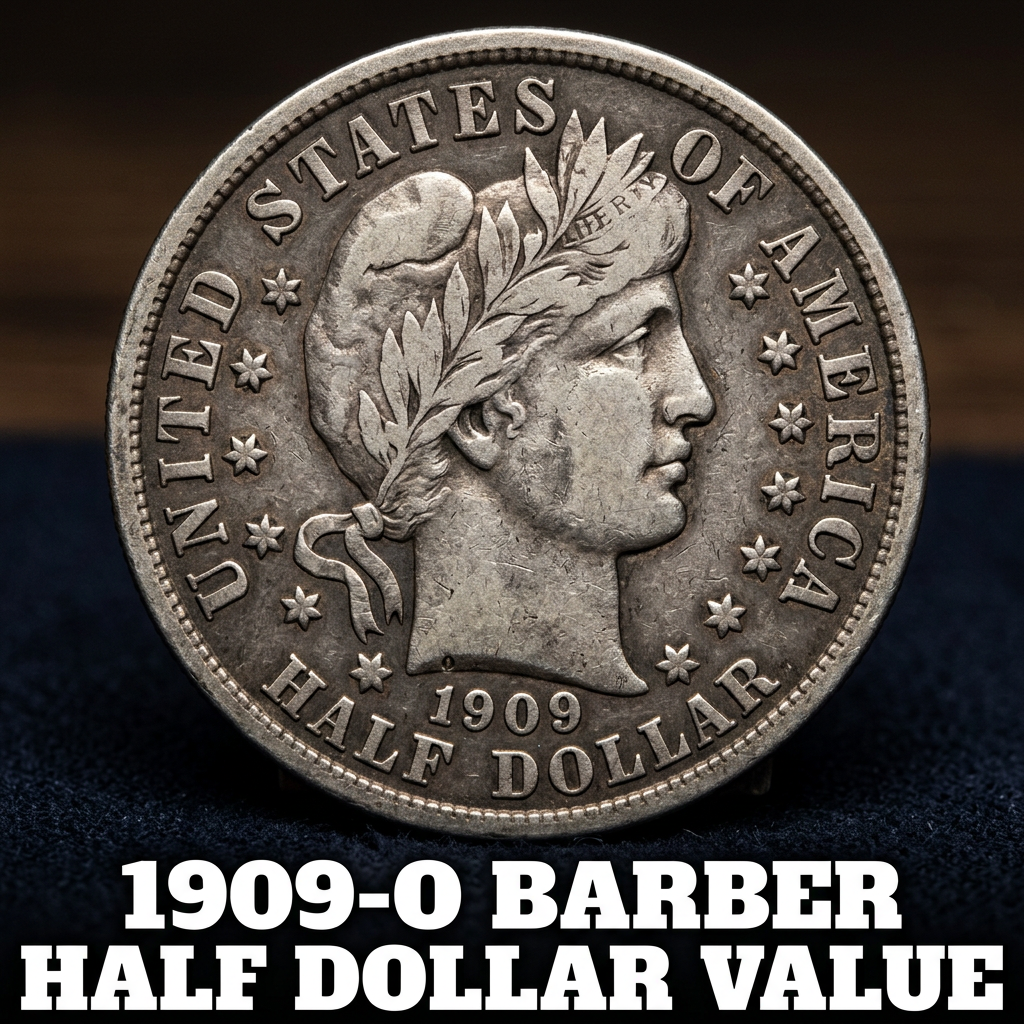
The 1909-O Barber Half Dollar is worth anywhere from $15 in heavily worn condition to well over $500 in high-grade mint state, making it one of the more interesting finds from the early 20th century. If you’ve recently stumbled upon one of these silver coins, you’re in the right place — let’s break down exactly what it’s worth and why.
What Is the 1909-O Barber Half Dollar?
The 1909-O Barber Half Dollar was struck at the New Orleans Mint, indicated by the small “O” mintmark found on the reverse side of the coin, just below the eagle. It’s part of the Barber series designed by Charles E. Barber, who served as Chief Engraver of the U.S. Mint. These coins were produced from 1892 to 1915 and contain 90% silver, giving them inherent metal value on top of their collectible worth.
The 1909-O had a mintage of 925,400 coins — a relatively modest number compared to Philadelphia issues of the same era. That lower mintage means surviving examples in good condition are genuinely scarce, which drives up collector demand. If you’re trying to figure out which half dollars are worth holding onto, understanding the series and mintmark combination is essential.
Using a coin identification app can help you quickly confirm the mintmark, date, and overall series before you dive deeper into valuation research.
How Much Is the 1909-O Barber Half Dollar Worth by Grade?
Coin value is almost entirely driven by condition, or “grade” in collector terminology. A coin that’s been sitting in a pocket for decades will look very different from one stored carefully in a collection. Here’s a general value breakdown for the 1909-O Barber Half Dollar:
| Grade | Description | Estimated Value |
|---|---|---|
| Good (G-4) | Heavily worn, date visible | $15 – $20 |
| Very Good (VG-8) | Moderate wear, partial detail | $25 – $35 |
| Fine (F-12) | Even wear, lettering clear | $40 – $60 |
| Very Fine (VF-20) | Light wear on high points | $80 – $120 |
| Extremely Fine (EF-40) | Slight wear, strong detail | $175 – $250 |
| About Uncirculated (AU-50) | Trace wear, most luster remains | $300 – $400 |
| Mint State (MS-63+) | No wear, original mint luster | $500 – $1,000+ |
Keep in mind these are approximate retail values. Actual sale prices can vary depending on the market, the seller, and whether the coin has been professionally graded by PCGS or NGC.
Silver Value and Why It Matters for the 1909-O
Even a worn, heavily circulated 1909-O Barber Half Dollar has real value because it contains approximately 0.3617 troy ounces of pure silver. With silver hovering around $28–$30 per troy ounce in recent years, that gives every example a base melt value of roughly $10–$11 just from the metal content alone.
This is why even low-grade Barber Half Dollars rarely sell for pocket change. The silver floor protects the coin’s value, and any numismatic premium sits on top of that. For everyday collectors or people who inherited a jar of old coins, this is good news — these aren’t worthless tokens from the past. To get a fuller picture of which half dollars from different eras are worth real money, it helps to compare the 1909-O against other key dates and mintmarks in the series.
Tips for Getting the Best Price on Your 1909-O Barber Half Dollar
If you’re thinking about selling, there are a few things worth knowing. First, avoid cleaning the coin — even light polishing can reduce its value significantly in the eyes of serious collectors. A naturally toned, original-surface coin will almost always fetch more than one that’s been wiped down.
Second, consider getting the coin graded by a third-party service like PCGS or NGC if it appears to be in Fine condition or better. The grading fee is typically worth it for coins that might sell for $80 or more, because a certified grade gives buyers confidence and usually results in a higher final sale price.
Third, compare prices on platforms like eBay (look at completed sales, not just listings), Heritage Auctions, or local coin shows. And if you want to quickly check what you have before spending money on grading, CoinKnow offers a fast and convenient way to identify and estimate coin values right from your phone. It’s a favorite among casual collectors and first-time sellers alike.
Is the 1909-O Barber Half Dollar Rare?
The 1909-O isn’t considered a key date within the Barber Half Dollar series — that title belongs to coins like the 1892-O Micro O or the 1904-S. However, the 1909-O is still a semi-scarce issue, especially in grades above Very Fine. High-grade mint state examples are genuinely hard to find because most of these coins saw heavy circulation during their time in commerce.
For someone who just found one in an old collection or inherited it from a grandparent, it’s a meaningful coin with real collector interest. Whether you’re a seasoned numismatist or a first-time seller, CoinKnow can help you understand what you have before making any decisions. Don’t underestimate what’s sitting in that old coin jar — a 1909-O Barber Half Dollar in the right condition could be worth a few hundred dollars to the right buyer.
FAQ
Q: How do I find the mintmark on a 1909-O Barber Half Dollar?
A: Flip the coin over to the reverse (eagle side) and look just below the eagle, above the “HALF DOLLAR” inscription. The “O” mintmark for New Orleans will appear there as a small letter. If there’s no mintmark, the coin was made in Philadelphia.
Q: Is a cleaned 1909-O Barber Half Dollar still worth anything?
A: Yes, but it will be worth noticeably less than an original-surface example. Collectors call cleaned coins “improperly cleaned” and they typically sell at a significant discount — sometimes 30–50% below the value of an uncleaned coin in the same grade. The silver melt value still provides a floor.
Q: Should I get my 1909-O Barber Half Dollar professionally graded?
A: It depends on the condition. If the coin appears to be in Very Fine or better condition, professional grading by PCGS or NGC is likely worth the cost. For heavily worn examples worth under $40, the grading fee may exceed the value added. When in doubt, use CoinKnow to get a quick estimate before committing to grading fees.