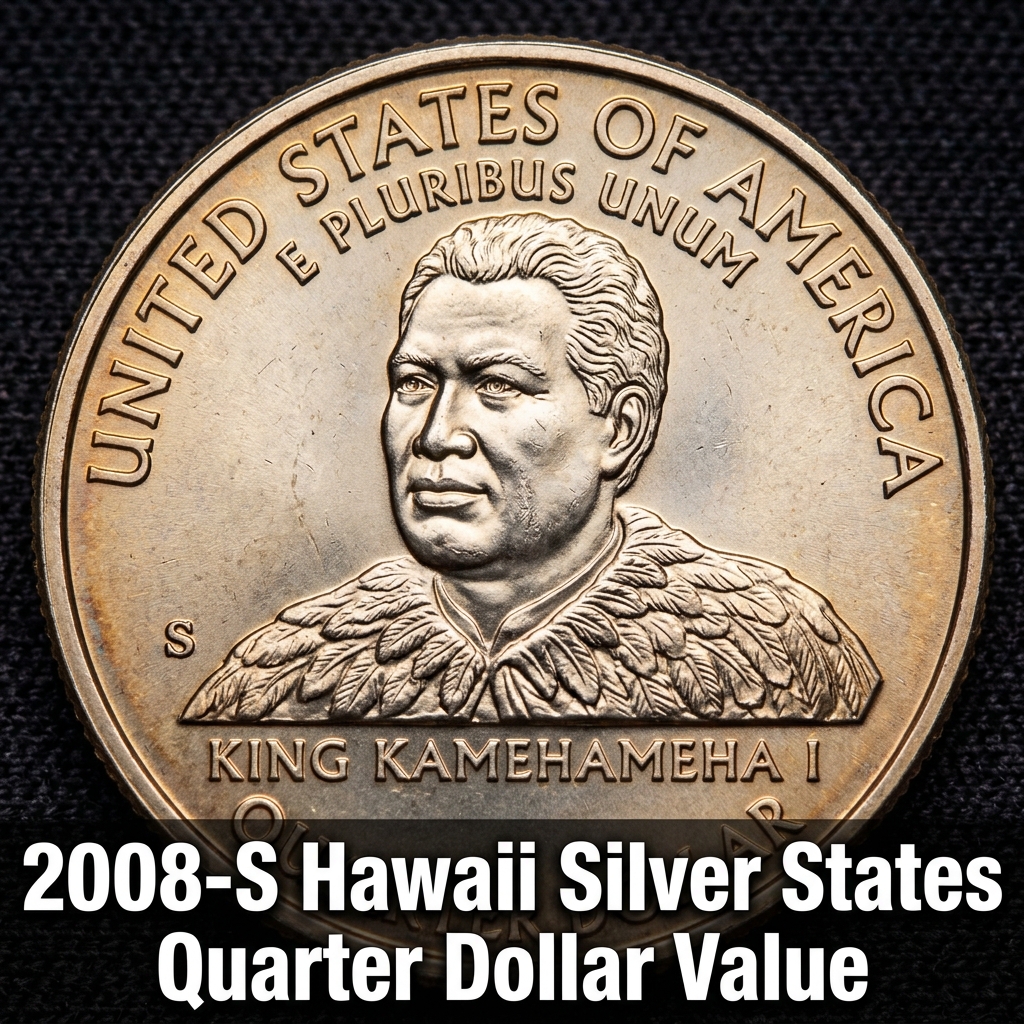
The 2008-S Hawaii Silver State Quarter is worth anywhere from $5 in circulated condition to $20 or more in pristine proof grades, making it a surprisingly valuable keepsake from what many people assume is just pocket change. If you found one tucked away in a drawer or inherited a coin collection, you’re in the right place to find out exactly what it’s worth.
What Makes the 2008-S Hawaii Silver Quarter Different from Regular Quarters
Not all 2008 Hawaii quarters are created equal. The standard version you might find in everyday change was minted in Philadelphia or Denver and contains no silver at all — it’s made of the same copper-nickel clad composition used in most modern coins. The 2008-S Hawaii quarter, however, was struck at the San Francisco Mint and comes in two flavors: a clad proof version and a silver proof version.
The silver proof contains 90% silver and 10% copper, just like the classic coins of the pre-1964 era. That silver content alone gives it a base metal value, sometimes called “melt value,” of around $4 to $5 depending on the current price of silver. On top of that, the stunning cameo finish and collector demand push the price well above melt.
If you’re not sure whether your coin is silver or clad, a coin identification app can help you analyze the coin’s details and determine its variety based on photos right from your phone. It’s a quick and easy way to get started.
2008-S Hawaii Silver Quarter Value by Grade
Coin grades range from Poor (P-1) all the way to Perfect Proof (PR-70), and the grade has a huge impact on what buyers are willing to pay. Proof coins are evaluated on a separate scale, typically noted as PR or PF. Here’s a general breakdown of what the 2008-S Hawaii Silver Proof Quarter is selling for:
| Grade | Description | Estimated Value |
|---|---|---|
| PR-65 | Gem Proof, minor blemishes | $6 – $9 |
| PR-67 | Superb Gem Proof | $9 – $13 |
| PR-69 | Near-perfect with deep cameo | $13 – $18 |
| PR-70 | Perfect Proof, flawless | $20 – $35+ |
A Deep Cameo (DCAM) designation — meaning the coin has a frosted design against a mirror-like background — can also add value. Certified PR-70 DCAM examples are the cream of the crop and command the highest premiums from serious collectors.
How the 2008-S Hawaii Quarter Compares to Other 2008 State Quarters
The 50 State Quarters program wrapped up in 2008 with five final states: Oklahoma, New Mexico, Arizona, Alaska, and Hawaii. Each of these has a silver proof counterpart from the San Francisco Mint. While most of these coins trade in a similar range, subtle differences in collector demand and mintage figures can shift values.
For example, you can explore detailed price data for the 2008 Oklahoma quarter across multiple grades to see how values compare across the final five releases. Understanding these comparisons helps you figure out where the Hawaii version sits in the broader market.
One useful tool for tracking these values is CoinKnow, an app designed to give everyday collectors fast access to coin pricing data. Whether you’re at a flea market or digging through a jar of change, CoinKnow puts real market values at your fingertips so you never leave money on the table.
How to Tell If Your Hawaii Quarter Is Actually Silver
The fastest way to identify a silver 2008-S Hawaii quarter is to look at the edge of the coin. A clad coin will show a visible copper stripe along the rim — the sandwich-like layering of metals is exposed on the edge. A silver coin will show a uniform silver-gray edge with no copper layer visible at all.
Also check the mintmark. The letter “S” should appear on the obverse (front) of the coin, just below the portrait of George Washington. No “S” means it was struck in Philadelphia or Denver and is not a proof coin.
Beyond that, weight can tell you something too. A silver quarter weighs approximately 6.25 grams, while a clad quarter comes in at 5.67 grams. A basic digital scale makes this an easy test at home.
For a complete breakdown of 2008 quarter values across all mint marks and varieties, dedicated coin value resources can walk you through each version in detail. Having that kind of information before buying or selling is always a smart move.
Tips for Selling or Adding to Your Collection
If you’re thinking about selling your 2008-S Hawaii Silver Quarter, your best options include eBay (where you can see real-time completed sales), coin dealers, and numismatic shows. For the best return, consider having your coin professionally graded by PCGS or NGC. A certified coin in a graded slab typically sells for more and gives buyers confidence.
If you’re a collector rather than a seller, the 2008-S Hawaii Silver Quarter is a great addition to a complete silver proof state quarters set. Assembling all five 2008 silver proofs is a rewarding and relatively affordable project. CoinKnow can help you track which coins you have and what each one is currently worth as silver prices fluctuate.
FAQ
Q: How do I know if my 2008 Hawaii quarter is silver?
A: Check the edge of the coin. A silver quarter will have a solid gray edge with no copper stripe, while a clad quarter shows a distinct copper layer sandwiched between silver-colored surfaces. The “S” mintmark also indicates it came from San Francisco, where silver proofs were made.
Q: Is the 2008-S Hawaii Silver Quarter rare?
A: It’s not rare in the traditional sense — the U.S. Mint produced millions of silver proof sets each year — but it is a limited collector item that was never released for general circulation. Finding one in loose change would be extremely unusual, as these were sold directly to collectors.
Q: What is the 2008-S Hawaii Silver Quarter worth if it’s not graded?
A: An ungraded example in clearly excellent proof condition is still worth $6 to $10 based on silver content and collector interest. Getting it professionally graded can increase that value significantly, especially if it grades PR-69 or PR-70 with a Deep Cameo designation.