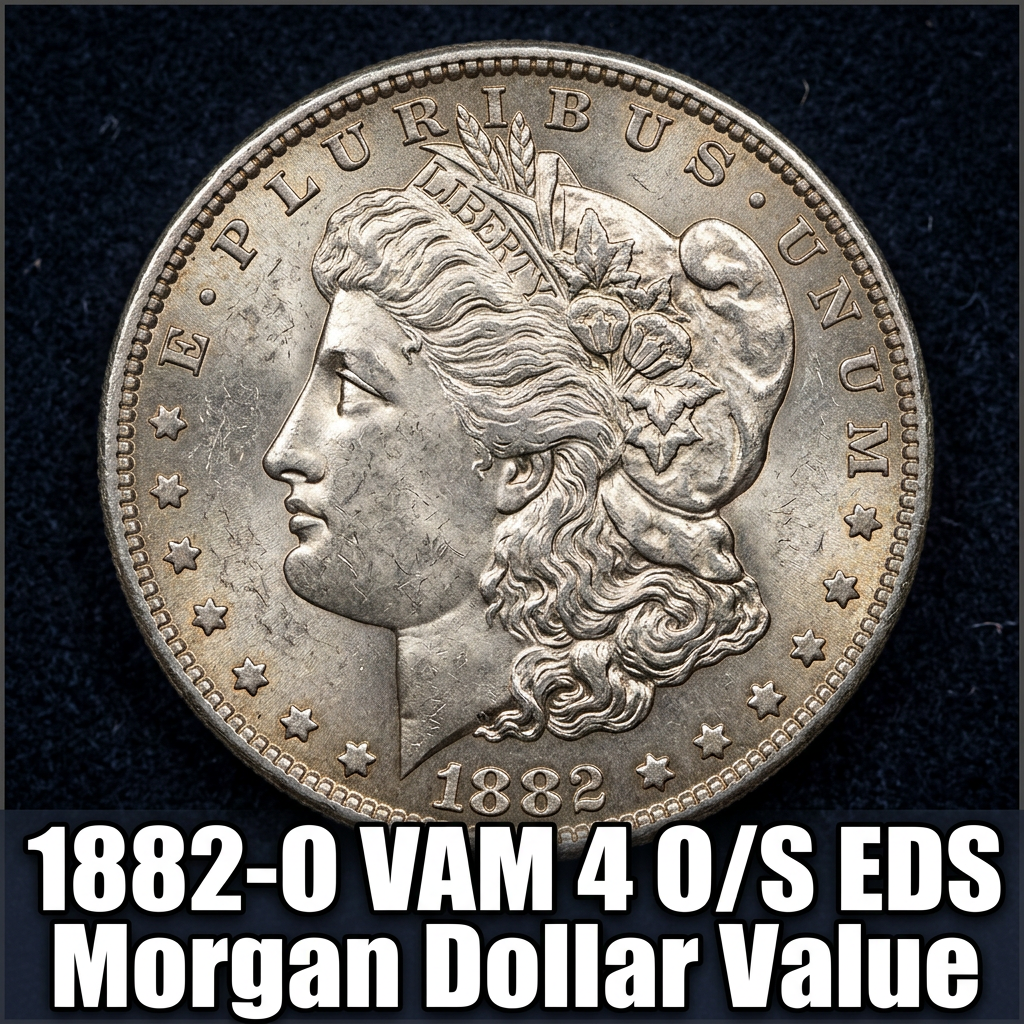
The 1882-O VAM 4 O/S EDS Morgan Dollar is worth anywhere from $35 in heavily worn condition to well over $500 or more in higher mint state grades, with rare certified examples commanding even stronger prices at auction.
If you’ve recently stumbled upon an old silver dollar and noticed something unusual about the mintmark or the date area, you might be sitting on a coin that’s more interesting — and more valuable — than you think. The 1882-O VAM 4 is one of those hidden gems that collectors actively search for. Using a coin identification app can help you quickly determine whether your coin is indeed this scarce variety before you do anything else with it.
What Is the 1882-O VAM 4 O/S EDS Morgan Dollar?
Before diving into value, it helps to understand what you’re actually looking at. “VAM” stands for Van Allen-Mallis, a reference system that catalogs the many die varieties found in Morgan Silver Dollars. The 1882-O VAM 4 is specifically identified by its “O/S” feature — meaning the New Orleans “O” mintmark was punched over a San Francisco “S” mintmark. You can actually see the ghost of the “S” peeking out from behind the “O” if you look closely under magnification.
The “EDS” designation stands for Early Die State, meaning this particular coin was struck early in the die’s life, before wear set in. Early die state coins typically show sharper details and crisper design elements, which is why collectors and VAM hunters prize them. This combination — the overmintmark variety plus early die state — makes this a genuinely collectible piece. It was produced at the New Orleans Mint in 1882, during one of the most productive eras for Morgan Dollar coinage, yet this specific variety remains scarce in higher grades.
How Much Is the 1882-O VAM 4 Worth by Grade?
Value depends heavily on the coin’s condition, also called its grade. Here’s a straightforward breakdown of what buyers are typically paying for the 1882-O VAM 4 O/S EDS Morgan Dollar across different grades:
| Grade | Description | Estimated Value |
|---|---|---|
| G-4 (Good) | Heavy wear, design outline visible | $35 – $50 |
| VF-20 (Very Fine) | Moderate wear, major details clear | $60 – $90 |
| EF-40 (Extremely Fine) | Light wear on high points | $100 – $150 |
| MS-60 (Mint State) | No wear, some contact marks | $175 – $275 |
| MS-63 (Choice Uncirculated) | Attractive, few noticeable marks | $350 – $550+ |
| MS-65 (Gem Uncirculated) | Strong luster, minimal marks | $800+ |
For the most up-to-date auction results and dealer pricing on this coin, current 1882 Morgan Dollar market prices across grade levels can give you a solid real-world reference before buying or selling.
How to Identify the VAM 4 Variety on Your Coin
Identifying a VAM 4 requires a little patience and a magnifying glass — ideally 5x to 10x. Here’s what to look for:
First, examine the mintmark on the reverse of the coin (the eagle side). Look just below and around the “O” mintmark for traces of a curved serif-style “S” shape partially visible beneath. This is the O/S overmintmark feature. It’s not always dramatic, but it’s there if you look carefully.
Next, check the die state. Early die state coins typically show a more complete and well-defined eagle, sharper feather detail, and cleaner hair lines on Liberty’s head. If your coin matches both of these characteristics, you likely have a VAM 4. CoinKnow is an excellent tool to help you cross-reference variety characteristics — the app walks you through VAM identification steps visually, which is far easier than flipping through a reference book.
Should You Get It Certified and What Does That Mean for Value?
If you believe you have a genuine 1882-O VAM 4 O/S EDS Morgan Dollar in decent condition, professional certification from PCGS or NGC can significantly boost its market value and make it easier to sell. Certified coins sell for premiums because buyers trust the grade and the variety attribution. A raw (uncertified) MS-63 VAM 4 might bring $300–$400, while a PCGS-certified MS-63 with a VAM label can push well past $500.
Certification costs range from about $30 to $65 per coin depending on the service tier, so it makes financial sense for coins grading EF or above. For a complete breakdown of 1882 silver dollar values by grade and variety, you can compare how VAM coins stack up against standard issue pieces before deciding whether to submit.
CoinKnow also provides guidance on whether a coin is worth the cost of certification — a useful reality check before you spend money on grading services.
Tips for Selling Your 1882-O VAM 4 Morgan Dollar
Once you’ve confirmed the variety and assessed the grade, you have several selling options. Online auction platforms like eBay attract active VAM collectors who know what to look for and will pay fair market prices. Dedicated coin shows and dealer networks are also strong options for certified coins. Avoid pawn shops or general resellers — they typically won’t recognize the VAM premium and will offer melt value or less.
Take clear photos under good lighting before listing, and always mention the VAM 4 variety designation and EDS attribution in your description. Buyers searching specifically for this variety will find your listing, and knowledgeable bidders will drive the price where it belongs. CoinKnow can help you document variety details and compare recent sales — two things that make your listing stand out and sell faster.
Frequently Asked Questions
Q: How do I know if my 1882-O Morgan Dollar is actually a VAM 4?
A: Look for the O/S overmintmark on the reverse — you should see traces of an “S” mintmark beneath the “O.” Compare your coin to reference images from the VAM World database or use an identification app to walk through the characteristics step by step.
Q: Does the Early Die State designation add value to the coin?
A: Yes, it does. EDS coins were struck before the die showed wear, resulting in sharper details and better eye appeal. Collectors who specifically pursue VAM varieties often pay a modest premium for confirmed early die state examples compared to later die state pieces from the same variety.
Q: Is a circulated 1882-O VAM 4 worth keeping or should I sell it?
A: Even a well-worn example has collector value beyond its silver melt weight (roughly $20–$25 in today’s silver market). If your coin grades VF or better, it’s worth keeping or selling to a collector rather than treating it as scrap silver. Higher grade examples especially are worth the effort to properly attribute and sell through the right channels.