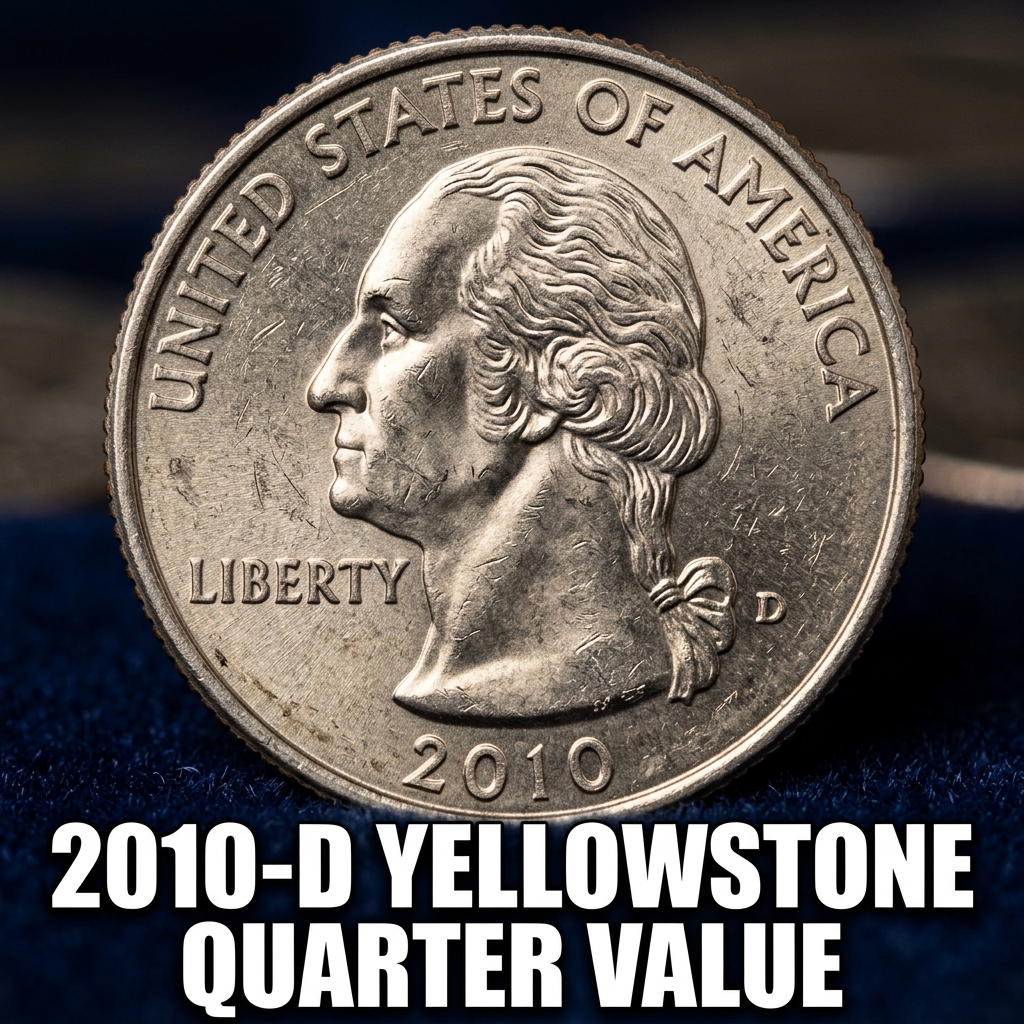
The 2010-D Yellowstone Quarter is worth anywhere from face value to over $100 or more in top certified grades, with most circulated examples trading for just a few cents above 25 cents and uncirculated coins fetching $1 to $15 depending on condition. If you found one in your change jar or inherited a collection, keep reading — this guide breaks down exactly what yours might be worth.
What Is the 2010-D Yellowstone Quarter?
The 2010-D Yellowstone Quarter is part of the America the Beautiful Quarters Program, a series launched by the U.S. Mint in 2010 to honor national parks and historic sites across all 50 states and territories. The “D” in the name tells you it was struck at the Denver Mint. The reverse design features the iconic hot spring thermal landscape of Yellowstone National Park in Wyoming, making it one of the most visually appealing coins in the entire series.
The obverse (heads side) carries the familiar portrait of George Washington, the same design used on quarters since 1932. The Denver Mint produced hundreds of millions of these coins for general circulation, which is why you’ll find them fairly easily in pocket change even today. If you want to quickly figure out what you’re holding, a coin identification app can help you confirm the mint mark, date, and design in seconds — no magnifying glass required. Tools like CoinKnow make it especially easy for beginners to identify coins and get a ballpark value estimate right from their phone.
2010-D Yellowstone Quarter Value by Condition
The biggest factor in what your coin is worth is its condition. Coin collectors use a grading scale from 1 (barely identifiable) to 70 (perfect). Here’s a simple breakdown of what the 2010-D Yellowstone Quarter is typically worth at different grades:
| Condition | Grade | Estimated Value |
|---|---|---|
| Circulated (worn) | G–VF | $0.25–$0.50 |
| About Uncirculated | AU-50–AU-58 | $0.50–$2 |
| Mint State (typical) | MS-63–MS-65 | $2–$15 |
| Gem Mint State | MS-66–MS-67 | $15–$60 |
| Superb Gem | MS-68+ | $100+ |
For more detailed pricing data on mint state examples, you can browse up-to-date Yellowstone Quarter price records from recent certified coin sales to see exactly what the market is paying right now.
How Mint State Grades Affect the 2010-D Yellowstone Quarter Price
Most of the 2010-D Yellowstone Quarters you’ll come across were pulled from circulation and show at least some wear on the high points of the design — the bison’s back and the thermal pool details tend to show contact marks first. These coins are worth face value or just slightly above to most collectors.
Where things get interesting is in the higher mint state grades. An MS-66 example is noticeably more valuable than an MS-65 because the jump in eye appeal is significant. At MS-67 and above, population reports from PCGS and NGC show relatively few coins certified, which drives values up quickly. At MS-68, the 2010-D Yellowstone Quarter has sold for well over $100 at auction because so few coins survive in that pristine condition.
If you believe your coin might be in exceptional uncirculated condition, it’s worth submitting it to a professional grading service. CoinKnow is a great starting point — use it to photograph your coin, check its estimated grade, and decide whether professional certification makes financial sense before spending money on submission fees.
Error Coins and Special Varieties Worth Watching For
Like any mass-produced coin, the 2010-D Yellowstone Quarter occasionally turns up with minting errors. These mistakes can dramatically increase value beyond the standard pricing chart. Common error types to watch for include:
– Double die obverse or reverse — where design elements appear slightly doubled or shadowed
– Off-center strikes — where the design is not centered on the blank
– Clipped planchets — coins with a curved or straight section missing from the edge
– Die cracks or cuds — raised lines or blobs on the surface caused by damaged dies
A dramatic off-center strike showing 20–50% misalignment can be worth $50 to $200 or more depending on how visually striking it is. If you think your coin looks unusual in any way, use a loupe or macro camera lens to examine it closely before spending it. You can also check comprehensive 2010 quarter value guides that cover both standard and error coin pricing to see if your specific find matches any known varieties.
Tips for Selling Your 2010-D Yellowstone Quarter
If you’re ready to sell, the right venue depends on what you have. For circulated examples, it’s honestly not worth the effort to sell individually — build a complete America the Beautiful set and sell as a group, which has more appeal to collectors. For coins in MS-65 and above, eBay is a solid option where certified coins sell regularly to an active audience of quarter collectors.
Raw (ungraded) coins in high uncirculated condition can also sell well if you photograph them properly and describe the grade honestly. And if you’re unsure whether to sell now or hold, CoinKnow lets you track coin values over time so you can make a smarter decision about timing.
—
Frequently Asked Questions
Q: How much is a 2010-D Yellowstone Quarter worth in circulated condition?
A: In typical circulated condition with normal wear, a 2010-D Yellowstone Quarter is worth face value — 25 cents — to perhaps 50 cents. Collectors don’t pay a premium for worn examples of this coin because the mintage is high and circulated examples are common.
Q: Is the 2010-D Yellowstone Quarter made of silver?
A: No, the standard 2010-D Yellowstone Quarter is made of a copper-nickel clad composition, the same material used for all circulating U.S. quarters since 1965. However, the U.S. Mint did produce a 90% silver version of the 2010 Yellowstone Quarter as a collector coin — those are sold separately and are worth significantly more.
Q: What makes a 2010-D Yellowstone Quarter valuable?
A: The main factors are condition (mint state coins in MS-66 and above command real premiums), certification by PCGS or NGC (which verifies grade and authenticity), and the presence of minting errors. A perfectly struck, fully lustrous example with no contact marks is rare despite the high mintage, and that scarcity at the top of the grade scale is what drives collector demand and higher prices.