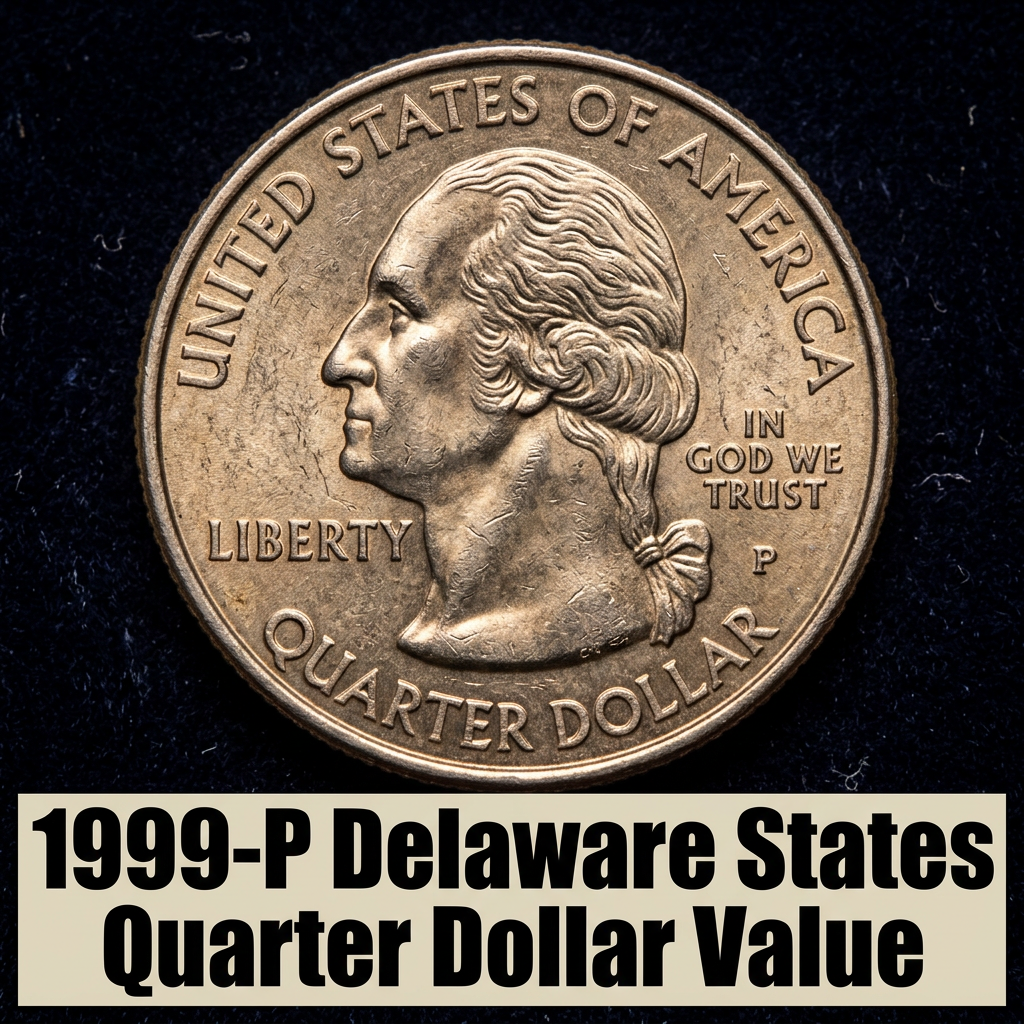
The 1999-P Delaware State Quarter is worth anywhere from 25 cents in heavily circulated condition to over $15 or more in pristine mint state grades, with rare high-grade specimens occasionally fetching $50 or beyond at auction. If you found one of these in your change jar or inherited a coin collection, you’re in the right place to find out exactly what it’s worth.
What Is the 1999-P Delaware State Quarter?
The 1999-P Delaware State Quarter holds a special place in American numismatic history — it was the very first coin released under the 50 State Quarters Program, launched by Congress in 1997. The “P” mint mark tells you this coin was struck at the Philadelphia Mint. Delaware earned the honor of going first because it was the first state to ratify the U.S. Constitution back in 1787.
The obverse features the classic portrait of George Washington, while the reverse depicts Caesar Rodney on horseback, commemorating his famous midnight ride to cast Delaware’s deciding vote for independence. The coin is made of a copper-nickel clad composition — a copper core sandwiched between layers of a 75% copper and 25% nickel alloy — giving it that familiar silver-like appearance.
If you’ve got one in hand and you’re not sure what you’re looking at, a coin identification app can help you quickly confirm the design, mint mark, and year before you dig into the value research.
How Much Is a 1999-P Delaware State Quarter Worth?
For most people who find a 1999-P Delaware State Quarter in everyday circulation, the coin is worth face value — just 25 cents. Circulated coins that show obvious wear on the high points (Washington’s cheek, Rodney’s horse, the rim lettering) typically don’t carry a premium above face value.
That said, uncirculated examples are a different story. Coins that were never spent and have been carefully stored can be worth several dollars to tens of dollars, depending on their grade. Certified coins graded by professional services like PCGS or NGC command the highest prices.
Here’s a general value breakdown:
| Condition / Grade | Estimated Value |
|---|---|
| Circulated (worn) | Face value ($0.25) |
| About Uncirculated (AU-50 to AU-58) | $1 – $3 |
| Mint State (MS-60 to MS-64) | $3 – $8 |
| Gem Mint State (MS-65) | $10 – $20 |
| MS-66 and higher | $30 – $75+ |
For more detailed and up-to-date certified coin auction data, you can check the 1999-P Delaware State Quarter price records across mint state grades to see what collectors are actually paying right now.
Factors That Affect the 1999-P Delaware Quarter’s Value
Several key factors determine whether your coin is worth 25 cents or significantly more:
Strike Quality: Philadelphia produced approximately 373,400,000 of these quarters in 1999, making them extremely common in circulated grades. However, well-struck examples with sharp details on Rodney’s horse and the coin’s lettering are more desirable to collectors.
Surface Preservation: Even tiny contact marks, hairline scratches from cleaning, or fingerprints can drop a coin from MS-65 to MS-63, which translates to a meaningful drop in value. Never clean a coin — cleaning almost always destroys collector value.
Eye Appeal: Toning, luster, and overall visual appeal matter. Bright, original luster with no distracting blemishes pushes a coin toward the higher end of the value range.
Certification: A coin graded and slabbed by PCGS or NGC is generally worth more than a raw coin of the same grade because buyers trust the professional assessment. CoinKnow is a great tool to research certified coin populations and understand what grade your coin might realistically achieve.
Error Coins and Special Varieties to Watch For
Some 1999-P Delaware quarters were struck with errors that can dramatically increase their value. The most notable variety is the Spitting Horse error, where die deterioration creates what looks like a line or spittle coming from the horse’s mouth. These error coins can be worth anywhere from $25 to well over $100 depending on the severity of the die crack and the coin’s overall condition.
Other errors to look for include off-center strikes, clipped planchets, and doubled die varieties. If you think you’ve spotted something unusual on your coin, use CoinKnow to compare images and identify whether your coin matches known error varieties before spending money on a professional appraisal.
If you want a broader look at all 1999 quarter values including other State Quarter issues from that year, this comprehensive 1999 quarter value guide breaks down pricing across all five designs released that year.
FAQ
Q: How many 1999-P Delaware State Quarters were made?
A: The Philadelphia Mint struck approximately 373,400,000 Delaware State Quarters in 1999. This large mintage is why most circulated examples are only worth face value — they’re simply not rare enough to command a premium in worn condition.
Q: Is it worth getting my 1999-P Delaware quarter professionally graded?
A: Generally, only if you believe you have a gem-quality uncirculated example (MS-65 or higher) or a genuine error coin. Grading fees typically range from $20 to $50 or more per coin, so a common circulated quarter won’t make financial sense to submit. Use CoinKnow to do a preliminary assessment before committing to third-party grading.
Q: What makes the Delaware quarter the most historically significant of the 50 State Quarters?
A: The 1999-P Delaware State Quarter was the very first coin issued in the 50 State Quarters Program, making it a landmark in modern American coinage. Delaware’s design was also chosen to honor the state’s nickname — “The First State” — because Delaware was the first to ratify the Constitution in 1787. That historical backstory makes it a favorite among collectors who appreciate American history alongside their numismatics.