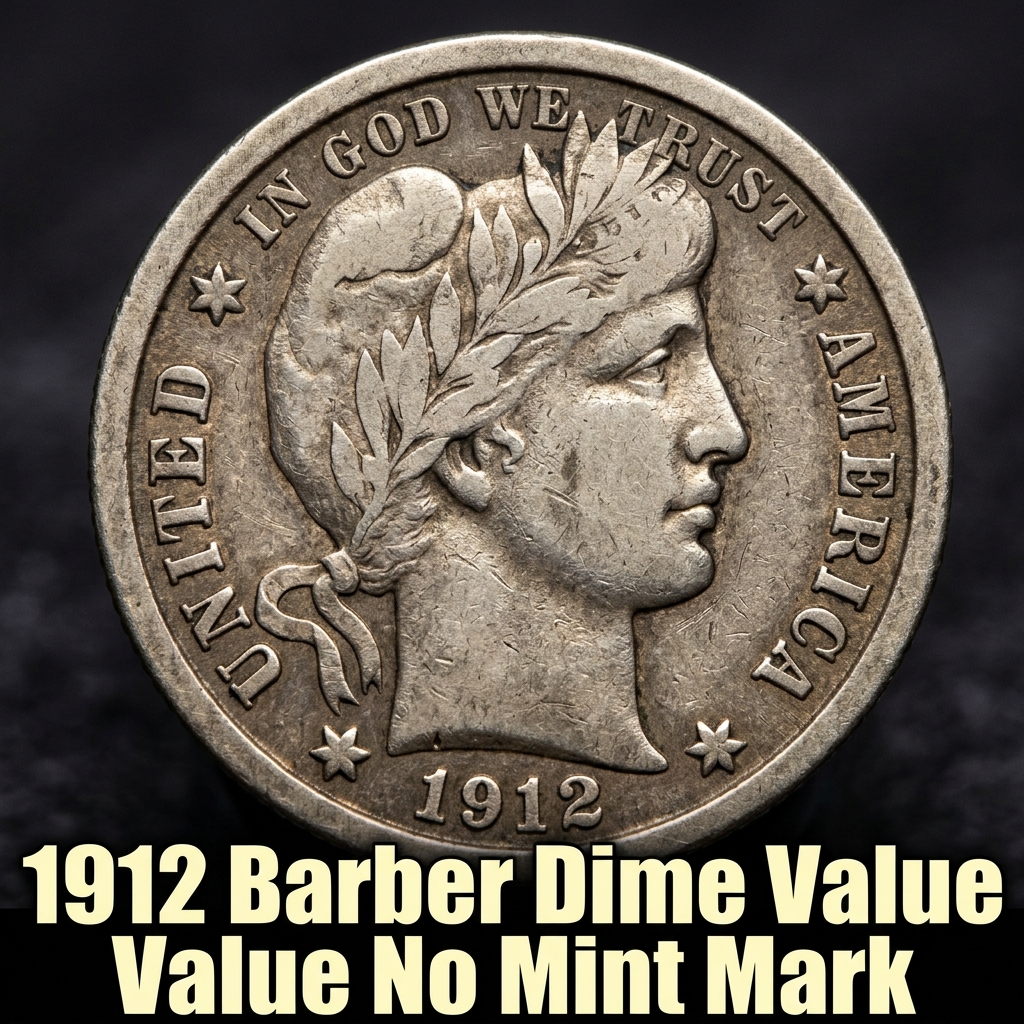
The 1912 Barber Dime with no mint mark is worth anywhere from $3 to $5 in heavily worn condition, but can climb to $30 or more in fine grades, and well-preserved examples can fetch over $100 or even higher at auction. If you found one of these old silver dimes in a coin jar or inherited collection, you may be sitting on a pleasant little surprise.
What Is the 1912 Barber Dime No Mint Mark?
The 1912 Barber Dime with no mint mark was struck at the Philadelphia Mint, which traditionally did not stamp a mint mark on its coins. Designed by Charles E. Barber, the Chief Engraver of the U.S. Mint, this coin was part of a series that ran from 1892 to 1916. The obverse features Lady Liberty wearing a Phrygian cap and a laurel wreath, while the reverse displays a bold eagle with a heraldic shield. These coins contain 90% silver, which gives them intrinsic metal value even in their most worn state. If you are unsure whether your coin is genuine or want help identifying it more precisely, a coin identification app can be a fast and convenient place to start. Many everyday collectors and beginners use tools like CoinKnow to quickly scan and identify old coins without needing expert knowledge right away.
How Much Is the 1912 Barber Dime No Mint Mark Worth?
Value depends heavily on condition, also known as grade. A coin that has been circulated for decades will show heavy wear on the high points, like Liberty’s hair and the eagle’s feathers. The more detail remaining, the more the coin is worth. Here is a general breakdown of 1912 Barber Dime no mint mark values by grade:
| Grade | Description | Estimated Value |
|---|---|---|
| Good (G-4) | Heavy wear, outline visible | $3 – $5 |
| Fine (F-12) | Moderate wear, some detail | $8 – $15 |
| Extremely Fine (EF-40) | Light wear on high points | $30 – $50 |
| About Uncirculated (AU-50) | Slight wear, most luster intact | $60 – $90 |
| Mint State (MS-63) | No wear, strong luster | $120 – $200+ |
For a more detailed breakdown of values across all grades and mint marks, check out this complete 1912 Barber Dime value guide that covers Philadelphia, Denver, and San Francisco issues side by side.
What Makes Some 1912 Barber Dimes More Valuable?
Beyond grade, a few other factors can push the value of your 1912 Barber Dime no mint mark higher. Strike quality matters a lot with Barber Dimes — weakly struck coins are common in this series, and a sharply struck example with full head detail on Liberty is rarer and more desirable. Eye appeal also plays a role. A coin with original, undisturbed surfaces and natural toning will almost always sell for more than one that has been cleaned. Cleaning removes the original skin of the coin and leaves unnatural luster that experienced collectors can spot immediately. Avoid polishing or washing old coins with any chemical product. Another factor is provenance — if your coin comes from a notable collection or has been certified by a third-party grading service like PCGS or NGC, buyers will pay a premium for the added confidence and documentation.
Silver Melt Value and Why It Still Matters
Even a heavily worn 1912 Barber Dime no mint mark is not worthless. Since the coin is composed of 90% silver and weighs 2.5 grams, it contains approximately 0.0723 troy ounces of pure silver. With silver prices fluctuating around $25 to $30 per troy ounce in recent years, the melt value alone puts a floor on what the coin is worth — typically around $1.80 to $2.20 at current silver prices. That means even the most beaten-up example has real value tied to its precious metal content. This is one reason Barber Dimes remain popular among both collectors and silver stackers. Apps like CoinKnow are helpful for tracking live silver prices alongside coin values, so you always know whether you are better off selling to a collector or a precious metals dealer.
How to Check If Your Coin Is the Real Deal
Before assuming your old dime is a 1912 Barber Dime, take a moment to confirm a few things. Look at the date on the obverse — it should clearly read 1912. There should be no mint mark below the eagle on the reverse, which confirms it was made in Philadelphia. Measure the diameter if you can; it should be approximately 17.9 mm. A magnet test can also be useful — genuine Barber Dimes contain silver and are not magnetic, so if yours sticks to a magnet, something is off. CoinKnow and similar tools can walk you through these steps visually if you are unsure.
—
FAQ
Q: Is the 1912 Barber Dime with no mint mark rare?
A: Not particularly. Philadelphia struck over 19 million of these coins in 1912, making it one of the more common dates in the Barber Dime series. However, well-preserved examples in high grades are genuinely scarce and command strong prices.
Q: Should I clean my 1912 Barber Dime before selling it?
A: No. Cleaning a coin almost always reduces its value in the eyes of collectors. Even if the coin looks dull or dirty, the natural patina is considered part of its original state. Leave it as-is and let a buyer or grader evaluate it honestly.
Q: Where is the best place to sell a 1912 Barber Dime?
A: Options include local coin dealers, coin shows, eBay, and auction houses like Heritage Auctions or Stack’s Bowers. For higher-grade coins, consider getting it certified by PCGS or NGC first, as slabbed coins typically sell for more and attract more serious buyers.