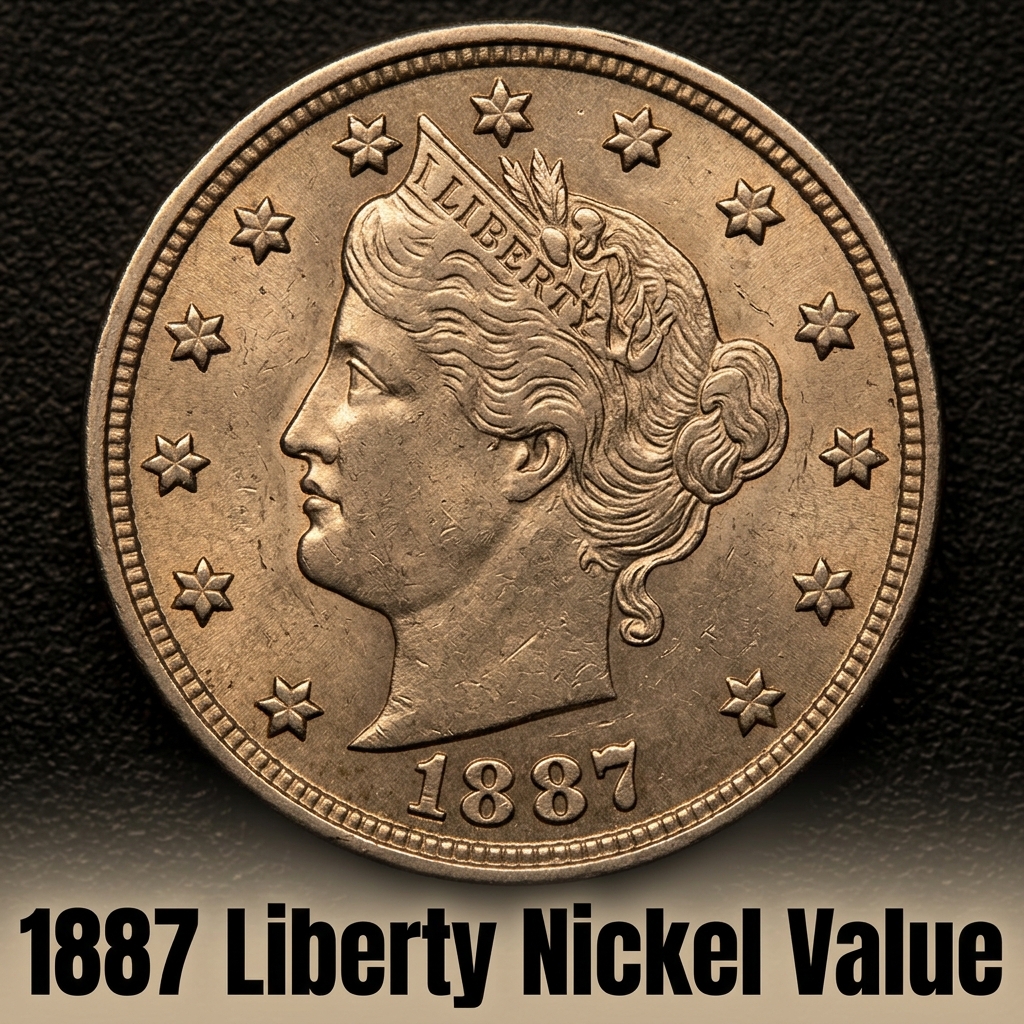
The 1887 Liberty Nickel is worth anywhere from $1 to $5 in heavily worn condition, while lightly circulated examples can fetch $10 to $30, and uncirculated specimens regularly sell for $75 to $300 or more depending on grade and eye appeal. If you found one of these coins in an old jar or inherited it from a relative, you’re in the right place to find out exactly what it’s worth.
Before we dive in, if you’re not totally sure what coin you’re holding, a coin identification app can help you confirm the design, date, and mint details in seconds — saving you time before you start researching values.
What Is the 1887 Liberty Nickel?
The 1887 Liberty Nickel is part of the Liberty Head series, also known as the “V Nickel” because of the large Roman numeral V on the reverse. Designed by Charles E. Barber, this five-cent coin was minted from 1883 through 1912. The obverse features the profile of Liberty wearing a coronet inscribed with the word LIBERTY, surrounded by thirteen stars. The reverse displays a large V encircled by a wreath of corn, cotton, and wheat.
In 1887, the coins were struck only at the Philadelphia Mint with no mint mark. The mintage that year was 15,263,652 — a solid production run, which means these coins aren’t rare in low grades. However, finding one in truly uncirculated condition is another story entirely. Most examples you’ll encounter today show significant wear from decades of everyday use. That’s what makes higher-grade pieces genuinely collectible and increasingly hard to come by.
How Much Is the 1887 Liberty Nickel Worth by Grade?
Coin values are almost always tied directly to condition, or “grade” in collector terms. A coin graded Good (G-4) looks flat and heavily worn, while a coin graded Mint State (MS-63 or higher) looks nearly as fresh as the day it left the press. Here’s a general breakdown of 1887 Liberty Nickel values across common grades:
| Grade | Description | Estimated Value |
|---|---|---|
| Good (G-4) | Heavy wear, outline visible | $1 – $4 |
| Very Good (VG-8) | Moderate wear, some detail | $4 – $8 |
| Fine (F-12) | Even wear, major features clear | $8 – $15 |
| Extremely Fine (EF-40) | Light wear on high points | $20 – $40 |
| About Uncirculated (AU-50) | Slight wear, most luster present | $45 – $80 |
| Mint State (MS-63) | No wear, minor contact marks | $100 – $200 |
| Mint State (MS-65+) | Gem quality, exceptional luster | $300 – $600+ |
For the most up-to-date auction results and certified coin prices, you can check detailed 1887 Liberty Nickel price data by grade at CoinHix, which tracks real sales across major coin markets.
What Makes Some 1887 Nickels Worth More?
Beyond grade, a few other factors can push the value of your 1887 Liberty Nickel higher or lower. Strike quality matters — some coins from this era were weakly struck, meaning design details look soft even on uncirculated examples. Luster and surface preservation are also huge. A coin with original, unimpaired luster and no cleaning will always out-value a bright, freshly polished coin, which collectors refer to as “cleaned” and consider damaged.
Eye appeal is surprisingly subjective but very real in the coin market. Two coins with identical grades can sell for noticeably different prices simply because one looks more attractive. Toning, which is the natural darkening of a coin’s surface over time, can actually add value if it’s attractive and original — or hurt value if it’s blotchy or artificial-looking.
Professional grading services like PCGS and NGC can authenticate and grade your coin, giving it a certified grade that buyers trust. A certified MS-64 example is worth significantly more than a raw coin claimed to be the same grade. If you believe you have a higher-end piece, certification is often worth the investment.
CoinKnow is a handy app that many everyday collectors use to quickly look up coin values, understand grading standards, and even track their collection over time. If you’re just getting started with coin collecting, CoinKnow makes the learning curve much gentler.
Should You Sell or Hold Your 1887 Liberty Nickel?
If your coin is well-worn, it’s worth a few dollars at most — which means it’s a fun historical artifact but not a financial windfall. However, if it shows minimal wear or has never circulated at all, you could be sitting on something genuinely worth selling to a collector or coin dealer.
Before making any decisions, compare it to sold listings on platforms like eBay or Heritage Auctions to get a realistic idea of what buyers are actually paying right now. You might also find useful context by reading about related coins from this era, such as 1887 silver dollar values and what makes them worth holding or selling, since understanding the broader coin market helps you make smarter decisions about any old coin.
When in doubt, get a second opinion. Local coin shows, coin shops, and online collector forums are all great places to ask questions without pressure. And of course, CoinKnow is always in your pocket when you need a quick reference on the go.
FAQ
Q: Is the 1887 Liberty Nickel made of silver?
A: No. Despite being called a nickel, the 1887 Liberty Nickel is composed of 75% copper and 25% nickel. It contains no silver. The coin’s value comes from its age, condition, and collector demand — not precious metal content.
Q: How do I know if my 1887 Liberty Nickel has been cleaned?
A: A cleaned coin often looks unnaturally shiny or bright, with fine hairline scratches visible under a loupe or magnifying glass. Original coins have a softer, more muted luster with natural toning. Cleaned coins are worth significantly less to collectors, so it’s an important distinction when pricing your coin.
Q: Where is the best place to sell an 1887 Liberty Nickel?
A: For coins in lower grades, eBay or local coin dealers are perfectly reasonable options. For higher-grade or certified examples, auction houses like Heritage Auctions or Stack’s Bowers can attract serious bidders and potentially get you a better price. Always get at least two or three opinions before selling anything you believe is valuable.