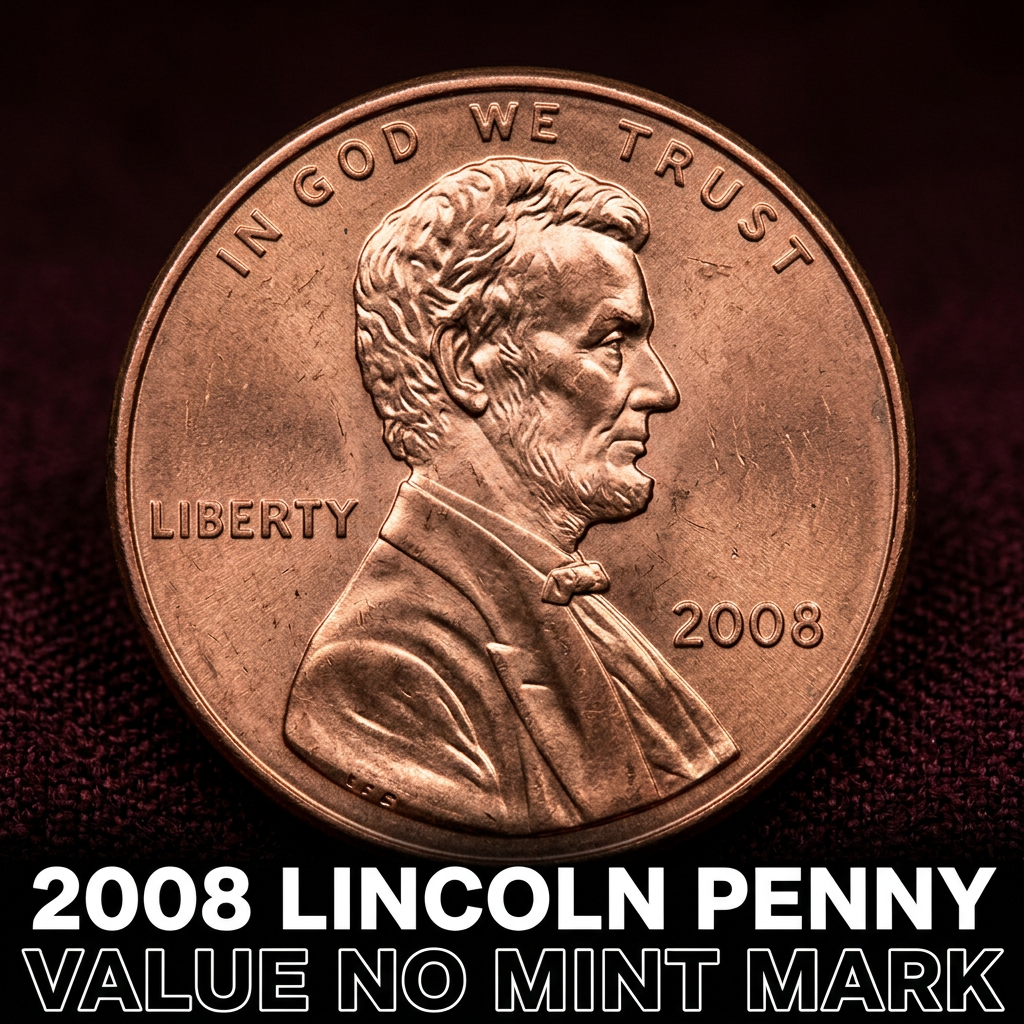
The 2008 Lincoln Penny with no mint mark is worth anywhere from 1 cent in circulated condition to around $5 or more in perfect uncirculated grades, with some high-end examples grading MS-67 or above fetching $20 to $50 at auction. If you found one in your change jar or inherited a coin collection, you’ve come to the right place — let’s break down exactly what this cent is worth and what affects its value.
What Does “No Mint Mark” Mean on a 2008 Penny?
Before diving into the numbers, it helps to understand the basics. A coin’s mint mark tells you where it was struck. The United States Mint operates several facilities, and each leaves a tiny letter on the coin. When you see no mint mark at all on a 2008 Lincoln penny, that means it was produced at the Philadelphia Mint. Philadelphia has a long tradition of not placing a “P” mint mark on cents, which is why these coins look “unmarked” compared to ones from Denver (which carry a “D”).
If you’re not sure whether your coin has a mint mark or just can’t find it, a good coin identification app can help you zoom in and analyze the details quickly right from your smartphone. The mint mark on Lincoln cents is located on the obverse (heads) side, just below the date. Once you confirm there’s no letter there, you’ve got a Philadelphia-minted coin on your hands.
The 2008 Philadelphia Mint produced hundreds of millions of Lincoln cents that year, making them common in circulation — but that doesn’t mean they’re all worth the same.
2008 Lincoln Penny No Mint Mark Value Chart
Most worn, circulated 2008 pennies are worth face value or just a tiny premium. The real value climbs as the coin’s condition improves. Here’s a quick breakdown:
| Grade | Condition | Estimated Value |
|---|---|---|
| Good (G-4) | Heavy wear, flat features | $0.01 |
| Fine (F-12) | Moderate wear | $0.05 – $0.10 |
| Extremely Fine (EF-40) | Light wear on high points | $0.25 – $0.50 |
| MS-63 (Uncirculated) | No wear, some bag marks | $0.50 – $2 |
| MS-65 (Gem Uncirculated) | Strong luster, minimal marks | $3 – $8 |
| MS-67+ (Superb Gem) | Near perfect, full red luster | $20 – $50+ |
For a deeper look at certified sale prices and auction records, you can explore the 2008 Lincoln penny MS-RD price data across different grades and recent transactions.
What Makes a 2008 No Mint Mark Penny Worth More
Condition is everything in coin collecting. A penny pulled straight from circulation has lost its original luster due to contact with pockets, hands, and other coins. But a 2008 cent that was never spent — kept in a mint set, a roll, or a coin album — can retain its brilliant red color and sharp strike, making it significantly more desirable to collectors.
Beyond grade, color designation matters a lot for Lincoln cents. Grading services like PCGS and NGC assign one of three color labels: Red (RD), Red-Brown (RB), and Brown (BN). A coin graded MS-65 Red is worth considerably more than the same grade in Brown, simply because it’s retained more of its original copper shine.
CoinKnow is a fantastic tool for understanding these distinctions. The app walks you through what to look for when assessing luster, strike sharpness, and surface marks — the three pillars of determining whether your penny lands in the bargain bin or a collector’s case.
Errors and Varieties That Could Boost Your 2008 Penny’s Value
Here’s where things get really interesting. Some 2008 pennies left the Philadelphia Mint with production mistakes — and those error coins can be worth far more than standard examples.
Common errors to look for include:
– Double die obverse: Lincoln’s portrait or the inscriptions appear doubled or blurry
– Off-center strikes: The design is not centered, leaving a blank crescent on one side
– Die cracks or cuds: Raised lines or blobs on the coin surface
– Broadstruck coins: The coin expanded beyond its normal size during striking
Even a minor off-center error of 10–15% can add $5 to $20 in value. A dramatic 50% off-center error might bring $50 to $100 or more. If you think you’ve found an error coin, don’t clean it — cleaning destroys value instantly. Instead, use CoinKnow to photograph and document the error before getting a professional opinion.
You can also reference a dedicated 2008 penny value guide with error coin details to compare your coin against known varieties and understand how much a premium error examples have sold for in recent years.
Should You Get Your 2008 Penny Graded?
For most circulated 2008 pennies, professional grading isn’t worth the cost. Submission fees to PCGS or NGC typically start around $30 to $50 per coin, which far exceeds the value of a worn Lincoln cent. However, if your coin appears to be in pristine, fully red uncirculated condition — or if it has a visible error — professional grading can absolutely pay off by making the coin more saleable and confirming its grade to potential buyers.
Not sure where your coin falls? CoinKnow lets you use your phone’s camera to get a preliminary assessment before you commit to a grading service. It’s a smart first step that can save you time and money.
—
FAQ
Q: Is a 2008 penny with no mint mark rare?
A: No. The Philadelphia Mint struck hundreds of millions of Lincoln pennies in 2008, making them very common. They’re only valuable in top uncirculated grades or if they carry a mint error.
Q: How can I tell if my 2008 penny is worth grading professionally?
A: Look for full original red luster with no visible scratches, spots, or wear. If it looks like it just came from the mint, it may grade MS-65 or higher, which could justify the cost of professional grading.
Q: Does the copper content affect the value of a 2008 penny?
A: Modern pennies since 1982 are 97.5% zinc with only 2.5% copper plating, so their metal melt value is essentially just face value — about one cent. The collector value comes from condition, not metal content.