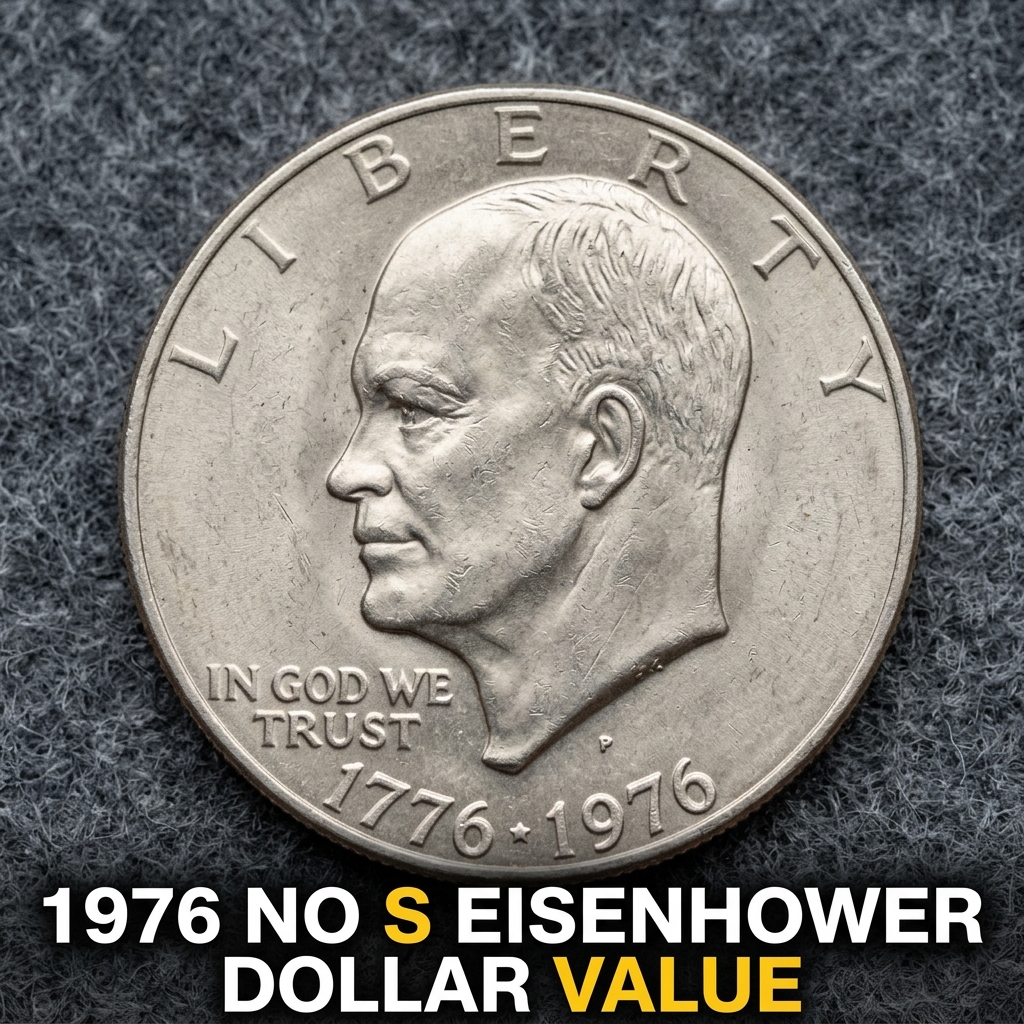
The 1976 No S Eisenhower Dollar is worth anywhere from $6,000 to over $50,000 depending on condition — making it one of the rarest and most exciting finds in modern U.S. coinage. If you stumbled across one of these coins, you may be sitting on a serious treasure.
Before we dig into the details, it’s worth knowing that identifying whether your coin is actually a “No S” variety can be tricky. The mint mark is tiny, and without the right tools, it’s easy to overlook. Using a coin identification app can help you zoom in and confirm the details before you make any decisions about selling or grading.
What Is the 1976 No S Eisenhower Dollar?
The 1976 Eisenhower Dollar was minted to celebrate the United States Bicentennial — 200 years of American independence. The coin features a special reverse design showing the Liberty Bell overlapping the Moon, replacing the standard eagle. These coins were produced at three mints: Philadelphia (no mint mark), Denver (D), and San Francisco (S).
The San Francisco Mint struck proof versions of this coin, which were intended for collectors and sold in special sets. These proof coins should bear the “S” mint mark just below Eisenhower’s neck on the obverse side. However, a small number of proof coins were accidentally struck without the “S” mint mark — and that error is what makes the 1976 No S Eisenhower Dollar so incredibly valuable.
Estimates suggest only around 2,000 of these error coins exist, which is an extremely small number by any collector’s standard. Most of them were discovered by sharp-eyed buyers who purchased proof sets and noticed something was off. Today, they’re considered one of the great modern rarities in American numismatics.
How Much Is the 1976 No S Eisenhower Dollar Worth?
The value of a 1976 No S Eisenhower Dollar depends heavily on its condition and whether it has been certified by a professional grading service like PCGS or NGC. Because of its rarity and demand among serious collectors, even lower-grade examples command impressive prices.
Here’s a general value breakdown:
| Grade / Condition | Estimated Value |
|---|---|
| PR-60 (Proof, lower grade) | $6,000 – $9,000 |
| PR-65 (Gem Proof) | $12,000 – $20,000 |
| PR-67 (Superb Gem Proof) | $25,000 – $40,000 |
| PR-68 or higher | $40,000 – $50,000+ |
For the most up-to-date auction results and certified price data for the 1976 Eisenhower Dollar across all grades, it’s worth checking recent sales from major grading services and auction houses before making any decisions.
How to Tell If You Have the No S Variety
First and most importantly, your coin needs to be a proof coin — not a regular business strike. Proof coins have a mirror-like background field and frosted design elements. If your dollar looks dull or worn like change you’d spend at a store, it’s almost certainly not the No S proof variety.
Next, look closely at the obverse side just below Eisenhower’s neck and slightly to the left. You’re looking for the absence of an “S” mint mark. A standard San Francisco proof will have a clear “S” stamped there. On the No S error coin, that space is completely blank.
Use a magnifying glass or loupe with at least 5x magnification for a proper look. Even better, CoinKnow offers detailed coin images and variety guides that can help you compare your coin side by side with known examples — a huge help when you’re trying to spot subtle differences.
If you believe you have a genuine No S variety, do not clean it or handle it more than necessary. Submit it to PCGS or NGC for authentication and grading right away.
Is the 1976 Bicentennial Dollar Worth Anything Without the Error?
Regular 1976 Bicentennial Eisenhower Dollars — the kind you might find in pocket change or a coin roll — are generally worth only face value or a small premium. A circulated example in average condition is worth about $1 to $2. Even uncirculated business strikes from Philadelphia or Denver typically sell for $5 to $15.
San Francisco proof coins with the “S” mint mark are more collectible, usually worth $10 to $30 in gem proof condition. Still nice to have, but nowhere near the value of the No S error.
For a full breakdown of what the 1776-1976 Bicentennial dollar is worth across all varieties and mint marks, including the regular S proof and business strikes, it’s helpful to consult a dedicated coin value resource.
If you’re not sure what you have, CoinKnow is a great starting point to research Eisenhower Dollar varieties, compare images, and understand what makes each coin type different before you invest in grading.
Where to Sell the 1976 No S Eisenhower Dollar
Because this coin is rare and valuable, you want to sell it the right way. Your best options include major numismatic auction houses like Heritage Auctions, Stack’s Bowers, or GreatCollections. These platforms attract serious collectors who are willing to pay top dollar for authenticated rarities.
Do not sell it to a pawn shop or a generic online buyer without first getting it professionally graded. A PCGS or NGC slab with the “No S” attribution confirmed will significantly increase both buyer confidence and final sale price.
CoinKnow can also help you understand the current market and connect with collector communities where buyers actively seek out exactly this kind of coin.
FAQ
Q: How many 1976 No S Eisenhower Dollars exist?
A: It’s estimated that approximately 2,000 examples exist, though the exact number is unknown. They were accidentally released without the “S” mint mark on San Francisco proof coins intended for collector sets, making them one of the rarer modern U.S. error coins.
Q: Do I need to get my coin professionally graded to sell it?
A: Yes, absolutely. Without a PCGS or NGC certification confirming the “No S” variety, most serious buyers will not pay full price — and may not buy at all. Grading also protects you from disputes about authenticity and can significantly increase your final sale price.
Q: Can a regular 1976 Eisenhower Dollar look like it’s missing the S mint mark?
A: It’s possible for a coin to have a weak or filled mint mark that looks faint under magnification. That’s why professional authentication is so important. A genuine No S proof will show no trace of the mint mark whatsoever, and experts at PCGS or NGC know exactly what to look for.