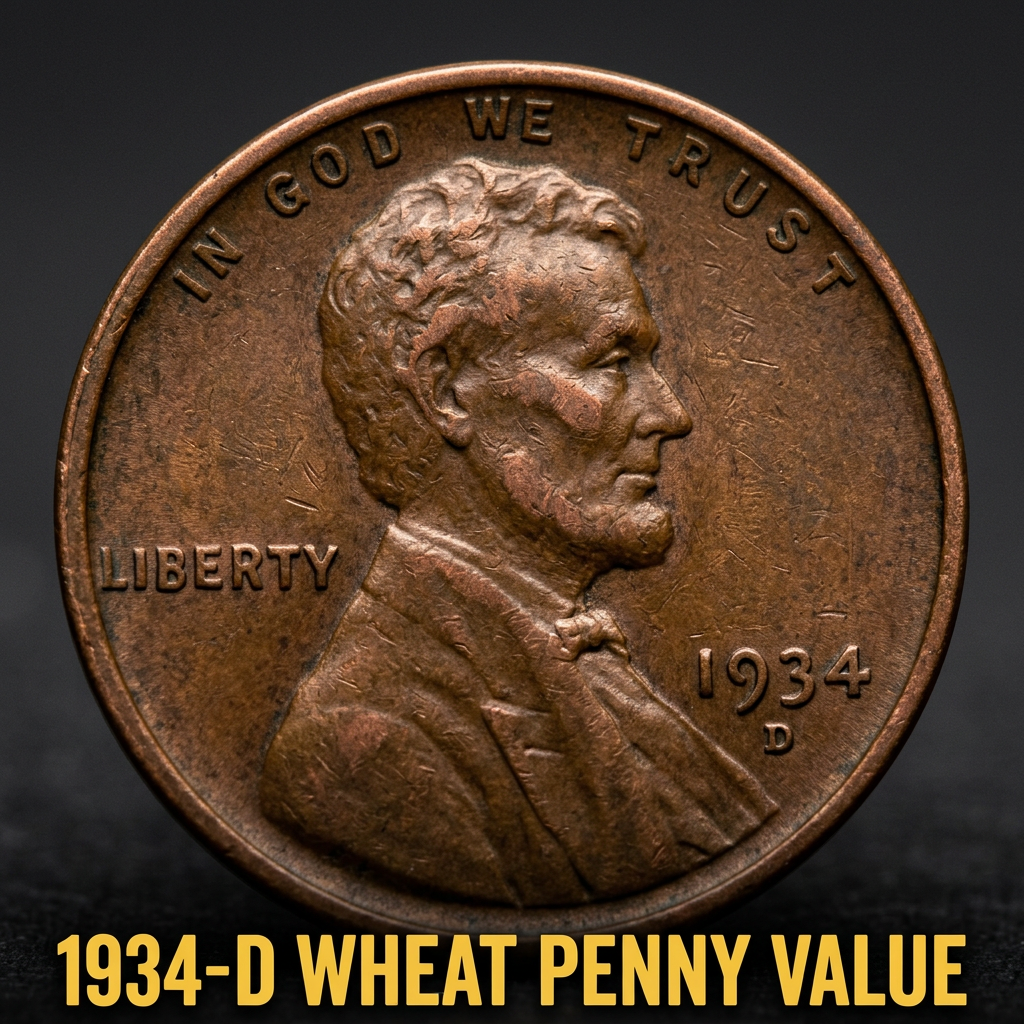
The 1934-D Wheat Penny is worth anywhere from $0.25 in heavily worn condition to over $100 or more in top mint state grades. If you recently found one of these coins in an old jar or inherited collection, you might be sitting on a small but genuine piece of American history.
What Is the 1934-D Wheat Penny?
The 1934-D Wheat Penny was struck at the Denver Mint during the heart of the Great Depression. The small “D” mintmark appears on the obverse side, just below the date. That little letter makes a big difference to coin collectors. While the Philadelphia Mint produced over 219 million Lincoln cents that year, Denver struck roughly 28 million — making the “D” version considerably scarcer. If you’ve got one in hand and want to identify it quickly, a coin identification app can help you confirm the mintmark, date, and variety in seconds. Tools like CoinKnow are especially popular among beginners because they make the process easy and fast, even if you’ve never collected coins before.
1934-D Wheat Penny Value by Grade
The condition of your coin — known as its “grade” — plays the biggest role in determining value. A coin that looks worn down and dull is worth far less than one that still shows sharp details and original luster. Here’s a general breakdown of what the 1934-D Wheat Penny is worth across different grades:
| Grade | Description | Estimated Value |
|---|---|---|
| Good (G-4) | Heavy wear, flat details | $0.25 – $0.50 |
| Fine (F-12) | Moderate wear, visible lettering | $0.75 – $2.00 |
| Extremely Fine (EF-40) | Light wear on high points | $5 – $12 |
| About Uncirculated (AU-55) | Slight wear, most luster remains | $15 – $30 |
| Mint State (MS-63) | Uncirculated, minor marks | $35 – $75 |
| Mint State (MS-65+) | Gem quality, strong luster | $100 – $200+ |
For the most current auction results and 1934-D Wheat Penny price data in MS-RD grades, it’s worth checking a reliable pricing database before you buy or sell.
What Makes the 1934-D Penny Worth More or Less
Beyond grade, a few other factors can push the value of your 1934-D Wheat Penny up or down. Color is one of the most important. Copper coins are graded as Red (RD), Red-Brown (RB), or Brown (BN). A fully red coin — meaning it has retained its original copper luster — is worth significantly more than a brown one of the same grade. Strike quality also matters. Some 1934-D pennies were weakly struck, leaving details soft or incomplete. A sharp, well-struck example commands a premium. Finally, any signs of cleaning or artificial enhancement will drop the value dramatically. Collectors want coins in their natural, original state. If you’re not sure whether your coin has been cleaned, CoinKnow can help you compare it to reference images of authentic examples.
How to Get the Most Accurate 1934-D Wheat Penny Value
Online price guides are a great starting point, but they give you ranges — not exact numbers. For a precise figure, you have a few options. You can submit your coin to a professional grading service like PCGS or NGC, which will authenticate it, assign a grade, and seal it in a protective holder. This is especially worthwhile if you believe your coin is in Mint State condition. You can also check recent sales on eBay by filtering completed listings, which shows what buyers are actually paying right now. For a quick and detailed look at the full 1934 Wheat Penny value guide including both Philadelphia and Denver issues, a dedicated coin value resource can save you a lot of time. And if you want to explore your entire coin collection on the go, CoinKnow is a handy app that lets you look up values, track your finds, and learn about each coin’s history in one place.
Should You Hold On to Your 1934-D Wheat Penny?
Most circulated 1934-D Wheat Pennies are worth only a dollar or two, but don’t be too quick to dismiss yours. If the coin shows minimal wear and retains a reddish color, it could be worth many times face value. Wheat Pennies in general have a devoted collector base, and the Denver issues from the 1930s are consistently in demand. Even a modestly graded example is a tangible piece of Depression-era American history — and that makes it worth keeping, if nothing else. As time goes on and these coins become harder to find in circulation, their collectible appeal only grows.
FAQ
Q: How do I know if my penny is a 1934-D or just a 1934?
A: Look directly below the date on the front of the coin. If you see a small “D,” it was made in Denver. No mintmark means it came from Philadelphia. A magnifying glass or loupe will make this much easier to confirm.
Q: Is a 1934-D Wheat Penny rare?
A: It’s not considered rare in lower grades, since about 28 million were minted. However, high-grade examples — especially fully red Mint State coins — are genuinely scarce and can sell for $100 or more to serious collectors.
Q: Is it worth getting my 1934-D penny professionally graded?
A: It depends on the condition. If your coin looks uncirculated or close to it, professional grading from PCGS or NGC can significantly increase its marketability and value. For worn coins worth a dollar or two, the grading fee probably isn’t worth it.