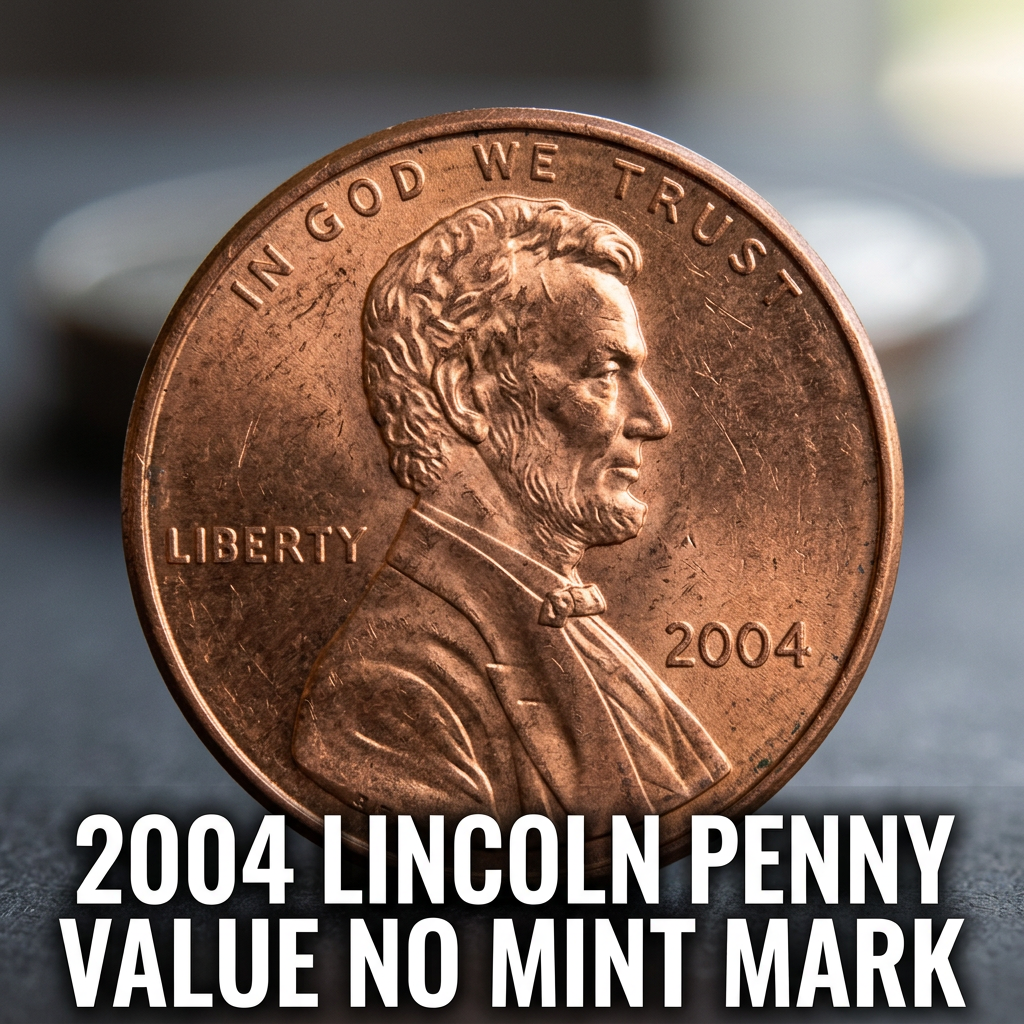
The 2004 Lincoln Penny with no mint mark is worth anywhere from 1 cent in circulated condition to around $5 or more in certified mint state grades, with top-tier examples occasionally selling higher at auction. If you found one of these pennies in your change jar, you’re in the right place to find out exactly what it’s worth.
Most people don’t think twice about a penny sitting at the bottom of a drawer, but coin collectors know that condition, mintage, and mint mark details can make a big difference in value. If you want to quickly identify what you’ve got, a coin identification app can help you scan your penny and get instant details about its origin and grade — a great starting point for any beginner.
What the No Mint Mark Means on a 2004 Lincoln Penny
When you look at a Lincoln penny, the mint mark is a tiny letter stamped just below the date on the obverse (front) side of the coin. A “D” means the coin was struck at the Denver Mint, while no letter at all means it came from the Philadelphia Mint. Philadelphia has historically not used a mint mark on its pennies, so a 2004 Lincoln Penny with no mint mark is simply a Philadelphia-minted coin.
In 2004, the Philadelphia Mint produced approximately 3.37 billion Lincoln pennies. Yes, billion. That enormous mintage is one of the main reasons why the 2004 no mint mark penny isn’t considered rare. The sheer volume of coins produced means most of them are easy to find, and the majority are only worth face value in circulated condition. However, coins that were never used — pulled straight from mint rolls or sets — can still carry a modest premium for collectors, especially if they’re bright, uncirculated, and without any contact marks.
2004 Lincoln Penny No Mint Mark Value by Condition
Condition is everything in coin collecting. A coin that looks shiny and untouched is worth far more than one that’s been rubbed smooth from decades of pocket wear. Here’s a straightforward breakdown of what the 2004 Philadelphia penny is worth at different grade levels:
| Condition | Grade (Sheldon Scale) | Estimated Value |
|---|---|---|
| Circulated (Average) | Good to Fine | Face value ($0.01) |
| Extremely Fine | EF-40 to EF-45 | $0.10 – $0.25 |
| Uncirculated | MS-63 Red | $0.50 – $1.00 |
| Choice Uncirculated | MS-65 Red | $2.00 – $5.00 |
| Gem Uncirculated | MS-67 Red | $10.00 – $30.00+ |
For the most current and detailed 2004 Lincoln Penny price data by MS grade and color designation, tracking certified auction results is your best resource. MS-67 Red examples are particularly sought after because they’re far less common than you’d expect given the high mintage.
What Makes a 2004 Penny Worth More Than Face Value
While most 2004 no mint mark pennies won’t make you rich, there are specific factors that push certain examples above face value. Here’s what to look for:
Color designation: Lincoln pennies can be graded as Red (RD), Red-Brown (RB), or Brown (BN). Red is the most desirable because it means the coin has retained its original copper-plated shine. A 2004 penny graded MS-65 Red is worth noticeably more than the same grade in Brown.
Strike quality: Some pennies come off the dies with sharper, crisper details than others. A well-struck coin with full definition on Lincoln’s portrait and the Lincoln Memorial reverse is more appealing to collectors.
Errors and varieties: Die errors, doubled dies, and off-center strikes can dramatically increase a coin’s value. A 2004 penny with a visible doubling on the date or lettering could be worth anywhere from a few dollars to hundreds, depending on the severity. Always examine your coins under good lighting or a loupe.
Using CoinKnow to scan your 2004 penny is a smart first step — the app helps identify error varieties and gives you an immediate sense of whether your coin has any collector value beyond face value.
How to Check the 2004 Lincoln Penny Value Today
Coin values shift based on the collector market, so it’s always wise to check recent sales rather than rely on outdated price guides. For a comprehensive look at what the 2004 penny is worth across all mint marks and conditions, up-to-date resources that pull real auction data will give you the most accurate picture.
If you believe your coin is in gem uncirculated condition, consider submitting it to a third-party grading service like PCGS or NGC. A professionally graded and slabbed MS-67 Red example has a much easier time selling at full market value because buyers trust the independent verification.
You can also use CoinKnow to photograph and catalog your coins at home, track their estimated values over time, and compare your piece against certified examples — all from your phone. It’s a handy tool whether you’re just getting started or building a serious collection.
FAQ About the 2004 Lincoln Penny No Mint Mark
Q: Is a 2004 penny with no mint mark rare?
A: No, it is not rare. The Philadelphia Mint produced over 3.3 billion of these pennies in 2004, making them one of the most common Lincoln cents of the modern era. Most are worth only face value unless they are in gem uncirculated condition.
Q: How do I know if my 2004 penny is uncirculated?
A: An uncirculated penny will have no signs of wear on the high points of the design — Lincoln’s cheekbone, hair, and the top of the Memorial columns on the reverse. The coin should have its original luster and ideally show a red or red-brown color. Even slight rubbing can drop a coin into the circulated category.
Q: Can a 2004 penny with no mint mark ever be worth a lot of money?
A: In most cases, no. However, coins with notable errors — such as a doubled die obverse, a broadstrike, or a major off-center strike — can sell for significant premiums. A top-grade MS-67 Red example certified by PCGS or NGC can also fetch $20 to $30 or more from dedicated Lincoln cent specialists. Always check for errors before dismissing any coin as ordinary.