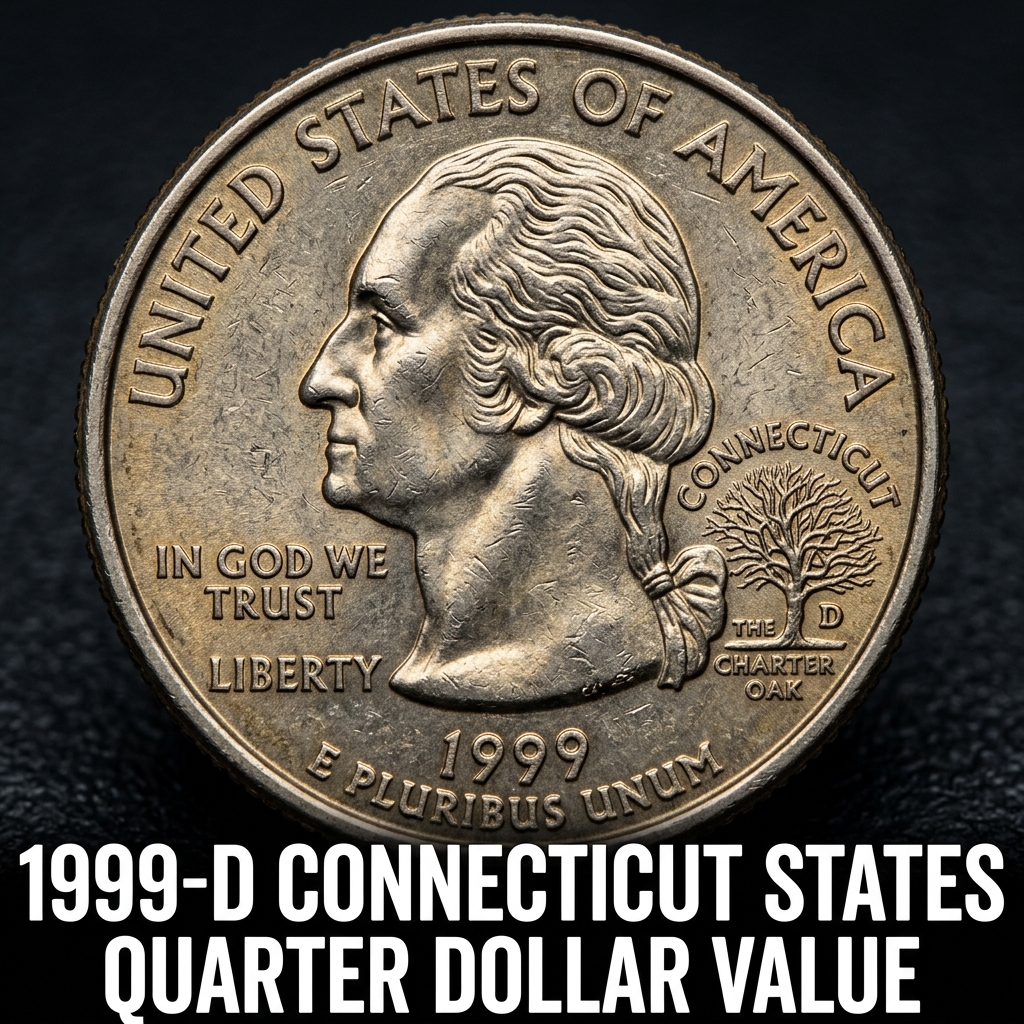
The 1999-D Connecticut State Quarter is worth between $0.25 and $1 in typical circulated condition, but well-preserved examples graded MS-65 or higher can fetch $5 to $15 or more among collectors. If you’ve pulled one of these out of a change jar, you might be sitting on something worth a closer look.
What Is the 1999-D Connecticut State Quarter?
The 1999-D Connecticut State Quarter was minted at the Denver Mint as part of the U.S. Mint’s celebrated 50 State Quarters Program, which ran from 1999 to 2008. Connecticut was the fifth state released in 1999, and its design features the iconic Charter Oak tree — a symbol deeply rooted in Connecticut’s colonial history. The “D” mintmark on the reverse indicates it was struck in Denver.
If you’re not sure which coin you’re holding, a coin identification app can help you confirm the mintmark, date, and design details within seconds. This is especially helpful if you’ve found a batch of old state quarters and want to sort through them quickly.
The Denver Mint produced over 657 million of these coins in 1999, making the 1999-D Connecticut quarter a fairly common coin in circulated grades. But that doesn’t mean all examples are equal — condition is everything in coin collecting.
1999-D Connecticut Quarter Value by Condition
Most people find these coins in average circulated condition, which means visible wear on the high points of the design. A coin in this state is generally worth face value to maybe a few cents above it. The real value kicks in when you start looking at mint-state (uncirculated) examples.
Here’s a quick breakdown of typical values based on grade:
| Grade | Description | Estimated Value |
|---|---|---|
| Circulated (G–VF) | Worn, some detail remains | $0.25 – $0.50 |
| Extremely Fine (EF-45) | Light wear, sharp detail | $0.50 – $1.00 |
| MS-63 | Uncirculated, minor bag marks | $1.50 – $3.00 |
| MS-65 | Gem uncirculated | $5.00 – $10.00 |
| MS-67+ | Superb gem, rare quality | $50.00+ |
For up-to-date certified sale prices on similar 1999 State Quarters, you can review recent auction records for 1999 State Quarters in mint state to get a sense of what the market is currently doing.
Factors That Affect the Value of Your 1999-D Connecticut Quarter
Several things influence how much a 1999-D Connecticut State Quarter is worth beyond basic grade. First, strike quality matters — some Denver Mint coins from this era showed weak strikes on the Charter Oak’s fine branch details. A sharply struck example stands out and commands a premium.
Second, surface quality plays a big role. Bag marks, scratches, or cleaning can dramatically reduce a coin’s value, even if it hasn’t been circulated. Collectors generally avoid cleaned coins, and grading services like PCGS and NGC will note cleaning on their slabs.
Third, eye appeal counts. A coin with original luster, good color, and no distracting marks will always attract more interest at auction than one that’s technically the same grade but less visually appealing.
Using CoinKnow is a smart way to evaluate your coin at home before deciding whether to spend money on professional grading. The app walks you through condition factors and gives you an estimated value range based on current market data — perfect for beginners who don’t know where to start.
Are Any 1999-D Connecticut Quarters Rare or Valuable Error Coins?
While the 1999-D Connecticut quarter is a common coin in general, error coins from this series do occasionally surface. Known varieties include off-center strikes, die cracks, and doubled die obverses. These errors can push values well above the standard range — sometimes into the $50 to $200+ territory depending on the error’s severity and visibility.
Die cracks are the most commonly encountered errors. Look for raised lines running across the coin’s surface, particularly across Washington’s portrait or the Charter Oak design. A dramatic, clearly visible die crack on an otherwise high-grade coin can make it noticeably more collectible.
If you think you’ve found an error coin, CoinKnow can help you identify the type of error you might be looking at. The app includes a dedicated error coin section with photo examples, which makes it easy to compare your coin against known varieties before reaching out to a professional dealer or grading service.
Should You Get Your 1999-D Connecticut Quarter Graded?
For most circulated examples, professional grading isn’t worth the cost — the coin simply won’t appraise high enough to justify the fee. However, if your coin looks crisp, bright, and untouched, it may be worth submitting to PCGS or NGC.
Before you decide, check out detailed 1999 quarter value information by grade and mint to see whether the potential return makes grading financially sensible. As a general rule, coins that appear to be MS-65 or better are the best candidates for slabbing.
Frequently Asked Questions
Q: How do I know if my 1999-D Connecticut quarter is uncirculated?
A: Look for original mint luster — that cartwheel-like shine you see when you tilt the coin under a light. Circulated coins will have flat, dull surfaces where the metal has been rubbed down from use. An uncirculated coin will also show no wear on Washington’s cheekbone or the high points of the Charter Oak design.
Q: Is the 1999-D worth more than the 1999-P Connecticut quarter?
A: In most grades, the two are comparable in value. The Denver Mint produced slightly more 1999-D Connecticut quarters (657 million vs. 688 million for Philadelphia), but the difference in survival rates and collector demand is minimal. High-grade certified examples of either mint can vary based on individual population reports.
Q: Where can I sell my 1999-D Connecticut State Quarter?
A: For circulated examples, local coin dealers or online marketplaces like eBay are your best options. For higher-grade or error coins, consider submitting to a grading service first, then listing on a dedicated numismatic auction platform. CoinKnow also offers resources to connect you with reputable buyers and dealers in your area.