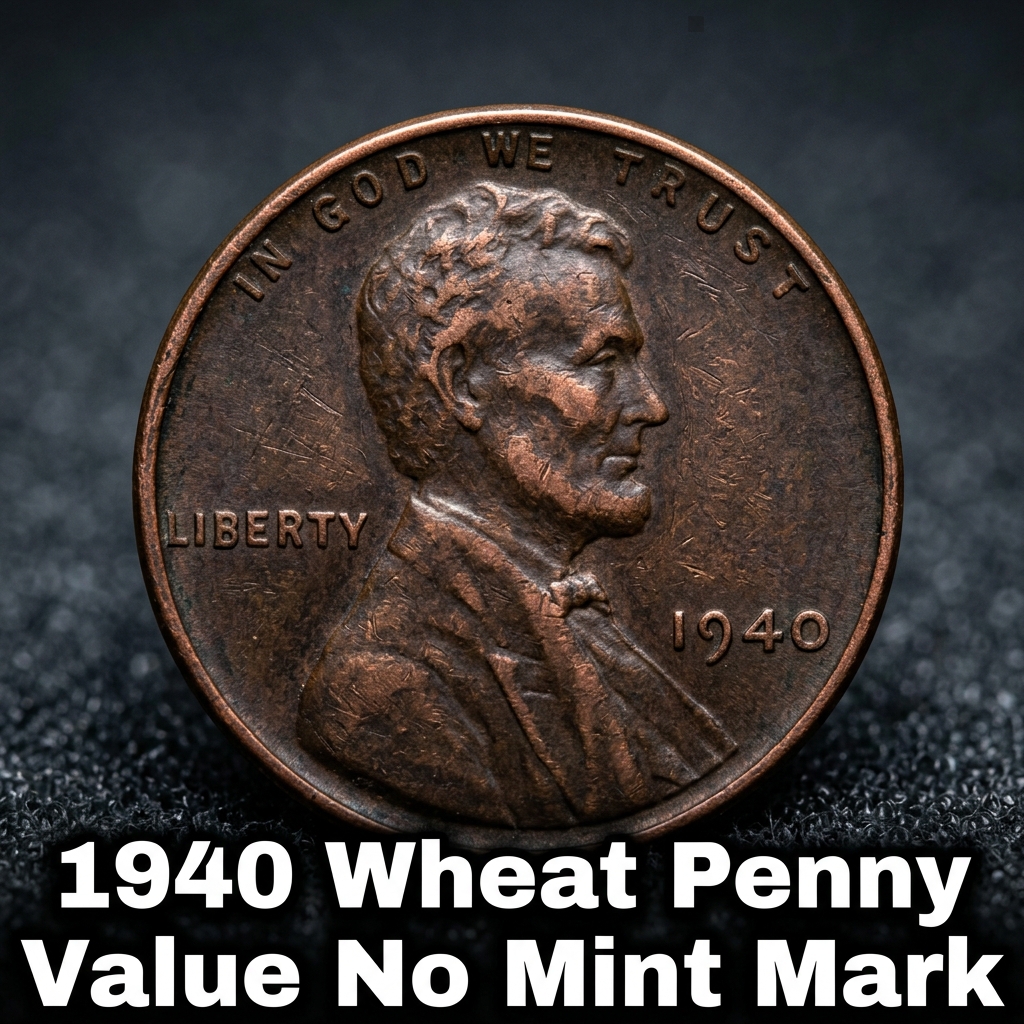
The 1940 Wheat Penny with no mint mark is worth anywhere from $0.10 in heavily worn condition to $8 or more in uncirculated grades, with top-quality red specimens occasionally fetching $20 to $50 at auction. If you found one in a jar of old coins, you’re in the right place to learn exactly what you have.
What Is the 1940 Wheat Penny No Mint Mark?
The 1940 Lincoln Wheat Penny without a mint mark was struck at the Philadelphia Mint, which was standard practice at the time — Philadelphia didn’t add a “P” mint mark to cents back then. This coin is part of the beloved Lincoln Wheat Penny series, which ran from 1909 to 1958. The obverse features Abraham Lincoln’s portrait, while the reverse displays two stalks of wheat framing the words “ONE CENT.” Made from 95% copper and 5% tin and zinc, these coins have a warm reddish-brown color that deepens with age.
If you’ve discovered one of these coins and want to figure out exactly what you’re holding, a coin identification app can help you match the coin’s details, date, and condition in seconds — no expertise required. The 1940 Philadelphia issue had an enormous mintage of over 586 million coins, which is one reason most circulated examples are fairly common and affordable. But condition, as you’ll learn, makes all the difference.
How Much Is a 1940 Wheat Penny Worth?
Value depends almost entirely on the coin’s grade, or condition. A coin that has been circulated — meaning it passed through many hands over the decades — will show wear on Lincoln’s cheek, hair, and the wheat stalks on the back. These coins are plentiful and worth only a small premium over face value.
Here’s a simple value breakdown based on grade:
| Grade | Condition Description | Estimated Value |
|---|---|---|
| Good (G-4) | Heavy wear, design visible | $0.10 – $0.25 |
| Fine (F-12) | Moderate wear, details clear | $0.25 – $0.50 |
| Extremely Fine (EF-40) | Light wear on high points | $1 – $3 |
| Mint State Brown (MS-63 BN) | Uncirculated, brown toning | $5 – $8 |
| Mint State Red (MS-65 RD) | Uncirculated, original red color | $20 – $50+ |
For a deeper look at 1940 Wheat Penny MS-RD graded price data across auction records, numismatic databases track real sales that show how dramatically color and luster affect final hammer prices.
What Makes a 1940 Penny More Valuable?
The biggest value driver for the 1940 no mint mark penny is color designation in uncirculated grades. Coin graders use three color labels: Red (RD), Red-Brown (RB), and Brown (BN). Red coins — those that have retained their original bright copper luster — command the highest prices. A coin graded MS-65 Red can be worth five to ten times more than the same grade with brown toning.
Strike quality also matters. A sharply struck coin with full details on Lincoln’s hair and the wheat stalks on the reverse will score higher in grading. Eye appeal — that intangible quality of just looking beautiful — can push a coin higher at auction. Professional grading by PCGS or NGC adds credibility and makes a coin far easier to sell. CoinKnow is a handy tool that helps you understand grading terminology and compare your coin’s appearance against known standards before you decide whether professional grading is worth the cost.
Tips for Selling or Keeping Your 1940 Wheat Penny
If your coin is circulated, it’s probably worth keeping as a piece of history rather than selling — dealer spreads on common low-grade wheat pennies are tight, and you might net only a few cents. However, if you have a bright, lustrous coin that looks like it was never used, it could genuinely be worth having evaluated.
You can check detailed 1940 penny value information including all mint marks and grades to compare where your coin falls. Online marketplaces like eBay’s “sold listings” are also great for seeing real-world prices. Always clean coins — never do it. Cleaning destroys surfaces and kills value instantly.
CoinKnow can walk you through how to photograph your coin properly and submit it for evaluation, saving you time and guesswork. And if you have a whole collection of old cents, CoinKnow makes it easy to catalog and track values all in one place.
—
FAQ
Q: Is a 1940 Wheat Penny with no mint mark rare?
A: No, it’s one of the most common wheat pennies ever made. Philadelphia struck over 586 million of them in 1940. Most circulated examples are worth only a few cents to about a dollar, though high-grade uncirculated red specimens can be worth $20 to $50 or more.
Q: How do I know if my 1940 penny is in good enough condition to be worth something?
A: Look at the high points of the design — Lincoln’s cheekbone, the hair above his ear, and the tops of the wheat stalks on the back. If those areas are smooth and worn flat, the coin is in lower grades. If the coin still shows sharp detail and has a reddish or reddish-brown color, it could be in uncirculated condition and worth more than a standard circulated piece.
Q: Should I get my 1940 no mint mark penny professionally graded?
A: Generally only if the coin appears fully uncirculated with bright original red color. Grading fees typically start around $20 to $30 per coin, so it only makes financial sense if your penny might grade MS-64 Red or higher, where values justify the cost. For average circulated coins, professional grading isn’t worth it.