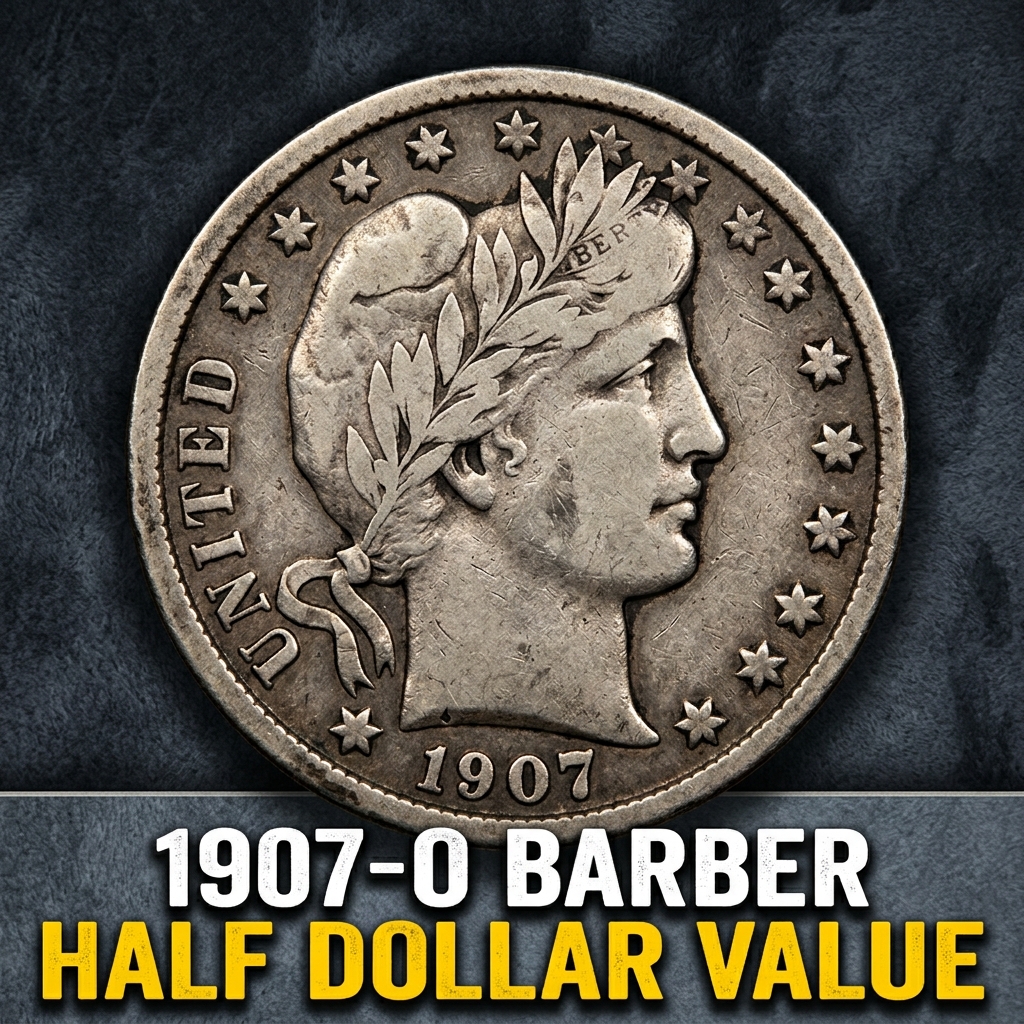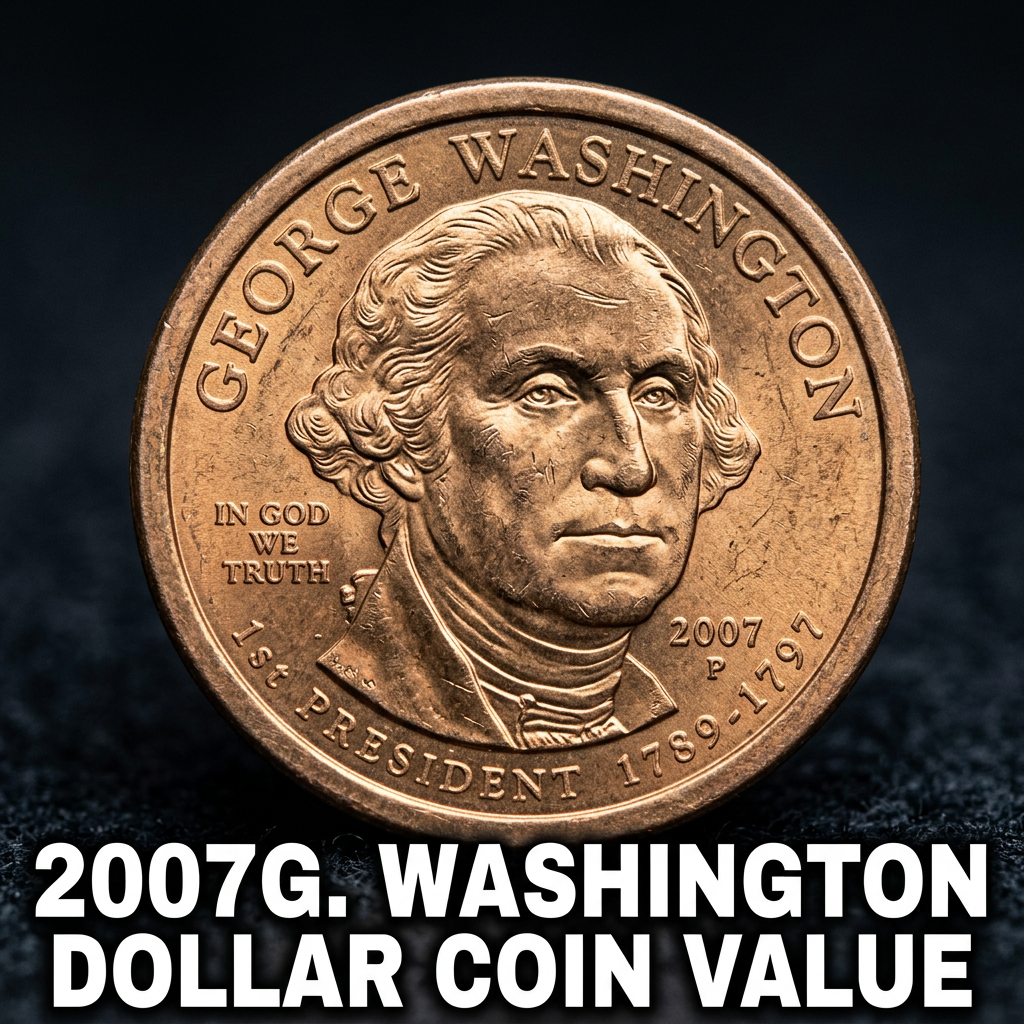
The 2007 George Washington Presidential Dollar is worth face value to a few dollars in circulated condition, but certain mint state and error examples can fetch anywhere from $10 to over $100 — and a rare few have sold for much more.
If you recently came across one of these golden-colored dollar coins and wondered whether it’s worth holding onto, you’re in the right place. This guide breaks down everything you need to know about the 2007 George Washington Dollar, from mintage numbers to what makes certain versions genuinely valuable.
What Is the 2007 George Washington Dollar Coin?
The 2007 George Washington Dollar was the very first coin released in the Presidential Dollar Program, a U.S. Mint initiative launched that year to honor former presidents. Each coin features a portrait of Washington on the obverse and the Statue of Liberty on the reverse — a design shared across the entire series. The edge of the coin is inscribed with “E Pluribus Unum,” the year, and the mint mark, which was a new and distinctive feature for U.S. coinage.
If you’ve never identified a coin like this before, a good coin identification app can help you quickly confirm what you have, check the mint mark, and get a ballpark value in seconds. Apps like CoinKnow are especially handy for beginners who want fast, reliable results without digging through price catalogs.
The coins were struck at both the Philadelphia (P) and Denver (D) mints for circulation, as well as San Francisco (S) for proof sets. Combined mintage across all facilities topped well over 400 million, which means most circulated examples are common. But that doesn’t mean every 2007 Washington Dollar is worthless — far from it.
2007 George Washington Dollar Coin Values by Condition
As with most coins, condition is everything. A heavily worn 2007 Washington Dollar pulled from circulation is still worth $1 — its face value. But coins that were never used, kept in original packaging, or certified by professional grading services like PCGS or NGC can be worth significantly more.
| Coin Type | Condition | Estimated Value |
|---|---|---|
| 2007-P Washington Dollar | Circulated | $1 – $2 |
| 2007-P Washington Dollar | MS65 – MS66 | $5 – $20 |
| 2007-D Washington Dollar | Circulated | $1 – $2 |
| 2007-D Washington Dollar | MS65 – MS66 | $5 – $25 |
| 2007-S Proof Washington Dollar | PR69 – PR70 | $10 – $50 |
| 2007-P Missing Edge Lettering Error | Any | $50 – $200+ |
The Famous “Godless Dollar” Error and Other Varieties
One of the most talked-about versions of the 2007 Washington Dollar is the so-called “Godless Dollar” — a coin where the edge lettering, including “IN GOD WE TRUST,” was accidentally omitted during production. These error coins were quickly noticed by the public and became a media sensation. Because they slipped into circulation before the error was caught, a decent number made it into everyday hands.
If you think you might have one, check the edge of your coin carefully. A smooth, plain edge with no inscription is a strong indicator of this error. Confirmed examples have sold at auction for well over $100, and high-grade certified pieces have gone even higher. The 2007 Washington Dollar error market remains active among collectors today.
It’s worth noting that the Washington Dollar series connects to a broader world of presidential and dollar coin collecting. If you enjoy researching dollar coin values, you might also want to explore detailed value information on rare Eisenhower Dollars, another fascinating series that many collectors pursue alongside Presidential Dollars.
How the 2007 Washington Dollar Fits Into the Bigger Picture
The Presidential Dollar Program ran from 2007 through 2016 and eventually expanded to include American Innovation Dollars. Washington’s coin holds a special place as the series starter, and that historical significance does add a small premium for collectors who want a complete set.
For those who also collect older Washington quarters — the silver coins minted from 1932 onward — the numismatic interest in the Washington name runs deep. You can browse detailed Washington Quarter price data from 1932 mint state examples to see just how valuable early Washington coins can become over time.
If you’re building a collection or just want to track the coins you find, CoinKnow is a fantastic tool that lets you log your coins, check real-time market values, and identify pieces you’re unsure about — all in one place.
Tips for Selling or Storing Your 2007 Washington Dollar
If you’ve determined that your coin has potential value — especially if it’s an error coin or a high-grade uncirculated example — proper handling matters. Never clean a coin, as this permanently reduces its value in collectors’ eyes. Store it in an airtight flip or hard plastic holder to protect the surfaces.
For coins you believe are worth $50 or more, professional grading through PCGS or NGC is often worth the cost. A certified grade adds credibility and typically increases what buyers are willing to pay. You can list certified coins on platforms like eBay, Heritage Auctions, or Great Collections to reach serious buyers.
For everyday coins without errors or special grades, hanging onto them as curiosity pieces or spending them is perfectly reasonable. CoinKnow can help you decide whether a coin is worth grading or simply worth keeping for fun.
FAQ
Q: How do I know if my 2007 George Washington Dollar is the error “Godless Dollar” version?
A: Examine the edge of the coin closely. If it is completely smooth with no text at all — no “IN GOD WE TRUST,” no date, and no mint mark — you likely have the missing edge lettering error. These coins can be worth $50 to $200 or more depending on condition.
Q: Is the 2007 Washington Dollar made of gold?
A: No. Despite its golden color, the 2007 Washington Dollar is made of a manganese-brass alloy. The golden appearance comes from the coin’s metal composition, not actual gold content. It has no precious metal value.
Q: Where is the mint mark on a 2007 Washington Dollar?
A: The mint mark is located on the edge of the coin, along with the year and the inscriptions “E Pluribus Unum” and “IN GOD WE TRUST.” This edge placement was unique to the Presidential Dollar Program and different from most other U.S. coins where the mint mark appears on the face.