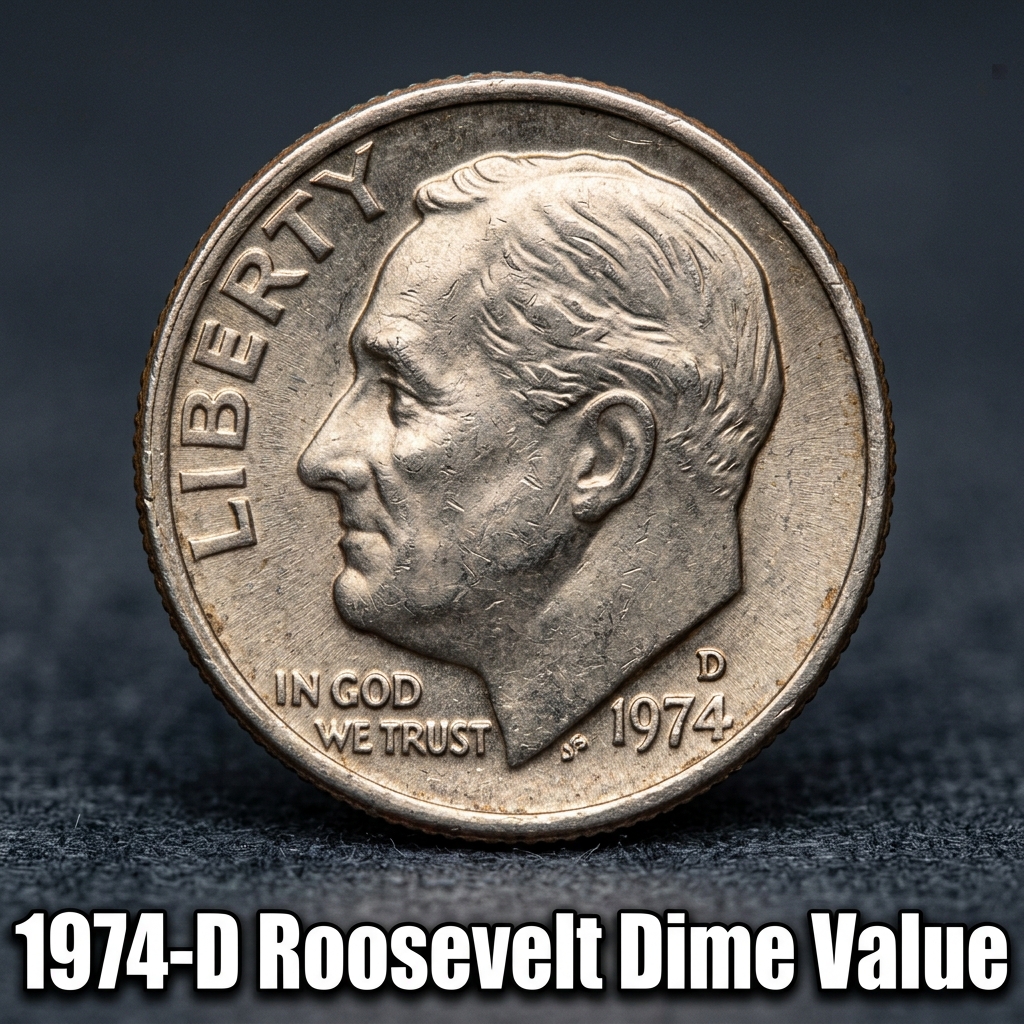
The 1974-D Roosevelt Dime is worth anywhere from face value (10 cents) in heavily worn condition to around $5 or more in pristine uncirculated grades — and a few exceptional examples have sold for significantly higher at auction.
If you’ve come across one of these coins in a jar of change or an old collection, you’re in the right place. Most 1974-D dimes aren’t going to make you rich overnight, but understanding what affects their value is genuinely useful — especially if you have a roll or a whole bag of them sitting around.
A great starting point is using a coin identification app to quickly confirm what you have before diving deeper into the grading process. Once you know what you’re working with, the real fun begins.
What Is the 1974-D Roosevelt Dime?
The 1974-D Roosevelt Dime was struck at the Denver Mint during a period when the U.S. was producing massive quantities of circulating coinage. The “D” mintmark, found on the obverse just above the date, identifies it as a Denver issue. That year, Denver struck over 571 million dimes — which is one of the main reasons most examples aren’t considered rare.
The coin features the classic Roosevelt design introduced in 1946, composed of 91.67% copper and 8.33% nickel (the silver version was phased out in 1965). John R. Sinnock’s initials “JS” appear at the base of Roosevelt’s neck. On the reverse, you’ll see a torch flanked by an olive branch and an oak branch — symbols of liberty, peace, and strength.
Because so many were made, circulated examples are extremely common. But that doesn’t mean they’re all worthless. Condition is everything with this coin.
1974-D Roosevelt Dime Value by Grade
Here’s a quick breakdown of approximate values based on coin grade:
| Grade | Description | Estimated Value |
|---|---|---|
| Good (G-4) | Heavy wear, major details visible | $0.10 – $0.25 |
| Fine (F-12) | Moderate wear, clear design | $0.25 – $0.50 |
| Extremely Fine (EF-40) | Light wear on high points | $0.50 – $1.00 |
| Mint State (MS-63) | Uncirculated, minor marks | $1.50 – $3.00 |
| Mint State (MS-67) | Near-perfect, very few marks | $15 – $50+ |
For the most current auction records and certified sale prices, you can check out detailed 1974-D Roosevelt Dime price data by grade to see exactly where the market stands today.
What Makes a 1974-D Dime Worth More?
Most 1974-D dimes you find in circulation are worth face value or just a tiny premium. But certain characteristics can push the value higher. The biggest factor is grade — a coin that never entered circulation and has been stored carefully can be worth many times more than a worn example.
Full Bands (FB) designation is another key value driver. This refers to the horizontal bands on the torch’s center on the reverse. If those bands are fully struck and clearly separated, certified grading services like PCGS or NGC will add “FB” to the label, which often doubles or triples the coin’s value compared to non-FB examples at the same grade level.
Strike quality and luster also matter. Denver-minted coins from this era sometimes show softer strikes compared to Philadelphia issues, so a sharply struck 1974-D with blazing original luster is a standout piece.
If you want a convenient way to evaluate your coin before paying for professional grading, CoinKnow is a handy tool that helps you quickly assess condition and estimated value using your smartphone.
How to Tell If Your 1974-D Dime Is Uncirculated
Identifying an uncirculated coin might sound complicated, but there are a few things you can look for without being an expert. First, check for any wear on the high points of the design — Roosevelt’s cheekbone, his hair above the ear, and the torch on the reverse. If those areas appear flat or dull compared to the rest of the coin, it’s been circulated.
An uncirculated coin will still have its original mint luster — that subtle cartwheel-like sheen that reflects light as you tilt the coin. The surfaces should also be relatively free from heavy marks, though minor bag marks from the minting process are normal and expected.
If you’re serious about getting a proper value on a potentially high-grade example, submitting it to PCGS or NGC for professional grading is worth considering. For a quick estimate before going that route, CoinKnow lets you photograph your coin and get an instant condition assessment — a smart first step for any collector or casual finder.
You can also reference this comprehensive guide to 1974 Roosevelt Dime values for a deeper look at pricing across all mint marks and grades.
Is the 1974-D Roosevelt Dime Rare?
Simply put — no, it’s not rare in the traditional sense. With over 571 million pieces minted, there’s no shortage of 1974-D dimes in the world. However, rarity in coin collecting isn’t always about total mintage. It’s about how many survived in a specific high grade.
Finding a 1974-D dime graded MS-67 with Full Bands, for instance, is genuinely difficult. PCGS and NGC population reports show that only a small number of coins have been certified at that tier, which is what drives prices at the top end of the scale.
So while the average 1974-D dime won’t impress your coin dealer, don’t dismiss a bag of old coins without at least checking for exceptional examples. Using CoinKnow or a similar tool can help you sort through a collection quickly and flag coins that might be worth a second look.
—
FAQ
Q: Is the 1974-D Roosevelt Dime silver?
A: No. The 1974-D dime is made of a copper-nickel clad composition. The U.S. stopped making silver dimes after 1964. If you’re looking for silver Roosevelt dimes, those were minted from 1946 through 1964.
Q: How do I know if my 1974-D dime is worth getting graded?
A: If your coin appears uncirculated — meaning it has original luster and no visible wear — it may be worth submitting to a grading service, especially if it shows sharp strike detail. For most circulated examples, the cost of grading would exceed the coin’s value.
Q: Where can I sell a 1974-D Roosevelt Dime?
A: Common circulated examples can be spent or sold in bulk to coin dealers. Higher-grade examples are best sold through online auction platforms like eBay or through certified coin auction houses where collectors actively seek top-grade Roosevelt dimes.