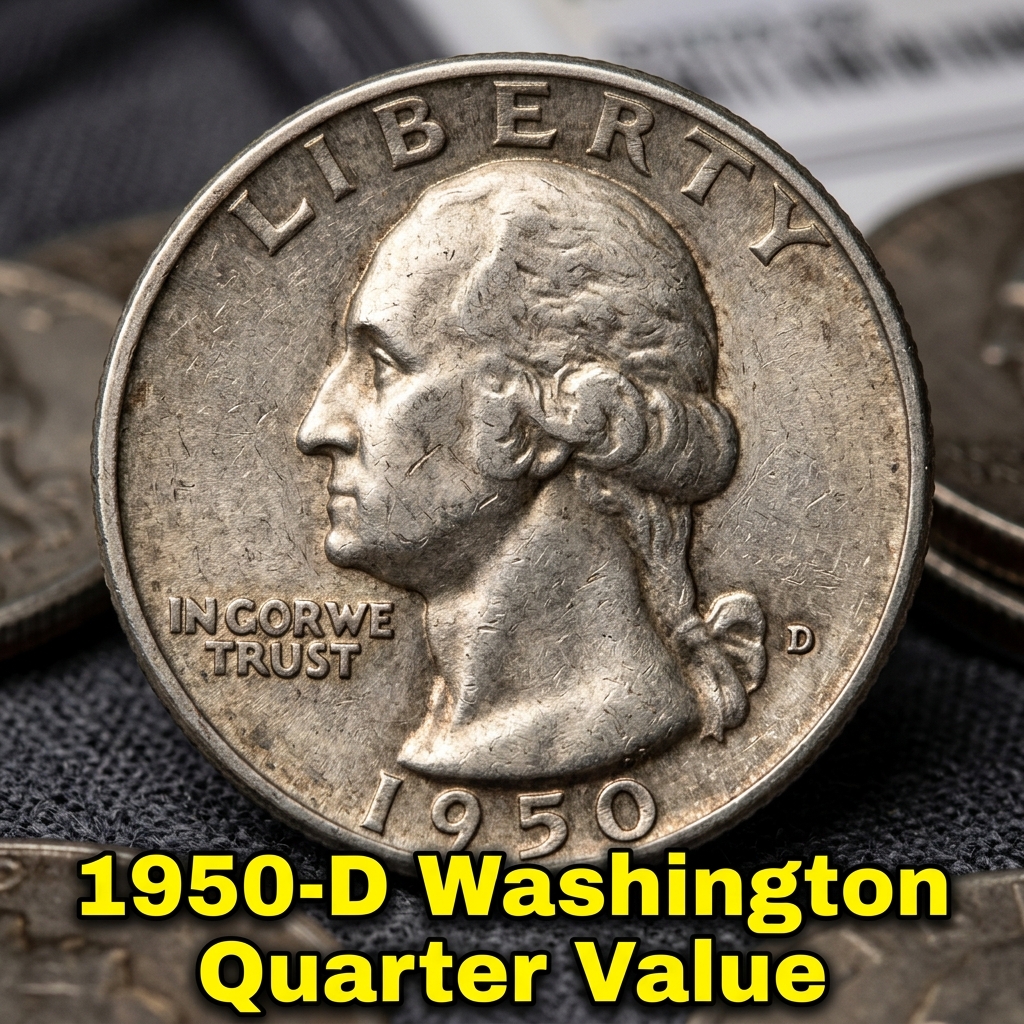
The 1950-D Washington Quarter is worth anywhere from $6 in heavily circulated condition to over $40 in well-preserved grades, with top mint state examples fetching $150 or more at auction. If you recently found one of these coins in an old jar or drawer, you’re in the right place to find out exactly what it’s worth.
What Makes the 1950-D Washington Quarter Special
The 1950-D Washington Quarter was struck at the Denver Mint, which you can identify by the small “D” mintmark located on the reverse side of the coin, just to the right of the ribbon bow beneath the eagle. That year, the Denver Mint produced approximately 21,075,600 quarters — a mintage number that’s not particularly rare by Washington Quarter standards, but still modest enough to make nicer examples worth tracking down.
If you’re holding a coin and aren’t sure whether it’s actually a 1950-D or something else, a coin identification app can help you confirm the date, mintmark, and denomination instantly using your smartphone camera. Tools like CoinKnow make it easy for everyday collectors and curious finders to identify coins without needing any prior experience. Just snap a photo and let the app do the work — it’s one of the simplest ways to get started understanding what you’ve got.
How Condition Affects the 1950-D Quarter’s Value
When it comes to coins, condition is everything. Collectors use a grading scale from 1 to 70, where higher numbers mean less wear and better preservation. A 1950-D Washington Quarter that’s been in circulation for decades will show visible wear on Washington’s cheek, hair details, and the eagle’s breast feathers. These are the areas that tend to flatten out first.
Here’s a general value breakdown based on grade:
| Grade | Description | Estimated Value |
|---|---|---|
| G-4 (Good) | Heavy wear, design visible | $6 – $7 |
| VF-20 (Very Fine) | Moderate wear, clear details | $8 – $12 |
| EF-40 (Extremely Fine) | Light wear, sharp features | $14 – $20 |
| MS-63 (Mint State) | Uncirculated, minor blemishes | $40 – $75 |
| MS-65 (Gem Mint State) | Sharp luster, excellent eye appeal | $100 – $175+ |
For the most up-to-date pricing, you can check current 1950-D Washington Quarter prices by grade at CoinHix, which tracks recent auction results and dealer prices in real time.
Silver Content and Melt Value
One thing that gives every pre-1965 Washington Quarter a built-in floor value is silver. The 1950-D quarter, like all Washington Quarters made before 1965, is composed of 90% silver and 10% copper. Each coin contains approximately 0.1808 troy ounces of pure silver.
That means even a heavily worn 1950-D is never truly worthless. When silver prices are around $28–$30 per troy ounce (as they’ve been in recent years), the melt value alone sits around $5.00 to $5.50. So if someone offers you just face value — a quarter — for one of these coins, politely decline. It’s worth far more than 25 cents.
This silver content is also one reason savvy collectors and investors hunt through old coin rolls and estate collections. Numismatic value and precious metal value together make coins like this interesting on two different levels.
Where to Sell or Get Your 1950-D Quarter Appraised
If you’ve determined that your coin is in nice shape and you want to sell it or get a professional opinion, you have a few solid options. Local coin shops are a great starting point — they can give you a quick in-person assessment. Online auction platforms like eBay also let you see what real buyers are actually paying for comparable examples.
For a more complete picture of what your specific coin might be worth based on its condition, this detailed 1950 quarter value breakdown by grade and mintmark is an excellent resource. It walks you through values for circulated and uncirculated examples and helps you compare your coin to established standards.
You can also use CoinKnow to scan and document your collection, track values over time, and even get an instant estimate based on the coin’s details. It’s a genuinely useful tool whether you’re a first-time finder or a seasoned hobbyist building a set of Washington Quarters.
Tips for Handling and Storing Your 1950-D Quarter
If you think your coin might be in better-than-average condition, handle it carefully. Hold it by the edges only — never touch the flat faces, because the natural oils from your fingers can cause long-term damage to the coin’s surface and reduce its grade and value. Avoid cleaning it at all costs. Even gentle cleaning leaves microscopic scratches that trained graders can spot immediately, and a cleaned coin is generally worth significantly less than an unaltered one in the same grade.
Store it in a coin flip, 2×2 cardboard holder, or a mylar sleeve. Keep it away from humidity, chemicals, and direct sunlight. If you’re planning to have it professionally graded by a service like PCGS or NGC, packaging it safely beforehand is essential.
CoinKnow also includes tips on proper storage and care, which can be helpful if you’re new to handling old silver coins for the first time.
FAQ
Q: Is a 1950-D Washington Quarter rare?
A: It’s not considered a key date or rare coin, but it’s a solid mid-series issue with a manageable mintage. Higher-grade examples in MS-65 and above are genuinely harder to find and command premium prices.
Q: How do I know if my quarter is the 1950-D and not another year?
A: Check the obverse (front) for the date “1950” and then flip to the reverse to look for the “D” mintmark right of the ribbon bow beneath the eagle. If you’re still unsure, a coin identification app can confirm it in seconds.
Q: Should I clean my 1950-D quarter before selling it?
A: Absolutely not. Cleaning a coin — even lightly — almost always lowers its value in the eyes of collectors and dealers. Leave it as-is and let a professional assess it in its natural state.