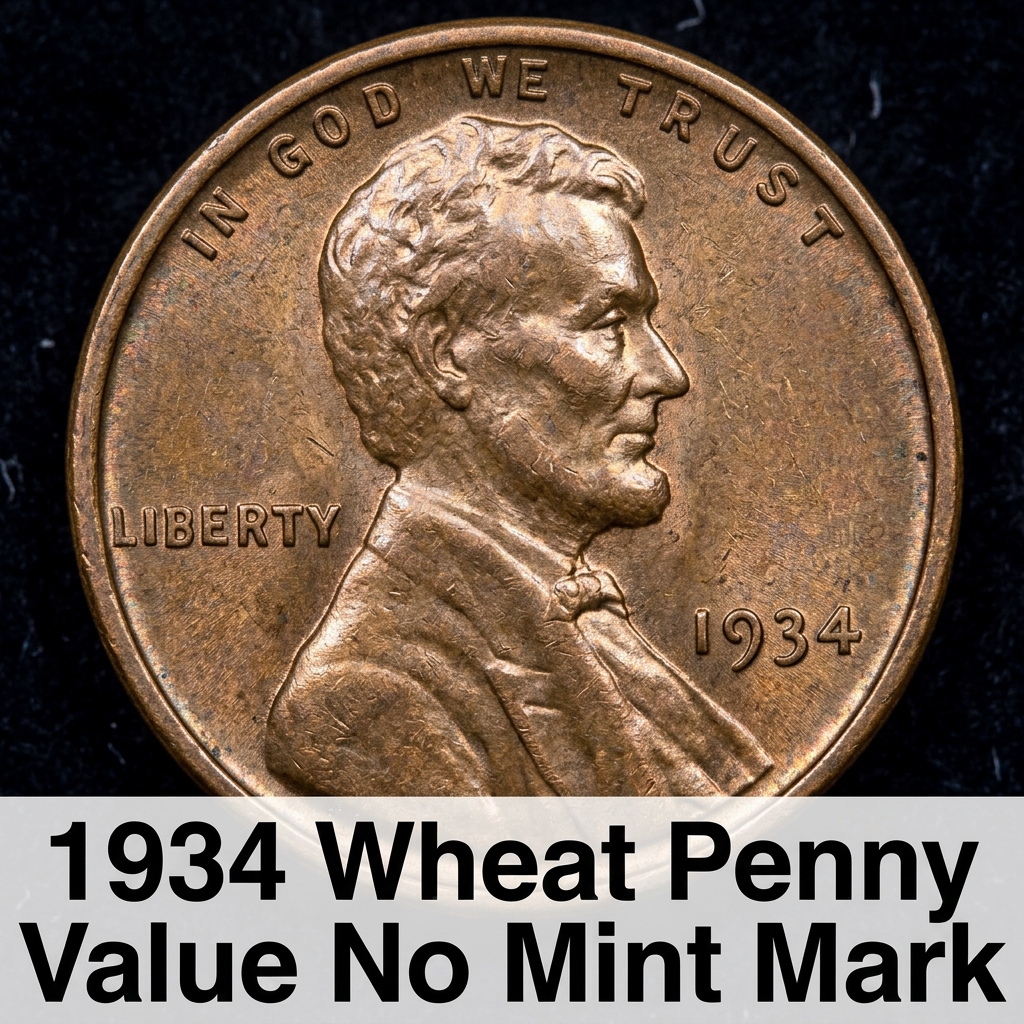
If you’ve got a 1934 Wheat Penny with no mint mark sitting in a jar or old coin collection, you’re holding a piece of American history — and it could be worth anywhere from $0.10 in heavily worn condition to over $100 or more in pristine mint state.
What Is the 1934 Wheat Penny With No Mint Mark?
The 1934 Wheat Penny with no mint mark was struck at the Philadelphia Mint, which was the standard practice at the time — Philadelphia didn’t add a mint mark to its coins. That year, the Philadelphia Mint produced over 219 million Lincoln cents, making this a fairly common coin in circulated grades. But don’t let that discourage you. Condition is everything in coin collecting, and even a common date like this one can command serious money if it’s been well preserved.
If you’ve recently found one of these coins and want to figure out exactly what you have, a coin identification app can help you quickly identify key details like mint mark location, coin type, and approximate grade — all from your smartphone. Tools like CoinKnow make this process simple and accessible, even if you’ve never collected coins before.
How Much Is the 1934 Wheat Penny Worth Today?
The value of a 1934 Wheat Penny (no mint mark) depends almost entirely on its condition, or “grade.” Coins that have been jingling around in pockets or drawers for decades will show heavy wear on Lincoln’s portrait and the wheat stalks on the reverse. These lower-grade coins are worth a few cents to about a dollar. But coins that were saved early and never circulated — especially those with strong red luster — can be worth surprisingly impressive amounts.
Here’s a general breakdown of current market values:
| Grade | Description | Estimated Value |
|---|---|---|
| Good (G-4) | Heavy wear, major details visible | $0.10 – $0.25 |
| Fine (F-12) | Moderate wear, clear lettering | $0.50 – $1.00 |
| Extremely Fine (EF-40) | Light wear on high points only | $3 – $6 |
| Uncirculated (MS-63) | No wear, some contact marks | $15 – $30 |
| Gem Uncirculated (MS-65 RD) | Full red luster, exceptional strike | $75 – $150+ |
For up-to-date pricing across all grades, you can check the 1934 Wheat Penny MS-RD price data which tracks recent auction results and dealer prices in real time.
Factors That Affect the 1934 No Mint Mark Penny Value
Beyond basic grade, there are a few specific things that can bump up — or drag down — the value of your 1934 Wheat Penny.
Color designation is one of the biggest. Copper coins like the Lincoln cent are graded not just by wear, but by color: Red (RD), Red-Brown (RB), or Brown (BN). A fully red coin with original mint luster is worth significantly more than a brown example in the same technical grade.
Strike quality also matters. Some 1934 Philadelphia cents came off the dies with soft, mushy details due to worn dies or high production pressure. A sharply struck coin with bold wheat stalks and clear hair detail on Lincoln is more desirable to collectors.
Surface preservation is another factor. Coins with heavy bag marks, scratches, or cleaning are worth far less — sometimes a fraction of the “book value.” Never clean an old coin; it almost always destroys its numismatic value permanently.
Where to Sell or Get More Information on Your 1934 Wheat Penny
Once you know your coin’s grade and approximate value, you have a few solid options. Online marketplaces like eBay are great for seeing what similar coins have actually sold for — just look at “completed listings” to get real transaction prices, not just asking prices. Coin shows and local coin dealers are also great venues, especially if you have higher-grade examples worth professional grading from PCGS or NGC.
For a comprehensive overview that covers all grades and varieties in one place, the full 1934 Wheat Penny value guide is a helpful resource that breaks down pricing by condition, color, and strike quality. And if you’re still unsure what grade your coin might be, CoinKnow offers an easy-to-use grading reference that helps everyday collectors understand exactly what they have before they sell.
Is the 1934 Wheat Penny Rare?
In circulated grades, no — the 1934 Philadelphia cent is not rare. With over 219 million produced, these coins turn up regularly in old collections, estate sales, and even pocket change in decades past. However, high-grade Mint State examples with full red color are genuinely scarce. Population reports from PCGS and NGC show that very few examples exist in grades above MS-66 RD, making those coins legitimately rare and desirable among advanced Lincoln cent collectors.
Frequently Asked Questions
Q: How do I know if my 1934 penny is from Philadelphia and not another mint?
A: If your 1934 Lincoln cent has no mint mark — meaning no small letter below the date — it was made in Philadelphia. A “D” below the date means Denver, and an “S” means San Francisco. The no mint mark version is the most commonly found variety.
Q: Can I tell my coin’s value from a photo?
A: You can get a rough estimate using apps like CoinKnow, which use image recognition and grade estimation tools to give you a ballpark value. For higher-value coins, professional grading by PCGS or NGC is always the most reliable way to confirm a coin’s grade and unlock its full market value.
Q: Should I clean my 1934 Wheat Penny before selling it?
A: Absolutely not. Cleaning a coin — even gently — removes the original surface and drastically reduces its collector value. Numismatists can spot a cleaned coin immediately, and cleaned coins typically sell for far less than their original, uncleaned counterparts. Leave your coin exactly as you found it.