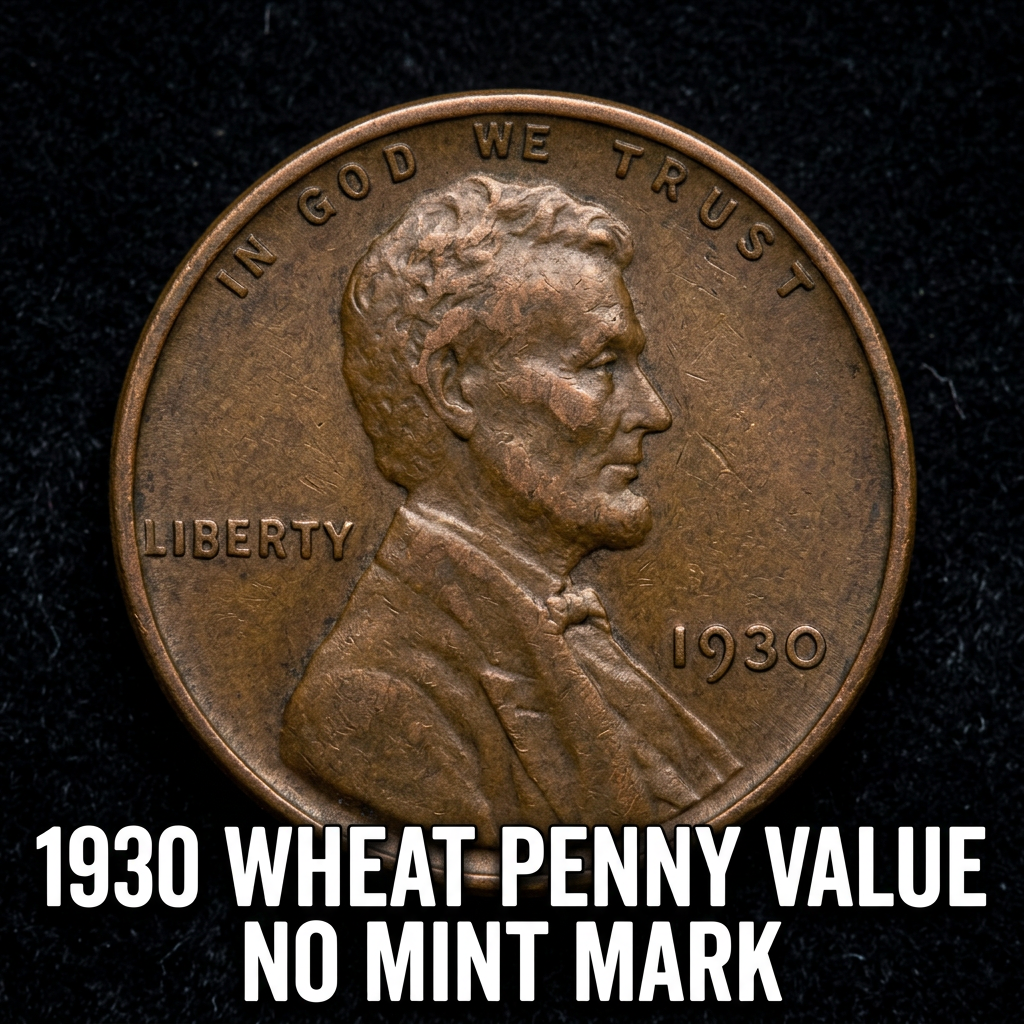
The 1930 Wheat Penny with no mint mark is worth anywhere from $0.15 in heavily worn condition to over $75 or more in pristine uncirculated grades. Most examples found in old coin jars or inherited collections fall somewhere in the middle, making this a surprisingly valuable little coin for everyday finders.
How to Identify the 1930 No Mint Mark Wheat Penny
If you’ve got a Lincoln Wheat Penny dated 1930 and you don’t see a small letter beneath the date, you’re holding a coin struck at the Philadelphia Mint. Philadelphia was the main U.S. Mint facility and did not use a mint mark on cents during this era. That means the absence of a “D” (Denver) or “S” (San Francisco) is itself a clue to its origin.
Flip the coin over and look for the two stalks of wheat framing the words “ONE CENT.” That’s the classic Wheat Penny reverse design, used on Lincoln cents from 1909 to 1958. The obverse shows a portrait of Abraham Lincoln, with “LIBERTY” to the left and the date to the right.
If you’re unsure about what you’re looking at, a reliable coin identification app can help you confirm the date, mint mark, and series in seconds — great for beginners and experienced collectors alike.
1930 Wheat Penny Value by Grade
Coin value is all about condition. The better the coin looks, the more it’s worth — simple as that. Here’s a general breakdown of what a 1930 Philadelphia Wheat Penny is worth at different grades:
| Grade | Description | Estimated Value |
|---|---|---|
| Good (G-4) | Heavily worn, outline visible | $0.15 – $0.35 |
| Fine (F-12) | Moderate wear, some detail | $0.50 – $1.00 |
| Extremely Fine (EF-40) | Light wear on high points | $3 – $6 |
| Uncirculated (MS-63) | No wear, minor marks | $20 – $35 |
| Gem Uncirculated (MS-65+) | Sharp strike, full luster | $60 – $100+ |
For the most current market prices broken down by specific grade, you can check out the detailed 1930 Wheat Penny MS Red pricing data to see exactly what certified examples are trading for right now.
What Makes a 1930 Wheat Penny More Valuable
Not all 1930 cents are worth the same even in identical grades. There are a few key factors that push value higher:
Color designation plays a huge role in uncirculated coins. Copper cents are graded as Red (RD), Red-Brown (RB), or Brown (BN). A fully red gem example — meaning it retains nearly all of its original mint luster and copper color — can be worth two to three times more than a brown example in the same numeric grade.
Strike quality matters too. Some coins from this era show weak strikes where details like Lincoln’s hair lines or the wheat stalks appear flat. A sharply struck coin stands out and commands a premium.
Eye appeal is the catch-all factor. Coins with attractive, original surfaces, no cleaning, and no environmental damage always sell better. If your coin looks like it was once cleaned with a metal polish or has green spots (verdigris), expect a lower price.
The 1930 Philadelphia Wheat Penny had a mintage of over 157 million coins — not a rare date by any stretch — but clean, original high-grade examples are genuinely hard to find, which is why top-grade specimens still attract serious collector attention.
How to Use Apps and Tools to Find Your Coin’s Value
Gone are the days of needing a price guide book or a trip to the coin shop just to get a ballpark figure. Today, tools like CoinKnow make it easy to look up coin values from your phone. Just enter the coin’s year, mint mark, and a rough grade, and CoinKnow gives you current retail and auction-based values instantly.
For a thorough breakdown of what your specific 1930 no mint mark penny might be worth across all grades and color designations, the 1930 penny value guide at CoinValueApp is a solid resource worth bookmarking.
Whether you’re just curious or thinking about selling, knowing the grade is the most important step. If you’re not confident grading on your own, CoinKnow also provides helpful comparison images to match your coin’s condition against established standards.
—
FAQ
Q: Is a 1930 Wheat Penny with no mint mark rare?
A: Not particularly. Over 157 million were struck at the Philadelphia Mint in 1930. It’s a common date in circulated grades, but original uncirculated examples with full red color are genuinely scarce and worth significantly more.
Q: Should I clean my 1930 Wheat Penny before selling it?
A: No — never clean a coin. Cleaning removes the natural surface patina and actually lowers the value in the eyes of collectors and dealers. An original, even heavily worn coin is always preferred over a polished one.
Q: Where is the best place to sell a 1930 no mint mark Wheat Penny?
A: For common circulated examples, eBay or local coin shops are fine options. For higher-grade or full-red uncirculated coins, consider having it certified by PCGS or NGC first, then selling through a coin auction. Certified coins almost always bring stronger prices.