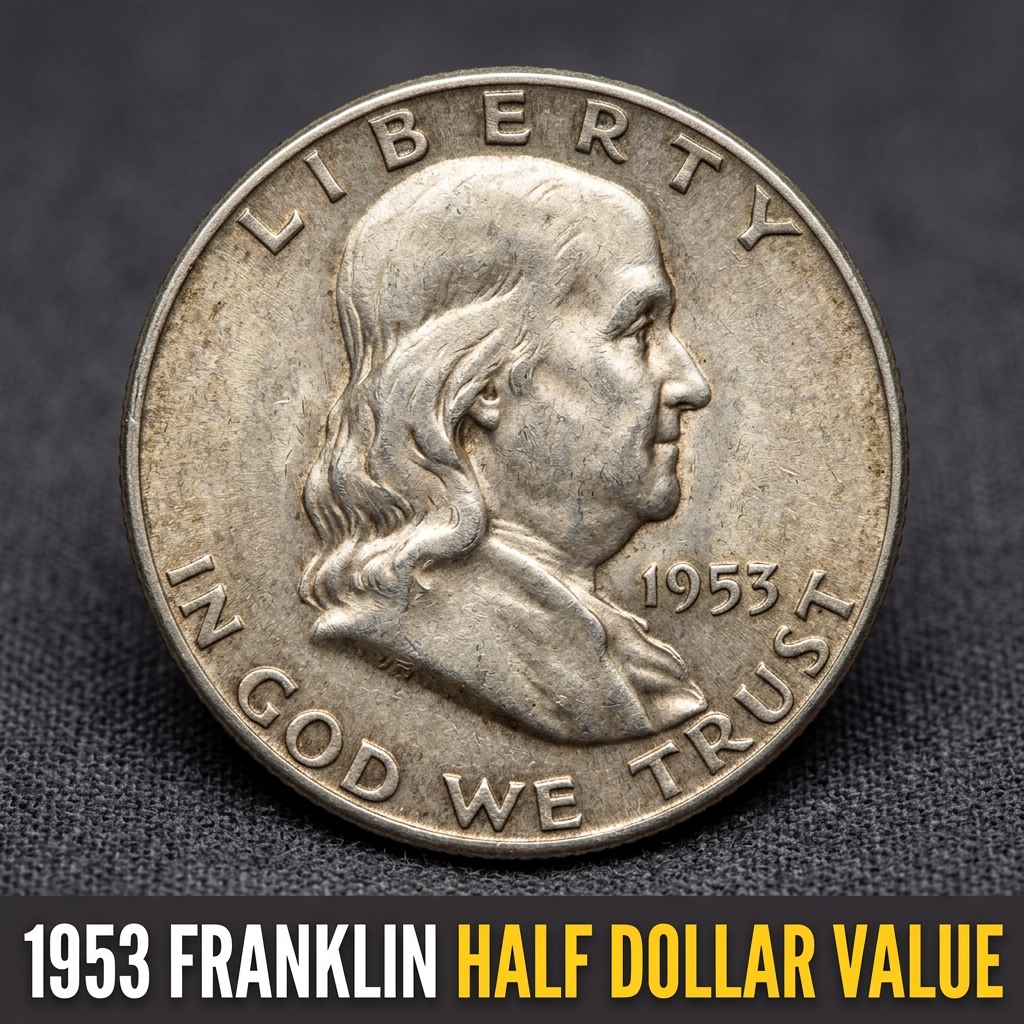
The 1953 Franklin Half Dollar is worth anywhere from $10 in heavily worn condition to over $500 or more in pristine mint state, making it a genuinely exciting find for anyone sorting through old coin jars or estate collections. Whether you stumbled across one in a drawer or inherited a small collection, you’ve come to the right place to learn exactly what it’s worth.
What Makes the 1953 Franklin Half Dollar Special
The Franklin Half Dollar series ran from 1948 to 1963, and the 1953 issue is one of the more popular dates among collectors. Designed by John R. Sinnock, the coin features Benjamin Franklin on the obverse and the Liberty Bell on the reverse — a classic combination that’s instantly recognizable. These coins are 90% silver, which alone gives them a baseline “melt value” regardless of condition. As of today, with silver trading around $28–$30 per ounce, even a worn 1953 Franklin Half Dollar is worth roughly $10–$11 just for its silver content. If you’re not sure whether your coin is genuine or want to quickly identify it, a coin identification app can save you a lot of time and guesswork right from your phone.
1953 Franklin Half Dollar Value by Mint Mark
Three different mints struck Franklin Half Dollars in 1953, and the mint mark makes a big difference in value. The Philadelphia Mint produced coins with no mint mark, the Denver Mint used a “D,” and the San Francisco Mint used an “S.” Here’s a quick breakdown:
| Coin | Good (G-4) | Fine (F-12) | AU-55 | MS-63 | MS-65 |
|---|---|---|---|---|---|
| 1953 (No Mint Mark) | $10 | $12 | $18 | $40 | $175+ |
| 1953-D | $10 | $12 | $18 | $45 | $200+ |
| 1953-S | $10 | $12 | $20 | $55 | $500+ |
The 1953-S is the standout here. San Francisco struck far fewer coins that year, and high-grade examples can fetch impressive sums at auction. For the most current 1953 Franklin Half Dollar price data across mint state grades, it’s worth checking a live pricing resource since silver fluctuations and collector demand can shift values month to month.
How Coin Condition Affects Your 1953 Franklin Half Dollar’s Worth
Condition — called “grade” in the coin world — is probably the single biggest factor in determining what your coin is worth beyond silver melt value. A coin that looks shiny and well-defined is worth far more than one that’s scratched, dull, or heavily worn. Collectors use a scale from Poor (P-1) all the way up to Mint State (MS-70). For everyday folks, here’s the simple rule: if Franklin’s hair lines above his ear are sharp and clear, your coin is likely in Fine or better condition. If the details are smooth and worn flat, it grades Good or lower. One important tip — never clean your coin. A cleaned coin loses significant collector value, even if it looks shinier to you. CoinKnow is a great tool to help you understand grading without needing a professional right away. The app walks you through visual grading guides so you can get a realistic sense of where your coin falls before taking it to a dealer.
Full Bell Lines and Why They Matter
Here’s something most casual collectors don’t know: on Franklin Half Dollars, there’s a special designation called “Full Bell Lines” (FBL). This refers to the horizontal lines at the bottom of the Liberty Bell on the reverse being fully struck and uninterrupted. Coins with Full Bell Lines are significantly rarer and more desirable. An MS-63 Franklin Half Dollar might sell for $40, but an MS-63 FBL example can jump to $100 or more. At MS-65, Full Bell Lines can push values into the hundreds or even thousands of dollars for exceptional specimens. It’s one of those details that separates a common circulated coin from a genuine collector treasure. If you want a thorough breakdown of 1953 Franklin Half Dollar value including Full Bell Lines premiums, dedicated coin value resources go deep on exactly how much FBL designation adds. CoinKnow also flags FBL status when you scan your coin, making it easier than ever to spot a potential premium piece in your collection.
Where to Sell Your 1953 Franklin Half Dollar
Once you know what you have, selling is the next step. Your best options include local coin dealers, coin shows, eBay, and auction houses like Heritage Auctions or Stack’s Bowers for high-grade pieces. For common circulated examples worth $10–$20, a local dealer or silver buyer is quick and easy. For nicer coins in MS-63 or above — especially with Full Bell Lines — it pays to get a professional grading from PCGS or NGC first. A certified grade adds credibility and often boosts your selling price considerably. CoinKnow can help you decide whether certification is worth the cost based on your coin’s estimated grade and current market demand, putting expert-level guidance right in your pocket.
—
FAQ
Q: How much silver is in a 1953 Franklin Half Dollar?
A: The 1953 Franklin Half Dollar contains 0.3617 troy ounces of pure silver. At current silver prices, the melt value alone is approximately $10–$11, which sets the floor for what any circulated example is worth.
Q: What does the “D” or “S” on my 1953 Franklin Half Dollar mean?
A: These letters are mint marks. A “D” means the coin was made at the Denver Mint, and an “S” means San Francisco. Coins with no letter were made in Philadelphia. The 1953-S is the most valuable of the three in high grades.
Q: Is my 1953 Franklin Half Dollar worth getting professionally graded?
A: It depends on the condition. If your coin looks uncirculated — no wear on Franklin’s cheek or the high points of the Liberty Bell — professional grading from PCGS or NGC could be worthwhile, especially if it might qualify for Full Bell Lines. For circulated coins, grading fees generally aren’t worth it.