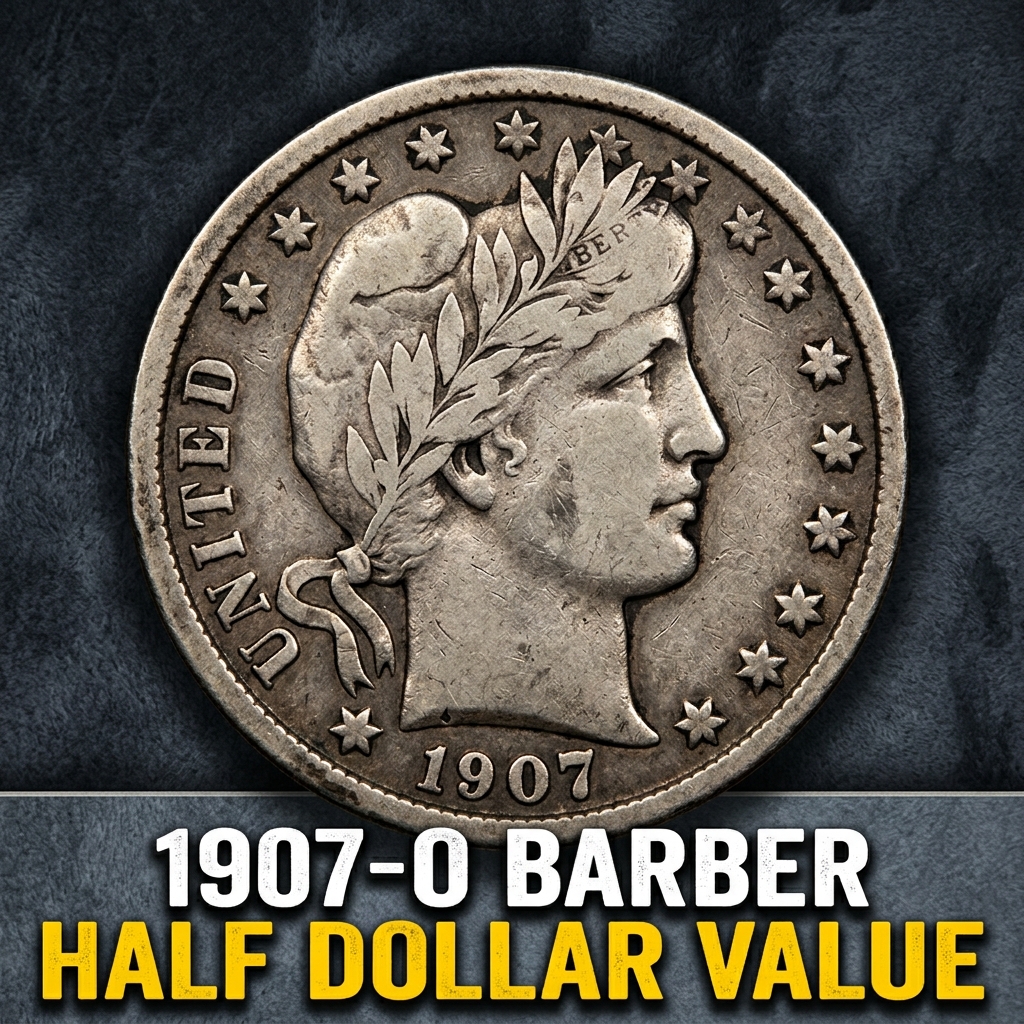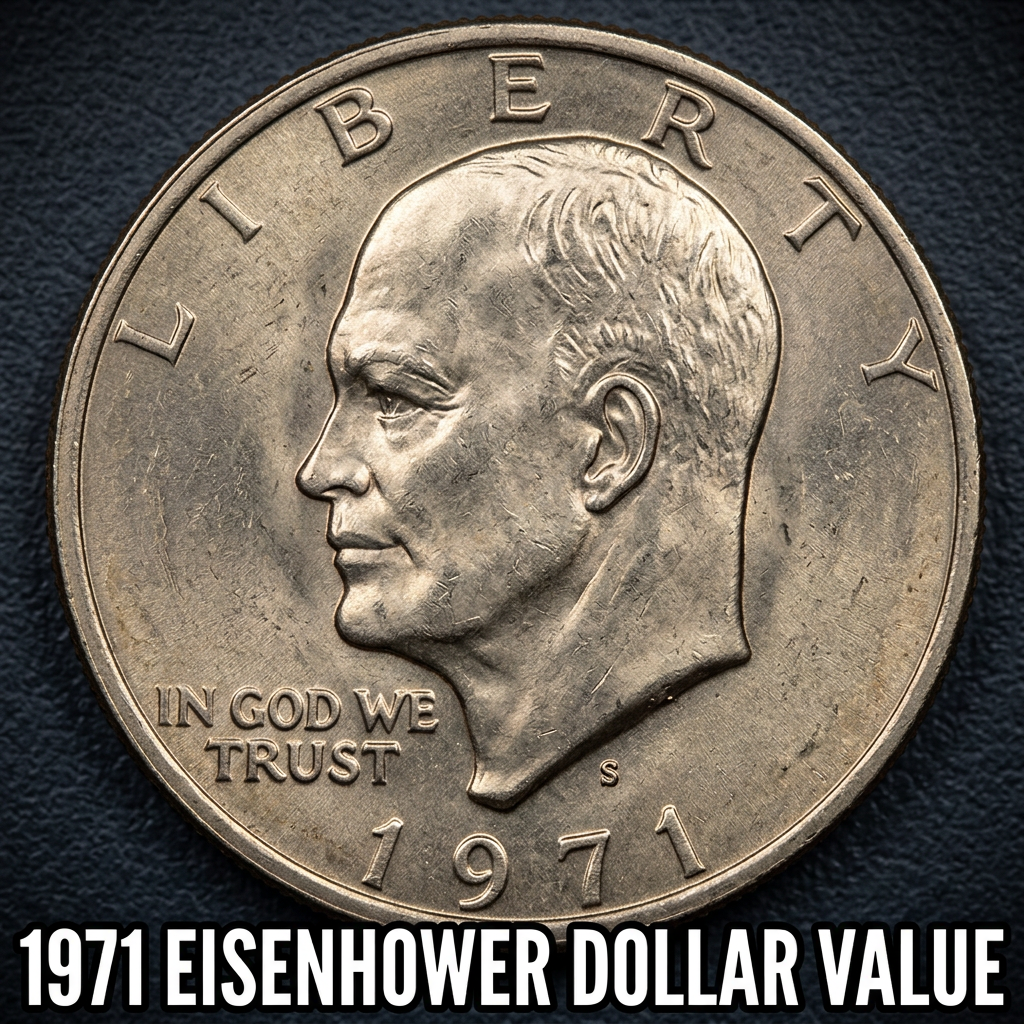
The 1971 Eisenhower Dollar is worth anywhere from $1 to $2 in circulated condition, but well-preserved uncirculated examples can fetch $10 to $50 or more — and certain mint varieties are worth significantly higher. If you pulled one of these large coins out of a drawer or inherited it from a relative, you’re in the right place to find out exactly what you’ve got.
What Is the 1971 Eisenhower Dollar?
The 1971 Eisenhower Dollar was the first coin in this series, introduced to honor President Dwight D. Eisenhower, who passed away in 1969. It also commemorates the Apollo 11 moon landing, which is why the reverse features an eagle landing on the moon. These large dollar coins were minted at two facilities — Philadelphia (no mint mark) and Denver (D mint mark) — in a copper-nickel clad composition for general circulation. A special 40% silver version was also struck at the San Francisco Mint (S mint mark) for collectors.
If you want to figure out which version you have before diving into values, a coin identification app can help you quickly identify the mint mark and variety without needing to be an expert. Tools like CoinKnow make this process incredibly simple, even for total beginners. Just snap a photo and you’ll get instant details about your coin’s type and potential value.
1971 Eisenhower Dollar Value by Mint Mark and Grade
The value of a 1971 Eisenhower Dollar depends heavily on which mint produced it and what condition it’s in. Here’s a quick breakdown:
| Variety | Circulated | Uncirculated (MS63) | Gem (MS65+) |
|---|---|---|---|
| 1971 (Philadelphia) | $1 – $2 | $5 – $15 | $30 – $75 |
| 1971-D (Denver) | $1 – $2 | $5 – $12 | $25 – $60 |
| 1971-S Silver (Uncirculated) | N/A | $15 – $25 | $30 – $100+ |
| 1971-S Silver Proof | N/A | $15 – $20 | $20 – $50 |
For more detailed 1971 Eisenhower Dollar price data by grade and mint mark, certified auction records are a great benchmark to check before buying or selling.
Does Your 1971 Dollar Contain Silver?
This is probably the most common question people ask, and the answer depends on the mint mark. The regular 1971 and 1971-D coins minted for circulation are copper-nickel clad — they contain no silver at all, despite looking like silver coins. Their metallic sheen comes from the outer copper-nickel layers.
However, the 1971-S coins struck at the San Francisco Mint were made with 40% silver content. These were sold directly to collectors in blue envelope sets (uncirculated) or brown box sets (proof). If your coin has an “S” mint mark on the obverse — just above the date and to the left of Eisenhower’s neck — and it came in an original government packaging, there’s a solid chance it’s the silver version. A magnet test won’t help here since neither version is magnetic, but a professional can weigh or test it. You can also explore the full breakdown of 1971 silver dollar value and composition details to better understand what you’re holding.
What Makes a 1971 Eisenhower Dollar More Valuable?
Condition is king. A coin that looks like it was just minted — sharp details, no wear on Eisenhower’s cheek or hair, bright luster — is worth many times more than one that’s been jingling around in someone’s pocket for decades. Grading agencies like PCGS and NGC assign numerical grades from 1 to 70, and the difference between an MS63 and an MS65 can be hundreds of dollars on key varieties.
Eye appeal also matters to collectors. Coins with natural toning, strong strikes, and no contact marks command premiums. Some collector-grade 1971 Eisenhowers have sold for $200 or more at major auctions when they come in extraordinarily high grades like MS67 or MS68. These are rare, but they exist — and that’s why it’s worth taking a closer look before spending or dismissing a coin you find. Apps like CoinKnow can even walk you through condition grading so you have a realistic idea of what grade a dealer or grading service might assign your coin.
How to Sell or Get Your 1971 Eisenhower Dollar Appraised
If you think you might have a valuable specimen, don’t rush to sell it. Start by getting a second opinion. Local coin shops are a good first stop — most dealers will give you a free verbal appraisal. For coins in particularly nice condition, consider submitting to PCGS or NGC for professional grading, which typically costs $20 to $40 per coin and adds significant credibility when selling.
Online marketplaces like eBay and Heritage Auctions show real-world sold prices, which are more reliable than asking prices. And if you’re just getting started and want to understand the hobby better, CoinKnow is a fantastic resource for beginners — it helps you identify coins, understand grades, and track current market values all in one place.
—
FAQ
Q: Is a 1971 Eisenhower Dollar made of silver?
A: Most are not. The 1971 and 1971-D coins are copper-nickel clad. Only the 1971-S versions sold in collector sets contain 40% silver.
Q: How can I tell if my 1971 dollar is worth more than face value?
A: Check the mint mark first — an “S” mint mark means it might be silver. Then assess the condition. Coins with no wear, strong luster, and sharp details are worth a premium over circulated examples.
Q: Where is the mint mark on a 1971 Eisenhower Dollar?
A: The mint mark is located on the obverse (heads side), just above the date near Eisenhower’s neck. Philadelphia coins have no mint mark, Denver coins show a “D,” and San Francisco coins show an “S.”