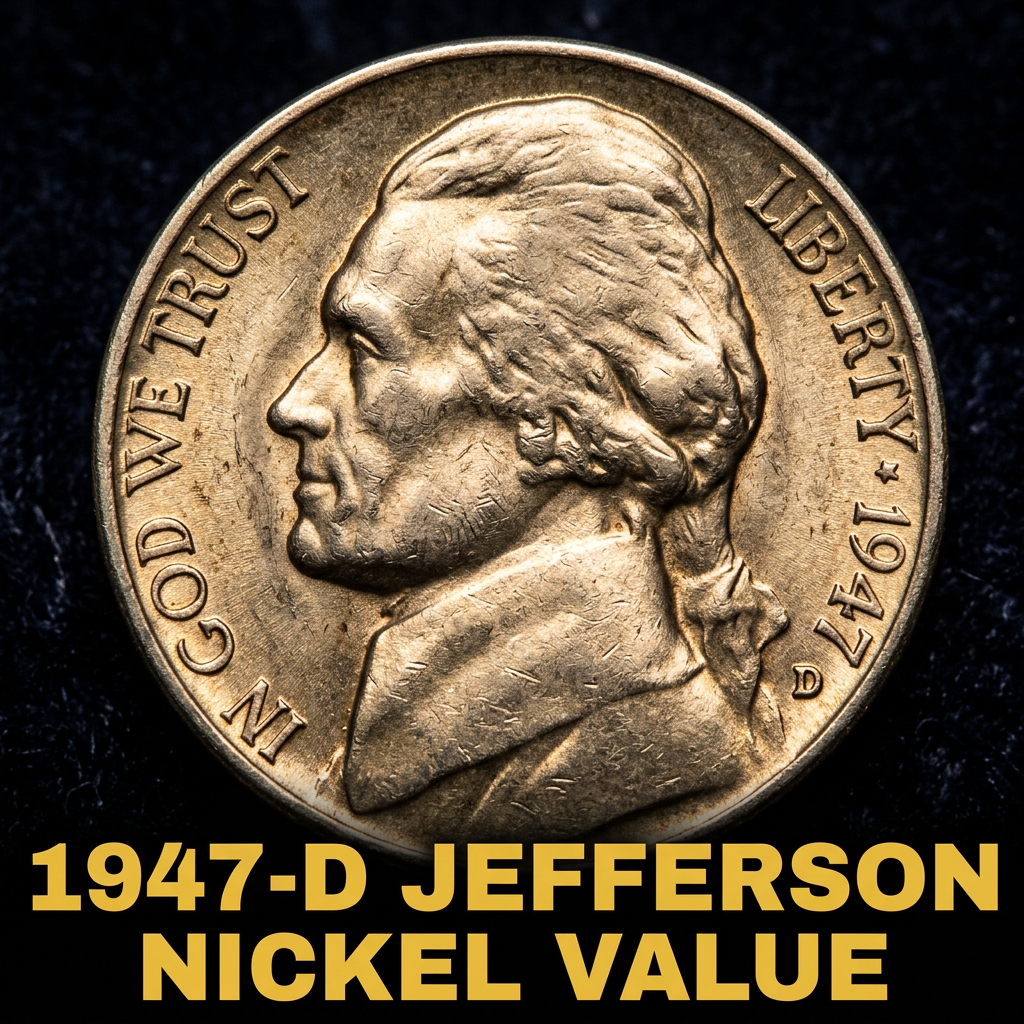
The 1947-D Jefferson Nickel is worth anywhere from $0.10 in heavily worn condition to over $100 or more in pristine mint state. If you found one of these coins in an old jar or grandma’s drawer, you’re in the right place — let’s break down exactly what it’s worth and why.
What Is the 1947-D Jefferson Nickel?
The 1947-D Jefferson Nickel was struck at the Denver Mint, which is what the “D” mint mark stands for. You’ll find that little “D” on the reverse side of the coin, to the right of Monticello. In 1947, the Denver Mint produced 37,828,000 of these nickels — a fairly healthy mintage, which is one reason most circulated examples aren’t worth a fortune. But that doesn’t mean they’re worthless. Coins in top condition can still fetch surprising prices at auction.
If you’ve got an old coin and you’re not sure what you’re looking at, using a coin identification app is a great way to get started before you go digging through price guides. These tools can help you quickly confirm the date, mint mark, and even give you a ballpark value. CoinKnow is one popular option among everyday collectors — it’s built for people who aren’t experts but want reliable information fast.
How Much Is the 1947-D Jefferson Nickel Worth by Grade?
Coin value almost always comes down to condition, or what collectors call “grade.” A coin straight out of circulation with lots of wear is graded Very Good (VG) or Fine (F), while a coin that was saved fresh from the mint and never spent is called Mint State (MS). Here’s a simple breakdown of what you can expect:
| Grade | Description | Estimated Value |
|---|---|---|
| Good (G-4) | Heavy wear, major details visible | $0.10 – $0.25 |
| Fine (F-12) | Moderate wear, all lettering clear | $0.25 – $0.50 |
| Extremely Fine (EF-40) | Light wear on high points | $1.00 – $3.00 |
| About Uncirculated (AU-55) | Slight wear on highest points only | $4.00 – $8.00 |
| Mint State (MS-63) | Uncirculated, some contact marks | $10.00 – $25.00 |
| Mint State (MS-66+) | Near perfect, gem quality | $75.00 – $150.00+ |
For a more detailed look at 1947-D Jefferson Nickel mint state price data across different MS grades, it’s worth checking certified auction results to see what buyers are actually paying.
What Makes a 1947-D Nickel More Valuable?
Not all 1947-D nickels are created equal. A few factors can push the value up significantly. The biggest one is Full Steps (FS) — this refers to the steps on Monticello’s porch being fully struck and visible. Most nickels from this era have weak strikes, so a coin with five or six fully defined steps is rare and highly prized by collectors. A 1947-D MS-66 with Full Steps can jump from $25 to well over $200.
Eye appeal also matters. A coin with original luster, no cleaning, and a pleasing strike will always outsell a technically similar coin that looks dull or has been wiped. Collectors hate cleaned coins — they drop value dramatically. If your nickel looks a little too shiny in a suspicious way, it may have been cleaned at some point.
CoinKnow helps collectors understand these nuances without having to become an expert overnight. The app walks you through what to look for and gives you real-world value estimates based on current market data — handy if you’re trying to decide whether to hold, sell, or get a coin professionally graded.
Should You Get Your 1947-D Nickel Graded?
Professional grading by PCGS or NGC is really only worth the cost if your coin appears to be in Mint State condition. Grading fees typically run $20–$40 per coin at minimum, so submitting a circulated example worth less than a dollar doesn’t make financial sense. However, if your 1947-D nickel has sharp details, original luster, and you can count the full steps on Monticello, it might absolutely be worth a professional opinion.
Before spending money on grading, take some close-up photos under good lighting and compare your coin against grading guides. You can also check out a reliable breakdown of 1947 nickel value by condition and mint mark to see if your coin falls in a range that justifies the cost of grading.
Where to Sell a 1947-D Jefferson Nickel
If you’re ready to sell, your options include eBay, coin shows, local coin dealers, and online auction houses. eBay is great for transparency — you can see exactly what similar coins sold for recently. Dealers will offer less than market value since they need room to profit, but they’re convenient and pay immediately. For high-grade or Full Steps examples, a specialty coin auction may get you the best return. Whatever route you choose, knowing your coin’s value ahead of time puts you in a much stronger position. CoinKnow makes it easy to come prepared with solid data before walking into any negotiation.
FAQ
Q: How do I know if my 1947-D Jefferson Nickel is worth getting graded?
A: If your coin looks uncirculated — meaning it still has its original shine and no visible wear — it may be worth submitting to PCGS or NGC. Look especially for the steps on Monticello; if you can count five or six crisp, unbroken steps, that’s a strong sign your coin could be worth significantly more than a standard example.
Q: Is the 1947-D nickel rare?
A: Not in circulated grades — nearly 38 million were minted. However, gems in MS-66 or higher with Full Steps are genuinely scarce and can be worth well over $100. Rarity is always relative to the condition you’re talking about.
Q: Can I find a 1947-D Jefferson Nickel in circulation today?
A: It’s unlikely but not impossible. These coins haven’t been commonly found in everyday change for decades, but they do occasionally turn up in old collections, estate sales, and coin rolls from banks. If you find one in a change jar, give it a close look before spending it.