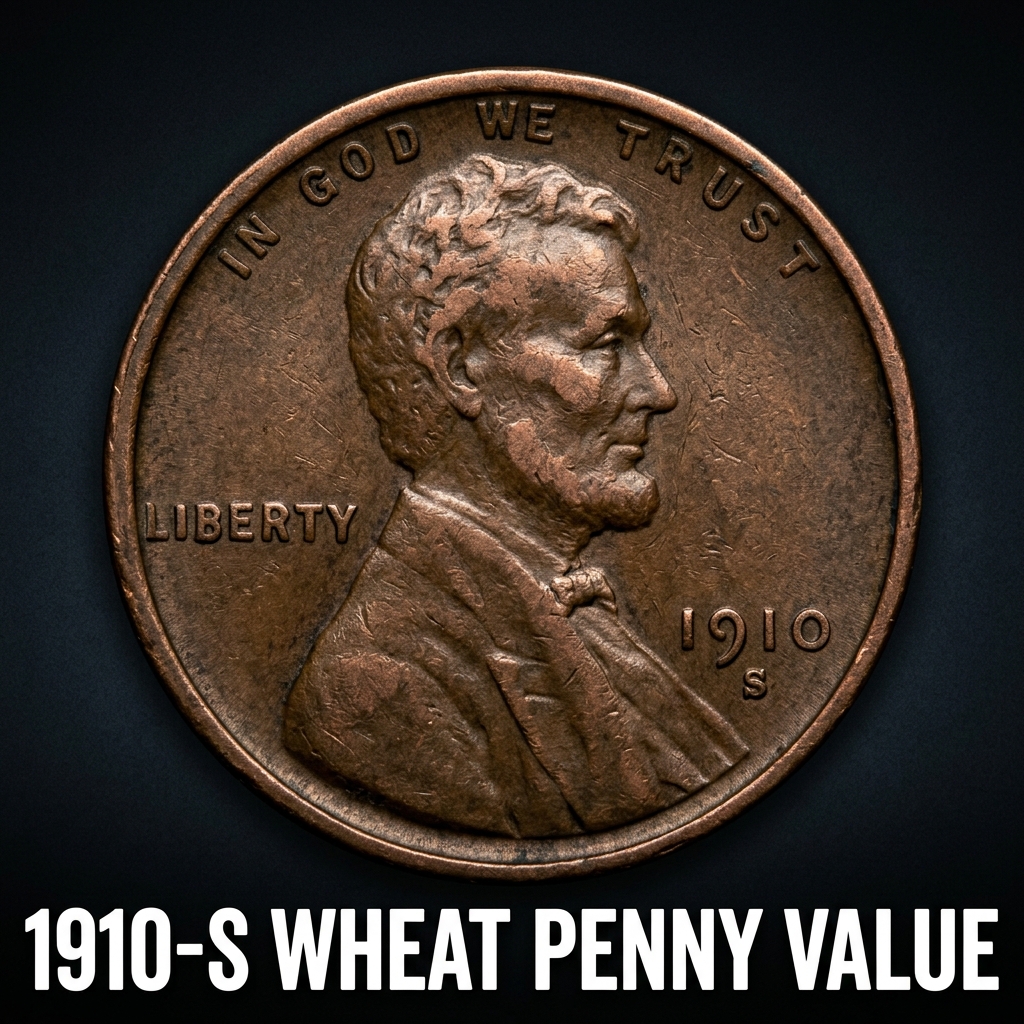
The 1910-S Lincoln Wheat Penny is worth anywhere from $3 in heavily worn condition to over $200 or more in well-preserved mint state grades — and certified gem examples can push even higher. If you found one of these in an old coin jar or inherited collection, you may be sitting on a real find.
What Makes the 1910-S Wheat Penny Special
The 1910-S Lincoln Wheat Penny was struck at the San Francisco Mint and carries the small “S” mintmark beneath the date on the obverse. It was only the second year of the Lincoln cent series, which began in 1909, so these early coins already carry strong collector interest. The San Francisco Mint produced about 6 million of these cents that year — a relatively modest mintage compared to the Philadelphia issues of the same era. That lower production number is a big reason why the 1910-S consistently commands a premium over its Philadelphia counterpart.
If you’re not sure whether your coin has a mintmark or you’re having trouble identifying it, a coin identification app can help you quickly confirm what you have before you try to sell or grade it. Apps like CoinKnow make it especially easy — just snap a photo of your coin and get an instant read on what it might be.
1910-S Wheat Penny Value by Grade
Coin value depends heavily on condition, which collectors measure using a grading scale from 1 (barely identifiable) to 70 (perfect). Here’s a general look at what a 1910-S Lincoln cent is worth across different grades:
| Grade | Description | Estimated Value |
|---|---|---|
| G-4 (Good) | Heavily worn, design visible | $3 – $6 |
| VG-8 (Very Good) | Moderate wear, details clear | $8 – $15 |
| F-12 (Fine) | Even wear, all lettering visible | $18 – $30 |
| EF-40 (Extremely Fine) | Light wear on high points | $55 – $90 |
| MS-63 (Mint State) | Uncirculated, some marks | $150 – $250 |
| MS-65 RD (Gem) | Full red luster, nearly perfect | $400+ |
For the most current auction results and dealer prices, you can check real-time 1910-S Wheat Penny price data in MS-RD grades to see what the market is actually paying right now.
How to Tell If Your 1910-S Is Worth More
Condition is everything in coin collecting. A 1910-S cent that has been cleaned, polished, or improperly stored will lose significant value — even if the details look sharp to the naked eye. Collectors and dealers can spot cleaning pretty easily because it removes the natural patina and leaves an unnatural brightness or hairline scratches on the surface.
Color is another value factor for uncirculated examples. Lincoln cents are graded as Red (RD), Red-Brown (RB), or Brown (BN). Red coins, which have retained their original copper luster, are worth considerably more than brown ones. A gem red example of the 1910-S can be worth several times the value of a brown coin in the same numerical grade.
If you want a thorough breakdown of the 1910-S in all conditions, the complete 1910 penny value guide including the S mint variety is a solid resource worth bookmarking.
Where to Sell a 1910-S Wheat Penny
Once you know what you have, selling is the next step. Your best options are established coin dealers, major auction platforms like Heritage Auctions or Stack’s Bowers, or online marketplaces such as eBay where you can track recent sold listings for comparable coins. For worn circulated examples, a local coin shop is perfectly fine. For uncirculated or higher-grade pieces, professional certification from PCGS or NGC is strongly recommended — it adds credibility and can significantly boost your selling price.
CoinKnow is a great starting point if you’re new to all of this. The app helps you identify your coin, estimate its grade, and understand its approximate market value before you walk into any dealer’s shop. Being informed means you won’t leave money on the table.
Is the 1910-S a Good Coin to Collect
Absolutely. Early Lincoln Wheat cents are among the most collected series in American numismatics, and the 1910-S sits comfortably in the middle tier — not impossibly rare, but genuinely scarce enough to hold value over time. Whether you’re building a complete Lincoln cent set or simply curious about a coin you found, the 1910-S is one worth understanding and potentially keeping. CoinKnow can help you track its value over time as the market shifts.
FAQ
Q: How do I know if my penny is a 1910-S or just a 1910?
A: Look just below the date on the front of the coin. If you see a small “S” mintmark, it was made in San Francisco. No mintmark means it came from the Philadelphia Mint, which typically makes it less valuable.
Q: Does cleaning my 1910-S Wheat Penny increase its value?
A: No — cleaning almost always decreases value. Even if the coin looks shinier afterward, trained collectors and dealers can detect cleaning instantly, and cleaned coins are graded and priced much lower than original-surface examples.
Q: What is the most valuable 1910-S Wheat Penny ever sold?
A: Top-grade certified examples in MS-66 RD or better have sold for well over $1,000 at major auctions. The value climbs steeply as the grade increases, so even a modest upgrade in condition can mean a dramatic difference in price.