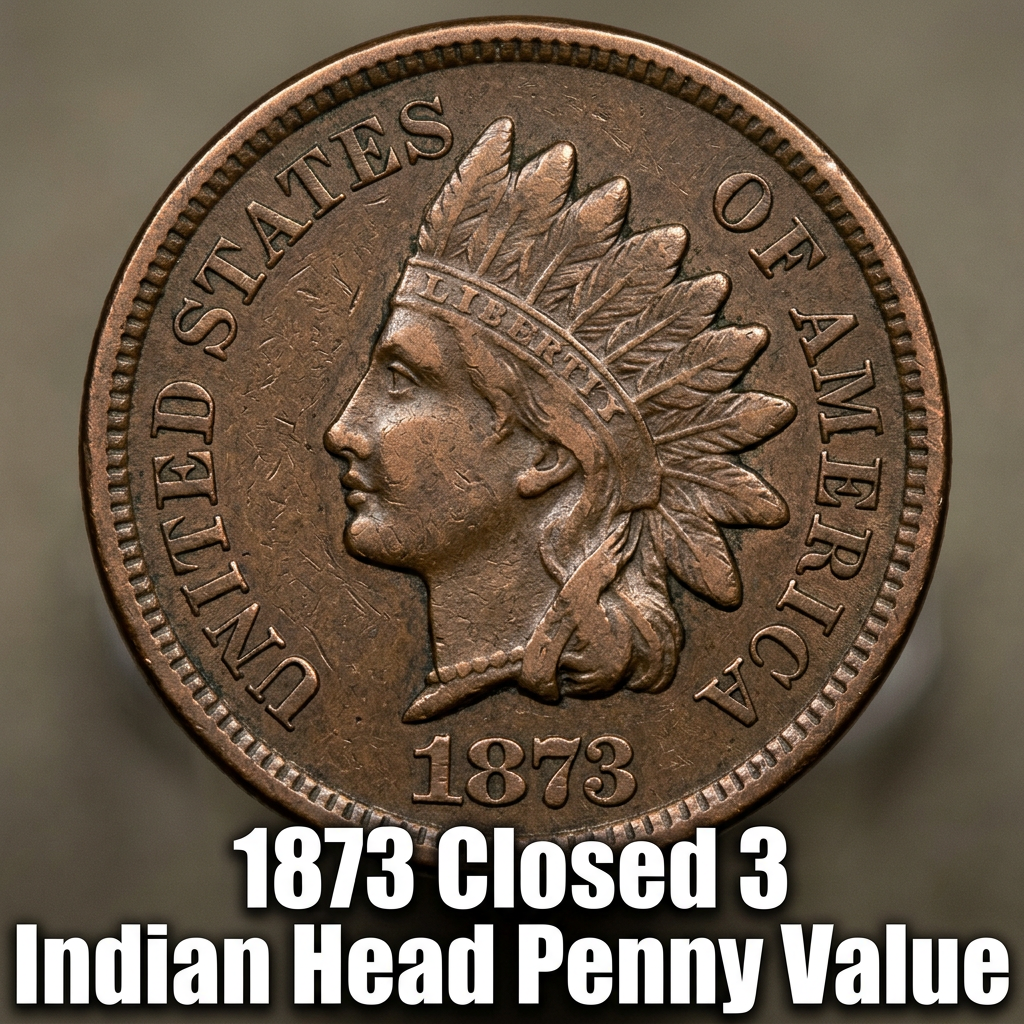
The 1873 Closed 3 Indian Head Penny is worth anywhere from $20 in heavily worn condition to over $500 or more in higher mint state grades. If you stumbled across one of these coins in an old collection or coin jar, you might be sitting on something genuinely valuable — read on to find out exactly what you have.
What Makes the 1873 Closed 3 Indian Head Penny Special
The 1873 Indian Head Penny comes in two distinct varieties: the Open 3 and the Closed 3. The Closed 3 variety was struck earlier in the year, and its distinguishing feature is the numeral “3” in the date, where the two curves of the number nearly touch or appear closed. This is not just a minor curiosity — it’s a detail that can seriously affect the coin’s value.
If you’re not sure which variety you have, a coin identification app can help you zoom in on the date and compare it against known examples. Even a basic magnifying glass can make the difference visible. The Closed 3 tends to be the more common of the two 1873 varieties, but common in numismatic terms still means it’s a 150-year-old bronze coin that most people would be thrilled to own.
The coin was produced at the Philadelphia Mint and features the classic Indian Head design by James Barton Longacre. The obverse shows Lady Liberty wearing a Native American headdress, which is a design that many collectors find both historically rich and visually appealing.
1873 Closed 3 Indian Head Penny Value by Grade
Grade is everything when it comes to old coins. A heavily circulated 1873 Closed 3 penny that looks dark and worn is worth much less than one that spent minimal time in pocket change. Here’s a general breakdown of what you can expect to pay or receive depending on condition:
| Grade | Description | Estimated Value |
|---|---|---|
| Good (G-4) | Heavy wear, major details visible | $20 – $30 |
| Very Good (VG-8) | Moderate wear, design clear | $30 – $50 |
| Fine (F-12) | Even wear, legends sharp | $55 – $80 |
| Extremely Fine (EF-40) | Light wear on high points only | $125 – $200 |
| Mint State (MS-63) | Uncirculated, some marks | $350 – $550 |
| Mint State (MS-65+) | Gem uncirculated, exceptional | $1,000+ |
For those interested in seeing certified auction prices for higher-grade examples, you can explore recent 1873 Indian Head Penny mint state price data to understand where the market currently sits.
How to Tell If Your Coin Is the Closed 3 Variety
The easiest way to distinguish the Closed 3 from the Open 3 is to look closely at the date with a magnifying glass or loupe. On the Closed 3, the top and bottom curves of the “3” nearly touch in the middle, giving it a more compact, closed appearance. On the Open 3, those same curves are more separated, like a normal printed numeral.
This might seem like a tiny difference, but variety collectors take it seriously. CoinKnow is a great tool for this kind of identification. The app lets you photograph your coin and compare it against a database of known varieties, saving you a lot of guesswork. If you’re new to coin collecting, this variety distinction is a perfect introduction to how small design details can have a real impact on value.
Many people who discover they have an 1873 penny assume it’s just an old coin. Once they realize it’s a specific, collectible variety, the conversation changes entirely.
Condition Tips and What Lowers the Value
Before you get too excited, it’s important to know what can reduce the value of your 1873 Closed 3 Indian Head Penny. Cleaning is one of the biggest value killers in the coin world. If a previous owner polished or scrubbed the coin, even with good intentions, it leaves microscopic scratches that experienced dealers and graders can spot immediately. A cleaned coin might look shiny, but it will grade significantly lower than an original-surface example.
Other factors that lower value include:
– Heavy environmental damage such as corrosion, verdigris, or pitting
– Edge nicks or rim damage from being dropped or stored poorly
– Holes drilled through the coin, which were common when old pennies were used as jewelry
If your coin is in original, untouched condition — even if it’s worn — that’s always preferable to one that’s been altered. If you’re comparing values across different Indian Head years, it’s worth reading up on related issues; for example, understanding how the 1898 Indian Head Penny is valued by grade and condition gives useful context for the series overall.
Should You Get It Graded or Sell It Raw
If your 1873 Closed 3 Indian Head Penny looks like it could be in Extra Fine condition or better, professional grading from PCGS or NGC is absolutely worth considering. Slabbed coins (coins sealed in a graded holder) generally sell for more because buyers trust the grade. The cost of grading is typically $20 to $40 per coin, so it only makes financial sense if the coin is worth at least a few hundred dollars.
CoinKnow can give you a preliminary sense of condition before you spend money on grading. Think of it as a first opinion before going to the expert. For coins in lower grades — Good through Very Fine — selling raw is often more practical since the grading fee might not be justified.
If you’re planning to sell, popular venues include eBay, coin shows, and local dealers. Make sure to photograph the coin in good lighting before listing it anywhere.
—
Frequently Asked Questions
Q: How do I know if my 1873 penny is the Closed 3 or Open 3 variety?
A: Look at the “3” in the date using a magnifying glass. If the two curves of the number nearly touch in the middle, you have the Closed 3. If there’s a clear gap between the curves, it’s the Open 3. Apps like CoinKnow can also help you compare your coin to reference images instantly.
Q: Is the 1873 Closed 3 Indian Head Penny rare?
A: It’s not considered rare in lower grades, but it becomes significantly scarcer in Mint State condition. Well-preserved examples with original red or red-brown color are genuinely hard to find and command strong prices from serious collectors.
Q: Can I clean my 1873 Closed 3 penny to make it look better before selling?
A: No — please don’t clean it. Cleaning a coin almost always reduces its numismatic value. Even gentle polishing leaves marks that graders and dealers can detect. Leave the coin in its natural state and let its honest condition speak for itself.