The 1888/7 Indian Head Penny is worth anywhere from $20 in heavily worn condition to well over $1,500 in mint state — and even higher for top-grade examples. If you’ve stumbled across one of these coins, you may be holding something far more valuable than an ordinary old cent.
—
What Makes the 1888/7 Indian Head Penny So Special
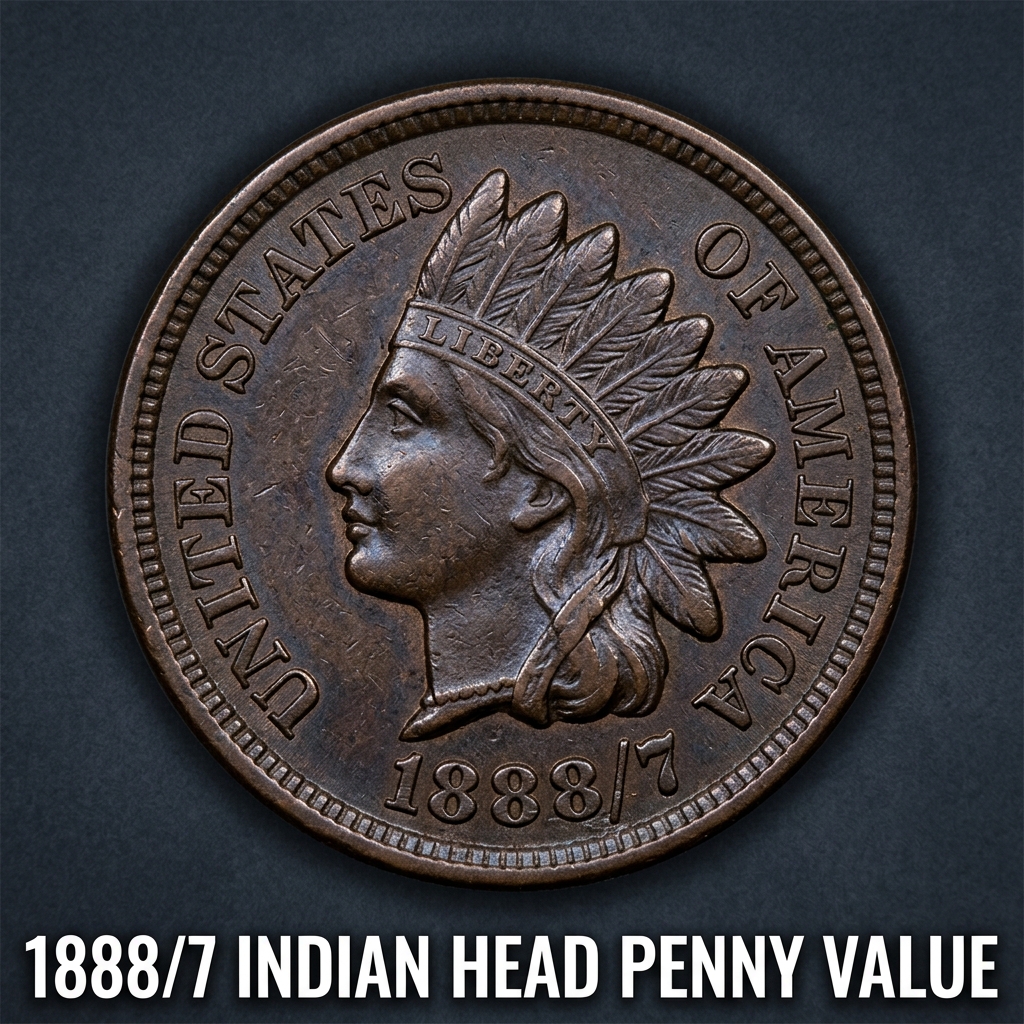
The 1888/7 Indian Head Penny is what collectors call an overdate — a coin where the die was re-engraved over a previous year’s date. In this case, an 1887 die was reworked with an 1888 date, and if you look closely under magnification, you can still see traces of the “7” beneath the final “8.” That tiny detail is what separates this coin from a standard 1888 Indian Head Penny and makes it significantly more valuable.
If you’ve found a coin like this and you’re not sure what you’re looking at, a coin identification app can be a huge help. Just snap a photo and get an instant read on what you have. For a more in-depth look at grades, mint marks, and values, CoinKnow is one of the most trusted tools available to everyday collectors — it puts professional-level coin data right in your pocket.
Overdates were fairly common in early U.S. Mint history because dies were expensive and the Mint recycled them rather than starting fresh each year. But that doesn’t make every overdate equal — the 1888/7 is particularly desirable because the underlying “7” is clearly visible and well-documented in numismatic literature.
—
How to Identify the 1888/7 Overdate
To spot the 1888/7 Indian Head Penny, you’ll need a magnifying glass or loupe — at least 5x magnification is recommended. Look at the last digit of the date. On a genuine 1888/7, you’ll notice the curve and tail of a “7” peeking through the bottom of the final “8.” This isn’t always obvious at first glance, which is why many of these coins get spent or passed over at estate sales.
Other details to check: the coin should show Lady Liberty wearing a Native American headdress on the obverse, with the word “LIBERTY” inscribed across the headband. The reverse displays a wreath with a shield at the top. These design elements were standard across all Indian Head Pennies from 1859 to 1909.
If you want to see detailed price data for the 1888 Indian Head Penny in mint red grades, that’s a great starting point for comparing your coin’s condition to certified examples. Condition — what collectors call “grade” — is the single biggest factor in determining value.
—
1888/7 Indian Head Penny Value by Grade
Here’s a general breakdown of what you can expect to pay or receive for a 1888/7 Indian Head Penny depending on its condition:
| Grade | Description | Estimated Value |
|---|---|---|
| Good (G-4) | Heavy wear, date visible | $20 – $40 |
| Very Good (VG-8) | Moderate wear, LIBERTY visible | $50 – $100 |
| Fine (F-12) | Even wear, all details clear | $100 – $200 |
| Extremely Fine (EF-40) | Light wear on high points | $300 – $600 |
| Mint State (MS-63+) | Uncirculated, original luster | $1,000 – $1,500+ |
—
How Condition and Color Affect the 1888/7 Penny Value
Beyond the numerical grade, Indian Head Pennies are also graded by color — and this matters a lot. Uncirculated examples are designated as Red (RD), Red-Brown (RB), or Brown (BN). A Red coin has retained most of its original copper luster and commands the highest premiums. A Brown coin, while still beautiful, is worth considerably less.
For example, an MS-63 Brown 1888/7 Indian Head Penny might sell for around $800–$1,000, while the same coin in MS-63 Red could push past $1,500 at auction. This is why professional grading from services like PCGS or NGC is so important for higher-grade pieces — it protects both the buyer and seller.
If you’re comparing values with nearby dates, you might also find it useful to look at how the 1898 Indian Head Penny holds up in value — it’s a helpful reference point for understanding where the 1888/7 sits within the broader series. CoinKnow also offers side-by-side comparisons across Indian Head Penny dates, making it easy to see how rare your specific coin really is.
—
Should You Get Your 1888/7 Indian Head Penny Graded?
If your coin shows clear evidence of the overdate and is in better than average condition, professional grading is absolutely worth considering. Certification by PCGS or NGC adds legitimacy, protects the coin’s value, and makes it easier to sell at the right price.
For coins in Good to Fine grades, the cost of grading may outweigh the benefit — but for anything in Extremely Fine or Mint State, it’s a smart investment. CoinKnow can walk you through the submission process and help you decide whether your coin is a strong candidate for certification.
—
FAQ
Q: How do I know if my 1888 penny is actually an 1888/7 overdate?
A: Look at the last digit of the date under magnification. On a genuine 1888/7, you’ll see the remnants of a “7” beneath the “8.” If you’re unsure, a coin dealer or numismatic expert can confirm it for you.
Q: Is the 1888/7 Indian Head Penny rare?
A: It’s not extremely rare, but it’s significantly scarcer than a regular 1888 Indian Head Penny, especially in higher grades. Collector demand keeps prices strong across all grade levels.
Q: Where is the best place to sell a 1888/7 Indian Head Penny?
A: Online auction platforms like eBay, Heritage Auctions, or Stack’s Bowers are popular options. For certified coins, major auction houses often yield the best results. Make sure to research recent sales before listing.