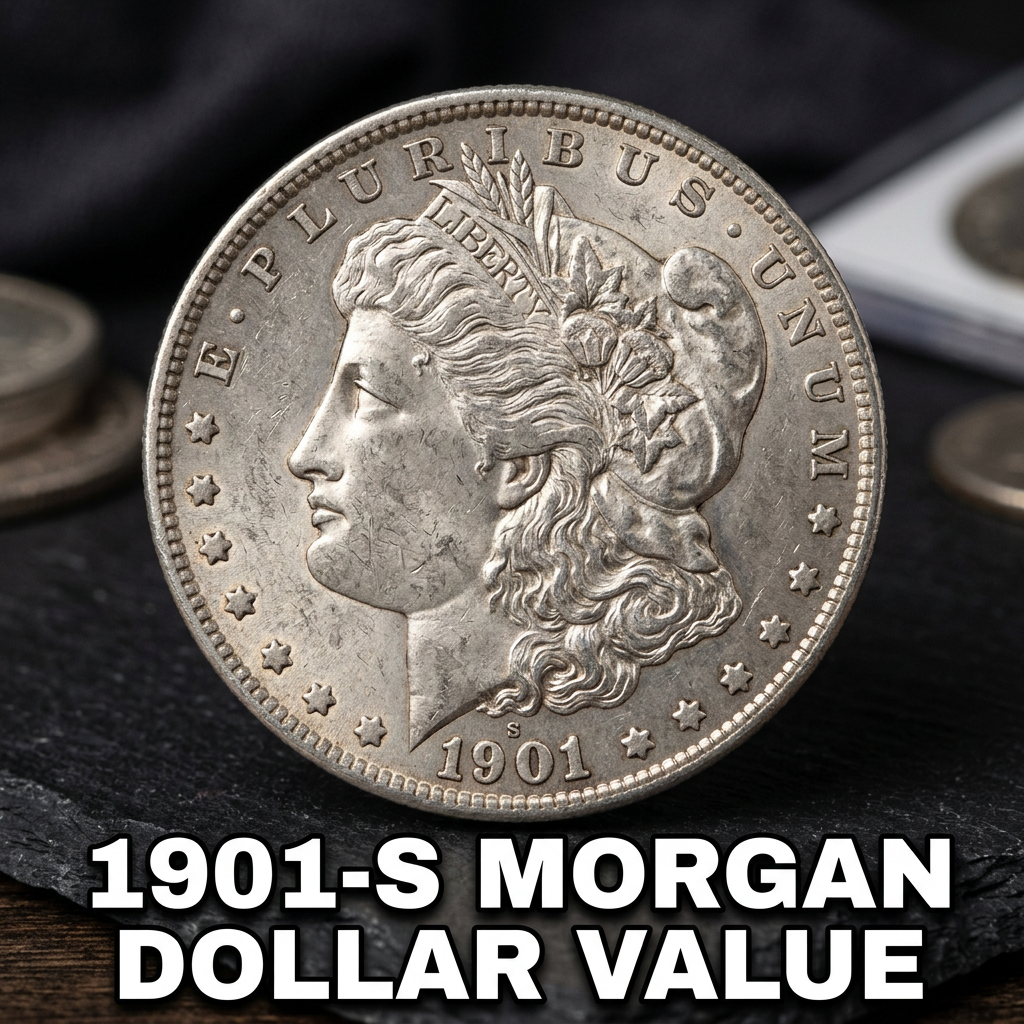
The 1901-S Morgan Dollar is worth anywhere from $30 in heavily worn condition to well over $1,500 or more in higher mint state grades. If you’ve recently found one of these old silver dollars, you’re in luck — this San Francisco-struck coin is a collectible piece of American history with real monetary value.
coin identification app tools have made it easier than ever for everyday collectors to identify and research coins like the 1901-S Morgan Dollar right from their phones. Whether you stumbled upon this coin in a jar, inherited it from a relative, or picked it up at an estate sale, understanding what affects its value is the first step to knowing what you’ve really got.
What Makes the 1901-S Morgan Dollar Special
The 1901-S Morgan Dollar was struck at the San Francisco Mint, indicated by the small “S” mintmark found on the reverse side of the coin, just above the “DO” in “DOLLAR.” San Francisco was known for producing well-struck coins with good luster, which is part of why these coins tend to hold up well over time.
The coin features Lady Liberty on the obverse and a detailed heraldic eagle on the reverse — a design created by George T. Morgan that became one of the most iconic in U.S. coinage history. The 1901-S had a mintage of approximately 2,284,000 coins, which is a moderate number for the series. That means these coins are available enough for collectors to find but not so common that they’re worth only melt value.
Because of its San Francisco origins and decent strike quality, the 1901-S often appears in better condition than Morgan dollars from other mints of the same era. That said, most examples found in circulation today show heavy wear from years of use.
1901-S Morgan Dollar Value by Grade
The condition — or “grade” — of your coin is the single most important factor in determining its value. Coin graders use a 70-point scale, and even small differences in grade can mean big differences in price. Here’s a general look at 1901-S Morgan Dollar price data across various grades:
| Grade | Description | Estimated Value |
|---|---|---|
| G-4 (Good) | Heavy wear, design visible | $30 – $40 |
| VG-8 (Very Good) | Moderate wear, some detail | $40 – $55 |
| F-12 (Fine) | Even wear, clear design | $55 – $75 |
| VF-20 (Very Fine) | Light to moderate wear | $75 – $110 |
| EF-40 (Extremely Fine) | Light wear on high points | $120 – $180 |
| MS-60 (Mint State) | No wear, heavy bag marks | $250 – $400 |
| MS-63 (Choice Uncirculated) | No wear, few marks | $500 – $800 |
| MS-65 (Gem Uncirculated) | Outstanding quality | $1,500+ |
Keep in mind these are approximate values. Actual prices can vary depending on current silver spot prices, collector demand, and recent auction results.
How to Check the Condition of Your 1901-S Morgan Dollar
You don’t need to be an expert to get a rough sense of what grade your coin might be. Start by looking at the highest points of the design — on the obverse, check Lady Liberty’s hair above the ear and her cheek. On the reverse, look at the eagle’s breast feathers. If these areas show smooth, flat wear with no detail, you’re likely looking at a Good or Very Good grade. If you can see distinct hair strands and individual feathers, you might have a Fine or Very Fine example.
For uncirculated coins, look for original mint luster — that cartwheel-like shimmer when you tilt the coin under a light. Any coin that’s truly uncirculated should show no wear at all, though it may have bag marks from when coins were stored together.
CoinKnow is a great tool for helping with this process. The app uses image recognition to help you identify coins and get ballpark values instantly, which is incredibly useful when you’re just getting started and don’t know a VF-20 from an MS-63.
Silver Melt Value and Why It Matters
Even a worn 1901-S Morgan Dollar has real value beyond just being a collectible, because it’s made of 90% silver. Each Morgan Dollar contains approximately 0.7734 troy ounces of pure silver. With silver prices typically hovering around $25–$30 per ounce in recent years, that means even a heavily worn example has an intrinsic melt value of roughly $19–$23.
However, you should almost never sell a Morgan Dollar for melt value alone — the collector premium is almost always higher. Even circulated examples in Good condition sell well above silver melt because of demand from collectors building date-and-mintmark sets.
If you want a more detailed breakdown of the complete 1901 Silver Dollar value including melt and collector price estimates, there are excellent online resources that update regularly to reflect current market prices.
Where to Sell Your 1901-S Morgan Dollar
Once you know what you have, you’ll want to consider your selling options. For coins in circulated grades, eBay is a popular and accessible option where you can search “sold listings” to see real recent prices. Local coin dealers are another option — convenient, but you’ll typically get wholesale prices rather than retail.
For higher-grade examples — especially anything you believe might be MS-60 or above — consider having the coin professionally graded by PCGS or NGC before selling. A certified grade adds credibility and often significantly increases the final sale price.
CoinKnow can also point you in the right direction when it comes to understanding current market conditions. Its database is updated regularly, making it a reliable companion for anyone who collects or sells Morgan dollars.
FAQ
Q: How do I find the mintmark on a 1901-S Morgan Dollar?
A: Flip the coin to the reverse (eagle side) and look just above the letters “DO” in the word “DOLLAR,” at the bottom center of the design. You should see a small “S” — that stands for San Francisco Mint.
Q: Is the 1901-S Morgan Dollar rare?
A: It’s not considered a rare coin in circulated grades, but it becomes significantly scarcer in higher mint state grades. Gem quality examples (MS-65 and above) are genuinely hard to find and command strong premiums from serious collectors.
Q: Can I use an app to identify and value my 1901-S Morgan Dollar?
A: Yes! CoinKnow is one of the most user-friendly options available. Just take a clear photo of both sides of your coin, and the app can help identify it and give you an estimated value range based on current market data. It’s a great starting point for anyone new to coin collecting.