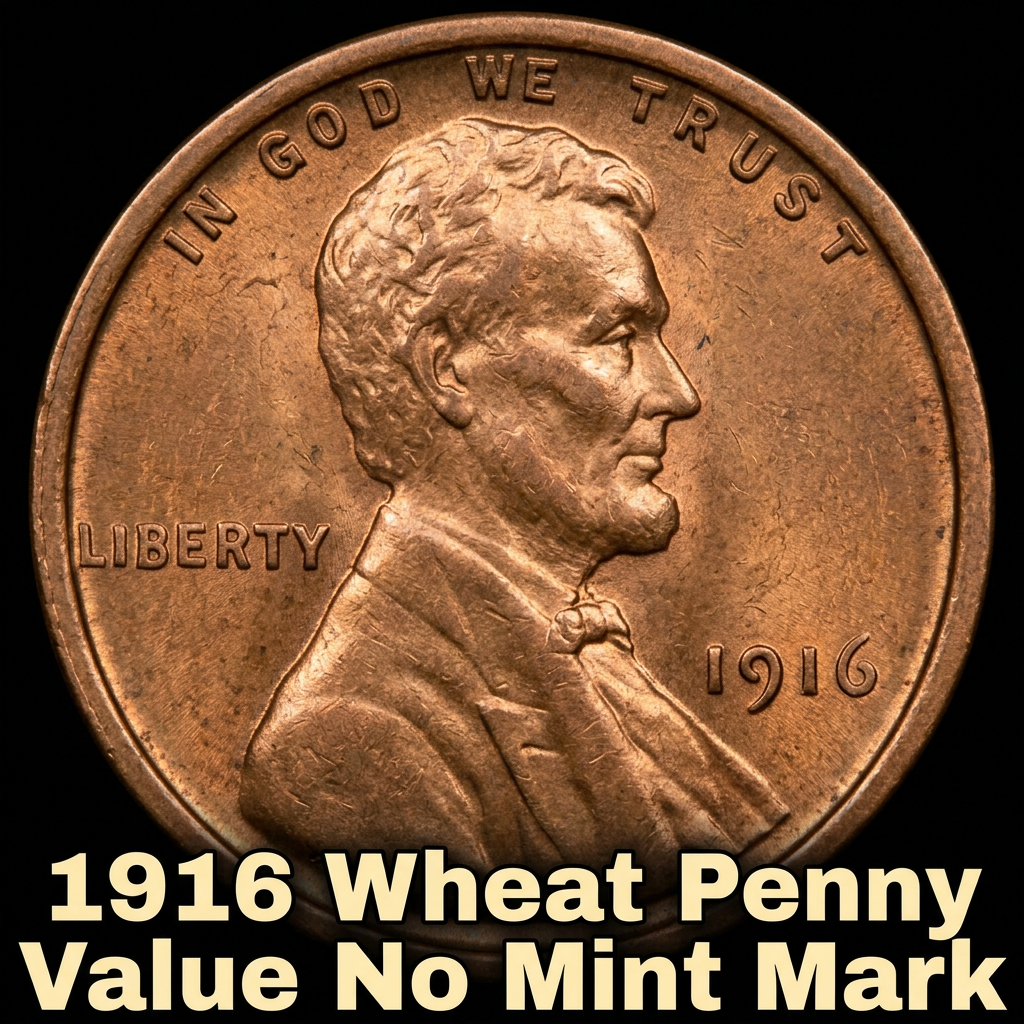
The 1916 Wheat Penny with no mint mark is worth anywhere from $0.50 in heavily worn condition to well over $50 in uncirculated grades — and rare high-grade examples can fetch hundreds of dollars at auction. If you just found one of these old cents, you’re in the right place to learn exactly what it’s worth.
Whether you discovered a 1916 Lincoln cent in a jar of old coins or inherited it from a family member, it’s worth taking a closer look. The no mint mark version was struck at the Philadelphia Mint, which was standard practice at the time — Philadelphia coins didn’t carry a mint mark. Millions were made, but survival rates in nice condition are surprisingly low after more than 100 years of circulation. If you want a quick way to identify what you have, CoinKnow is a great app to start with. It lets you scan your coin and get an instant read on its details and estimated value, which can be a huge help before you visit a dealer or list it online.
—
What Makes the 1916 No Mint Mark Wheat Penny Special
The 1916 Lincoln Wheat Penny is part of one of the most beloved series in American coin collecting. Designed by Victor David Brenner, these coins carried the portrait of Abraham Lincoln on the obverse and two wheat stalks on the reverse — a design that ran from 1909 all the way to 1958. The Philadelphia Mint produced 156,860,000 pennies in 1916, making it a relatively common date overall. However, “common” in mintage doesn’t always mean “common in good shape.” Coins that spent decades bouncing around in pockets and piggy banks tend to wear down quickly, so finding one in fine or better condition is actually not as easy as you might think. Collectors prize examples that still show sharp details in Lincoln’s hair and the wheat stalks, because those are far rarer than heavily circulated pieces.
—
1916 Wheat Penny Value Chart by Grade
The value of your 1916 no mint mark penny depends heavily on its condition, also known as its grade. Here’s a breakdown of typical market values:
| Grade | Description | Estimated Value |
|---|---|---|
| Good (G-4) | Heavy wear, outline visible | $0.50 – $1.00 |
| Fine (F-12) | Moderate wear, major details clear | $2 – $5 |
| Extremely Fine (EF-40) | Light wear on high points | $10 – $20 |
| About Uncirculated (AU-58) | Slight wear, nearly full luster | $25 – $45 |
| MS-63 Red | Uncirculated, minor blemishes | $60 – $100 |
| MS-65 Red | Gem uncirculated, bright red | $150 – $300+ |
For the most up-to-date auction records and dealer prices, you can check out detailed 1916 Wheat Penny MS Red price data that tracks real market sales over time.
—
How to Determine the Condition of Your 1916 Penny
Grading coins takes practice, but even a beginner can get a rough idea of condition by examining a few key areas. On the 1916 Lincoln cent, look closely at Lincoln’s cheekbone and jaw — these are the first spots to show wear. If those areas look flat and smooth, the coin has seen significant circulation. Next, check the wheat stalks on the reverse. On a well-preserved example, you should see clear lines running along the stalks. If the stalks look blurry or merged together, you’re looking at a lower-grade coin. Natural brown or reddish-brown color is totally normal for a coin this old. What collectors really love is a coin that still shows original red mint luster — those examples command the highest prices. You can find a full breakdown of 1916 penny values by grade and mint mark to see exactly where your coin falls on the spectrum.
—
Errors and Varieties That Can Increase the Value
Most 1916 no mint mark pennies are straightforward, but a small number have errors or die varieties that make them significantly more valuable. One thing to watch for is a doubled die obverse, where the date or lettering appears slightly doubled when viewed under a magnifying glass. These errors happen when the die used to strike the coin was itself created with a misalignment. While not as dramatic as the famous 1955 doubled die Lincoln cent, any doubling on a 1916 wheat penny adds collector interest and value. You should also examine the coin under good lighting to check for repunched dates, off-center strikes, or lamination errors. These mint mistakes can sometimes turn an ordinary coin worth a dollar or two into one worth $50 or more. CoinKnow can help you identify suspected errors by comparing your coin’s image to known varieties in its database, making it a smart first step before seeking a professional opinion.
—
Where to Sell Your 1916 Wheat Penny
Once you know roughly what your coin is worth, you have several solid options for selling. Online platforms like eBay give you access to thousands of collectors actively looking for wheat pennies in all grades. For better coins — particularly those in EF or uncirculated condition — consider submitting them to a third-party grading service like PCGS or NGC. A professionally graded coin in a sealed holder typically sells for more because buyers trust the grade. Local coin shows and coin dealers are also worth visiting, especially if you have multiple coins to sell at once. For everyday worn examples in lower grades, the realistic expectation is face value to a few dollars, so don’t spend too much on shipping for a coin in poor condition. CoinKnow can give you a quick ballpark value right from your phone, so you know what you’re dealing with before you walk into any shop or list anything online.
—
FAQ
Q: Is a 1916 penny with no mint mark rare?
A: Not especially — over 156 million were made at the Philadelphia Mint. However, finding one in nice uncirculated condition with original red color is genuinely difficult after more than a century, and those examples are worth real money to collectors.
Q: How do I know if my 1916 penny is worth getting graded professionally?
A: If your coin appears uncirculated or nearly uncirculated with strong luster and no major damage, professional grading from PCGS or NGC is usually worth considering. For heavily circulated coins worth a few dollars or less, the grading fee wouldn’t make financial sense.
Q: Can a 1916 wheat penny be worth more than $300?
A: Yes. Gem red examples graded MS-65 or higher have sold for several hundred dollars, and MS-67 red specimens have brought over $1,000 at major auctions. These extreme grades are very rare, but they do exist.