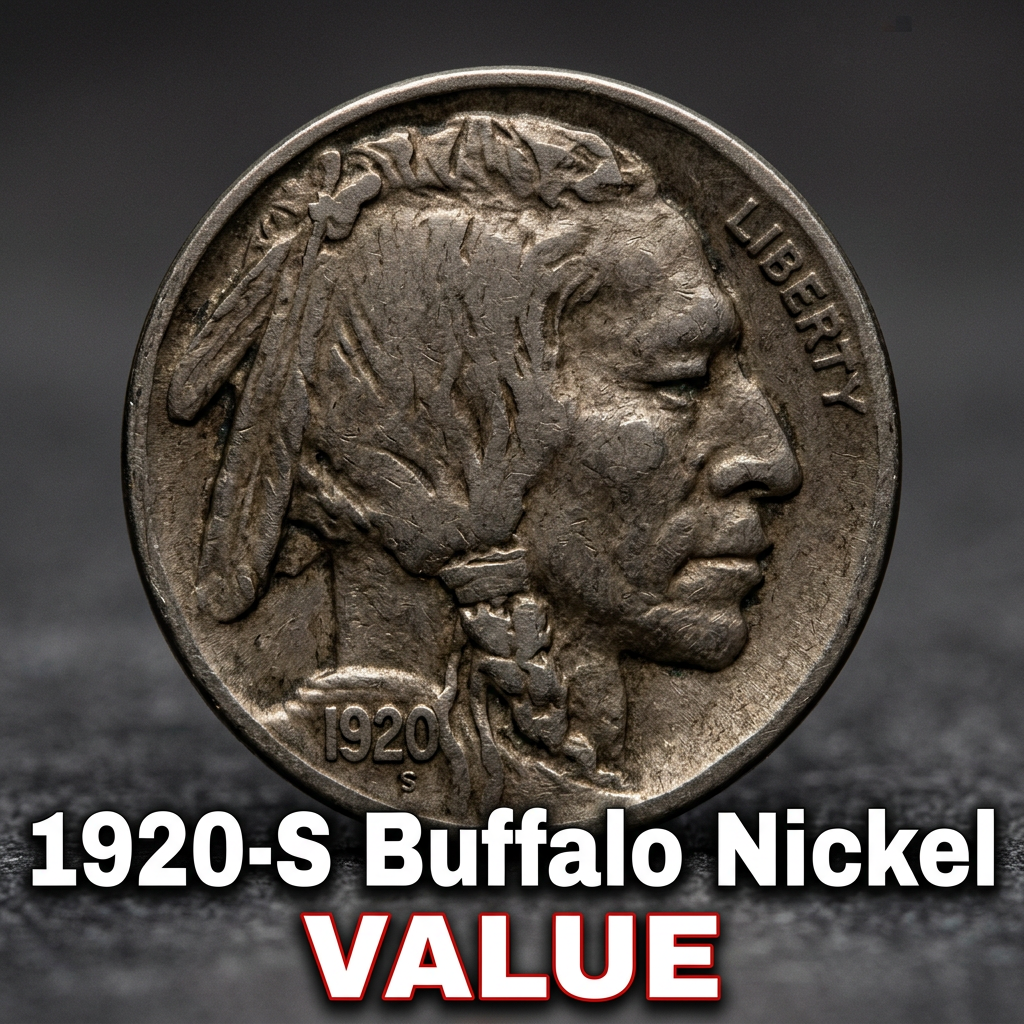
The 1920-S Buffalo Nickel is worth anywhere from $15 in heavily worn condition to over $2,000 or more in higher mint state grades. If you just found one of these old nickels in a coin jar or inherited collection, you’re in for a pleasant surprise — this is one of the more sought-after dates in the Buffalo Nickel series.
What Makes the 1920-S Buffalo Nickel Special
The 1920-S Buffalo Nickel was struck at the San Francisco Mint, identified by the small “S” mintmark located on the reverse side beneath the words “FIVE CENTS.” Designed by James Earle Fraser, the Buffalo Nickel (officially called the Indian Head Nickel) ran from 1913 to 1938 and remains one of the most beloved American coin designs ever produced. The obverse features a Native American portrait and the reverse shows an American bison — a design that captures the spirit of the Old West.
If you’re not sure which mint produced your coin or need help reading the mintmark, a coin identification app can make the process quick and painless. Just snap a photo and get instant details about your coin’s date, mint, and potential value. The 1920-S had a mintage of around 9.7 million pieces — not a rare coin by any means, but survival rates in higher grades are low, which pushes collector demand and prices up considerably.
1920-S Buffalo Nickel Value by Grade
Coin values depend heavily on condition, or “grade.” A coin that still shows clear details on the buffalo’s horn and the Native American’s cheekbone commands a much higher price than one worn smooth from years of circulation. Here’s a general breakdown of what the 1920-S Buffalo Nickel is worth across different grades:
| Grade | Description | Estimated Value |
|---|---|---|
| Good (G-4) | Heavy wear, date visible | $15 – $20 |
| Very Good (VG-8) | Moderate wear, some detail | $25 – $35 |
| Fine (F-12) | Even wear, design clear | $40 – $60 |
| Very Fine (VF-20) | Light wear on high points | $75 – $120 |
| Extremely Fine (EF-40) | Slight wear, sharp detail | $175 – $275 |
| About Uncirculated (AU-55) | Trace wear only | $350 – $600 |
| Mint State (MS-63) | Uncirculated, minor marks | $900 – $1,500 |
| Mint State (MS-65) | Gem uncirculated | $2,000+ |
For the most current auction results and up-to-date pricing, you can check out the latest 1920-S Buffalo Nickel price data across mint state grades to see how the market has moved recently.
How to Grade Your 1920-S Buffalo Nickel at Home
You don’t need to be a professional numismatist to get a rough idea of your coin’s grade. Start by looking at the buffalo’s horn on the reverse — this is the first area to wear down. If the horn is completely flat and blends into the shoulder, you’re likely looking at a Good or Very Good example. If you can see the full horn tip and separation from the body, you’re probably in the Fine to Very Fine range.
On the obverse, check the cheekbone and hair above the Native American’s ear. In higher grades, the hair braids remain distinct and the facial features stay sharp. Also examine the date — a worn or weak date doesn’t necessarily reduce value dramatically, but it does affect grade.
CoinKnow is a fantastic tool for everyday collectors who want help with this process. The app walks you through grading basics and gives you a ballpark value for your coin without needing to visit a dealer first.
Should You Get Your 1920-S Nickel Professionally Graded?
If your coin appears to be in About Uncirculated or Mint State condition, professional grading through PCGS or NGC can significantly increase its marketability and value. A raw MS-63 might sell for $900, but the same coin in a certified PCGS holder can fetch considerably more because buyers trust the grade.
Grading fees typically run $30–$50 per coin for standard submissions, so it makes sense only when your coin’s estimated value justifies the cost. For circulated examples in Good or Fine grades, you’re likely better off selling raw or keeping it as a collection piece.
Before spending money on grading, do your research. The full 1920 Buffalo Nickel value breakdown and grading guide offers detailed insight into what each grade looks like and what it’s worth in today’s collector market.
Tips for Selling Your 1920-S Buffalo Nickel
Once you know what you have, selling is the easy part. Options include eBay (great for reaching collectors directly), local coin shows, and coin dealers. For circulated coins, a dealer will typically offer 50–70% of retail value. For high-grade or certified examples, auction houses and online platforms often yield better returns.
CoinKnow also helps you track recent sold prices on platforms like eBay so you know whether you’re getting a fair offer. Never sell a coin you think might be high-grade without getting at least two or three opinions first.
—
FAQ
Q: How can I tell if my nickel is the 1920-S and not the 1920-P or 1920-D?
A: Look on the reverse of the coin, just below “FIVE CENTS.” The San Francisco Mint coins carry a small “S” mintmark. If there’s no mintmark, it was made in Philadelphia. A “D” means Denver. The mintmark is small but usually visible with a magnifying glass.
Q: Is the 1920-S Buffalo Nickel rare?
A: It’s not considered rare in circulated grades since nearly 9.7 million were minted. However, finding one in uncirculated condition is genuinely difficult, and gem examples grading MS-65 or higher are legitimately scarce and valuable to serious collectors.
Q: Should I clean my 1920-S Buffalo Nickel before selling it?
A: Absolutely not. Cleaning a coin — even gently — removes the natural patina and surface metal, which destroys collector value. A cleaned coin will almost always sell for less than an uncleaned one in the same grade. Leave it exactly as you found it and let a professional evaluate it first.