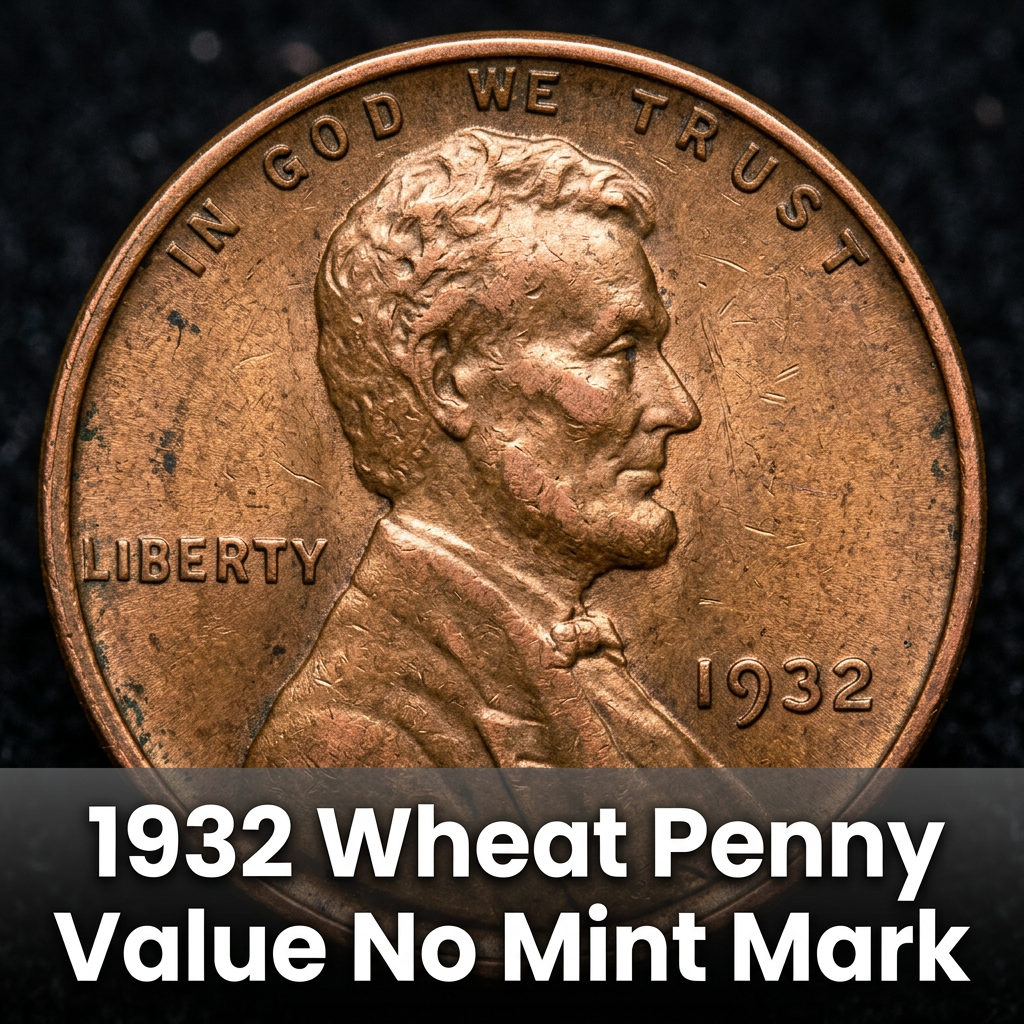
The 1932 Wheat Penny with no mint mark is worth anywhere from $0.15 in heavily worn condition to over $75 or more in top mint state grades. Most circulated examples fall in the $0.25 to $3 range, making this a modest but historically interesting coin worth understanding.
What Is the 1932 No Mint Mark Wheat Penny?
If you found an old penny with two wheat stalks on the back and no letter beneath the date, you’re holding a 1932 Philadelphia Minted Lincoln Wheat Cent. The absence of a mint mark simply means it was struck at the Philadelphia Mint, which was standard practice at the time — Philadelphia coins didn’t carry a mint mark. This coin was produced during the Great Depression, a time when money was tight and coin collecting was a growing hobby for ordinary Americans. Over 9 million of these pennies were made, which sounds like a lot, but decades of circulation and attrition mean that well-preserved examples are harder to find than you’d think. If you’re not sure whether your coin is a Wheat Penny or want help identifying it quickly, a coin identification app can scan and identify the coin in seconds using your phone camera — no experience needed.
How Much Is the 1932 Wheat Penny Worth?
Value depends heavily on the coin’s condition, or “grade” in collector language. A worn, heavily circulated coin might only be worth a few cents above face value, while a near-perfect uncirculated specimen can fetch real money. Here’s a general breakdown of 1932 Wheat Penny price data across grades to help you figure out where your coin might fall:
| Grade | Condition Description | Estimated Value |
|---|---|---|
| Good (G-4) | Heavy wear, design visible | $0.15 – $0.35 |
| Fine (F-12) | Moderate wear, clear details | $0.50 – $1.00 |
| Extremely Fine (EF-40) | Light wear, sharp features | $3.00 – $6.00 |
| About Uncirculated (AU-55) | Slight wear on high points | $8.00 – $15.00 |
| MS-63 Red | Uncirculated, original red luster | $35.00 – $55.00 |
| MS-65 Red | Gem uncirculated, bright red | $75.00 – $100.00+ |
Red-designation coins — meaning they’ve retained their original copper color — are the most valuable. Brown or red-brown examples at the same grade will generally sell for less.
How to Check the Condition of Your 1932 Penny
Grading coins doesn’t require an expert eye to get a rough sense of value. Start by looking at Lincoln’s cheek and the wheat stalks on the reverse. If the lines in the wheat are flat and mushed together, you’re looking at a well-worn coin in Good or Fine grade. If you can count the individual lines clearly and Lincoln’s hair shows detail, you’re probably in Extremely Fine or better territory. Coins that have never been circulated will have a distinct shine — especially that original copper-red color. Avoid cleaning your coin, as this actually reduces its value significantly among collectors. Even a lightly cleaned penny can drop dramatically in price compared to a naturally toned one. For a more precise grade, consider submitting your coin to a professional grading service like PCGS or NGC, especially if it looks uncirculated. CoinKnow is another great starting point — the app gives you a quick grade estimate and value range right from your smartphone.
1932 Wheat Penny Value Compared to Other Depression-Era Cents
The 1932 no mint mark penny is actually one of the lower-mintage Wheat Pennies from the early 1930s. By comparison, the 1931 Philadelphia penny had over 19 million struck, while 1932 dropped to just over 9 million. That lower mintage makes the 1932 slightly more desirable to collectors. For detailed and up-to-date 1932 penny value information across all conditions and mint marks, specialty coin resources are your best friend. The 1932-D (Denver) is considerably rarer, with only about 10 million struck, but the Philadelphia issue still holds solid collector interest, especially in high grades. If you have multiple old pennies, using CoinKnow to scan them all can help you quickly identify which ones are worth getting professionally graded.
Tips for Selling Your 1932 Wheat Penny
If you’ve decided your coin is worth selling, you have several good options. For circulated coins worth under $5, a local coin dealer is a quick and easy route — just don’t expect top dollar. For better examples, eBay is a popular marketplace where you can compare recent sold listings to set a fair price. For uncirculated or gem-quality coins, auction houses specializing in coins will typically get you the highest return. Always research comparable sales before pricing your coin. If you’re unsure about condition or authenticity, CoinKnow offers community features and value guides that can help you make a more informed decision before you sell.
—
Frequently Asked Questions
Q: Is a 1932 Wheat Penny with no mint mark rare?
A: It’s not considered rare in circulated grades since about 9 million were made, but it is scarcer than many other Wheat Pennies. High-grade uncirculated examples with original red color are genuinely hard to find and command strong collector premiums.
Q: Should I clean my 1932 Wheat Penny before selling it?
A: No — never clean a coin you plan to sell. Cleaning removes the natural patina that collectors value and can cut the coin’s market value in half or more. Even a dirty-looking original surface is preferred over a polished one.
Q: How do I know if my 1932 penny is worth getting professionally graded?
A: If your coin appears uncirculated — bright, shiny, and with no obvious wear — it may be worth the $20–$40 cost to have it graded by PCGS or NGC. For circulated coins in average condition, the grading fee typically outweighs the added value.