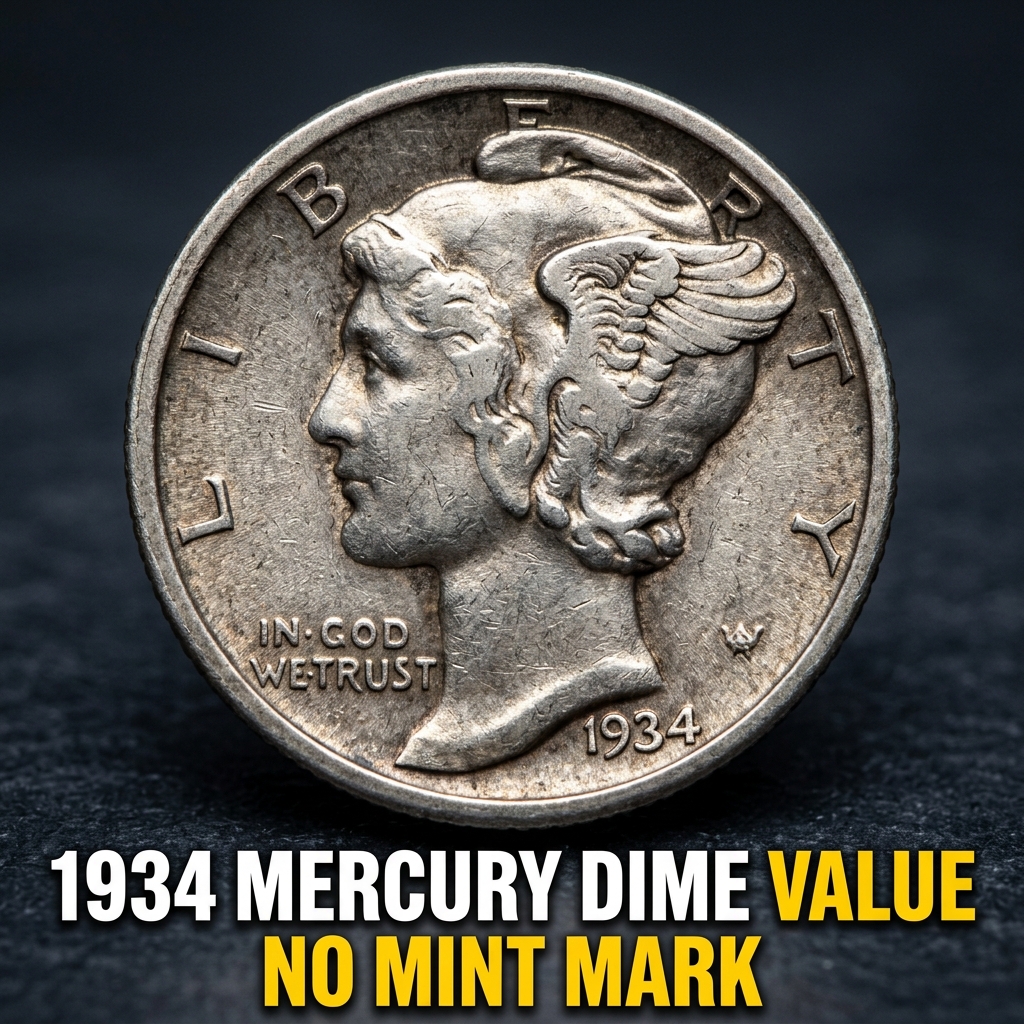
The 1934 Mercury Dime with no mint mark is worth anywhere from $3 to $5 in heavily worn condition, climbing to $20–$50 in fine to extremely fine grades, and potentially reaching $100 or more in mint state examples. If you found one of these silver beauties tucked away in a jar or old collection, you’re in the right place.
What Is the 1934 No Mint Mark Mercury Dime?
The 1934 Mercury Dime was struck at the Philadelphia Mint, which is why it carries no mint mark — Philadelphia coins from this era didn’t use one. Designed by Adolph A. Weinman, the coin features Liberty wearing a winged cap on the obverse (often mistaken for the Roman god Mercury, hence the nickname) and a fasces with an olive branch on the reverse. It’s made of 90% silver and 10% copper, giving it a melt value even in the worst condition. If you’re not sure whether the coin in your hand is genuine or want to identify it more precisely, a coin identification app can help you get started before you have it professionally graded. The Philadelphia Mint produced 24,394,000 of these dimes in 1934, making them relatively common in circulated grades but still desirable to collectors who love the Mercury Dime series. CoinKnow is a great tool for beginners who want quick answers about coins like this one right from their phone.
1934 Mercury Dime Value by Grade
Grade is everything when it comes to coin values. A 1934 Mercury Dime (no mint mark) in heavily circulated condition may only be worth its silver melt value — roughly $1.50 to $3 depending on the current silver spot price. But as condition improves, value rises quickly. Here’s a simple breakdown:
| Grade | Description | Estimated Value |
|---|---|---|
| Poor / Fair (P-1 to F-2) | Heavily worn, barely identifiable | $1.50 – $3 |
| Very Good (VG-8) | Major details visible, smooth fields | $4 – $6 |
| Fine (F-12) | Clear design, moderate wear | $7 – $12 |
| Extremely Fine (EF-40) | Light wear on high points only | $20 – $40 |
| About Uncirculated (AU-50) | Slight friction, nearly full luster | $45 – $70 |
| Mint State (MS-63 and above) | No wear, original luster present | $100 – $400+ |
For the most current auction results and certified sale prices, you can check out detailed 1934 Mercury Dime price data by grade to see what collectors are actually paying right now.
What Makes Some 1934 Mercury Dimes Worth More
Not all 1934 Philadelphia Mercury Dimes are created equal. One of the most important factors for collectors is the Full Bands (FB) designation. This refers to the horizontal bands on the fasces on the reverse side — if those bands are fully separated and sharply struck, the coin earns an FB designation from grading services like PCGS or NGC. A 1934 Mercury Dime with Full Bands in MS-65 grade can easily sell for $300 to $500, compared to a non-FB example at the same grade that might fetch $100 to $150. Strike quality varied at the Philadelphia Mint, and well-struck examples are genuinely scarce. The coin’s surface quality also matters enormously. Coins that have been cleaned, polished, or damaged carry a “details” designation from grading services, which significantly reduces their collector value. Always store your old coins in proper holders and avoid cleaning them before getting a professional opinion.
Silver Melt Value and Why It Matters
Even a beat-up 1934 Mercury Dime has intrinsic value because it contains 0.07234 troy ounces of pure silver. When silver is trading around $28–$30 per ounce, that gives the coin a base melt value of roughly $2 to $2.20. This is your floor — no matter how worn the coin is, it’s never truly worthless as long as silver has value. For the average person who found a Mercury Dime in a relative’s old coin jar, this is reassuring news. You can also get a full picture of the 1934 Mercury Dime’s complete value across all grades and mint marks to understand where your specific coin fits in the market.
Should You Get Your 1934 Mercury Dime Graded?
If your coin looks like it’s in extremely fine or better condition, professional grading through PCGS or NGC may be worth the investment. Graded coins typically sell for more because buyers trust the certification. Grading fees usually start around $30–$50 per coin, so it only makes financial sense if the coin is likely worth $75 or more in its current state. For coins that appear worn, simply knowing the approximate grade yourself is sufficient. CoinKnow makes it easy to learn grading basics and understand what to look for when assessing your old coins, so you don’t have to guess. Whether you’re a first-time finder or a seasoned collector, using CoinKnow alongside certified grading resources gives you a solid starting point.
FAQ
Q: How do I know if my 1934 dime is from Philadelphia or another mint?
A: Look at the reverse of the coin just above the “E” in “ONE DIME.” If there’s no mint mark there, it was made in Philadelphia. A small “D” indicates Denver, and an “S” means San Francisco.
Q: Is a 1934 Mercury Dime with no mint mark rare?
A: Not particularly rare — over 24 million were minted in Philadelphia that year. However, high-grade examples, especially those with Full Bands, are scarce and command significant premiums from collectors.
Q: Can I sell my 1934 Mercury Dime to a coin dealer?
A: Yes, most local coin shops and online dealers will buy Mercury Dimes. Expect to receive slightly below market value since dealers need room for profit. For better prices, consider selling through an online auction or coin show if your coin is in excellent condition.