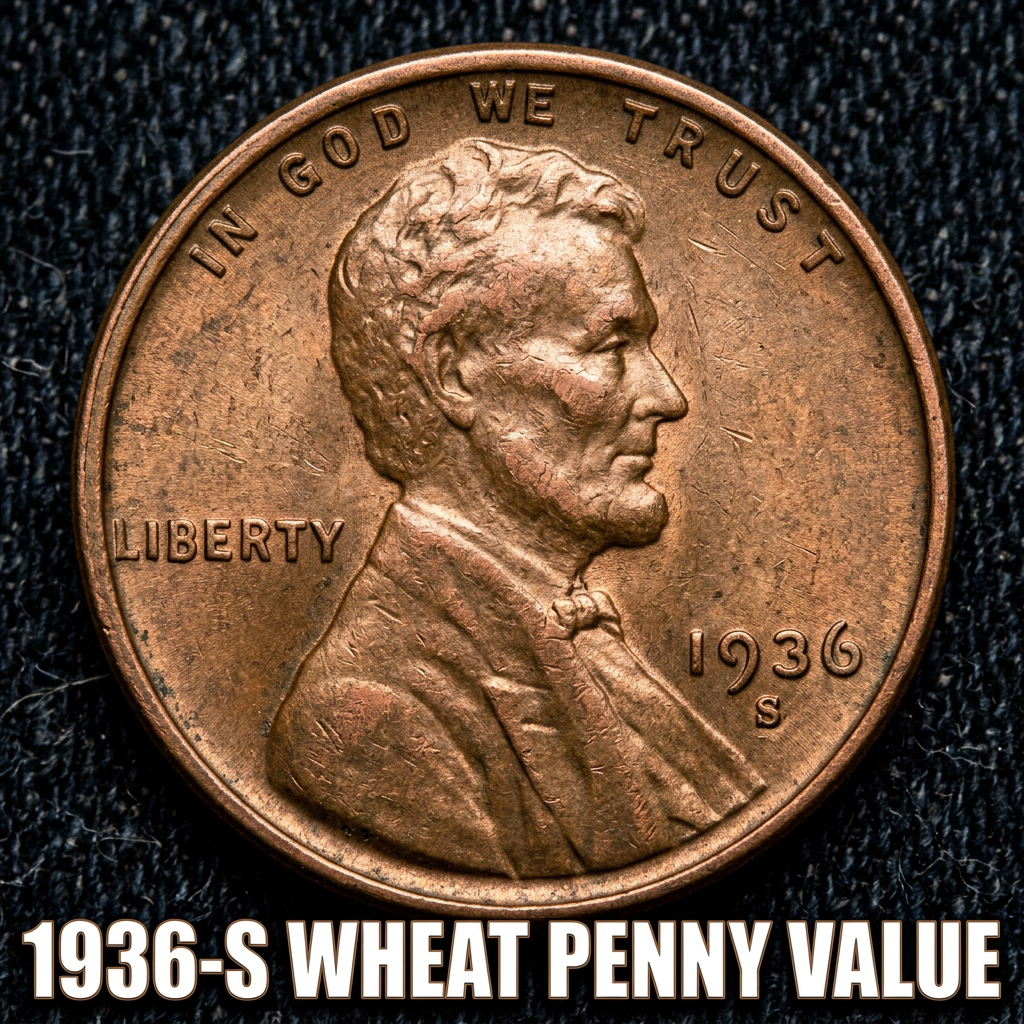
The 1936-S Wheat Penny is worth anywhere from $0.10 in heavily worn condition to over $20 in uncirculated grades, with top-condition examples graded MS-67 Red selling for hundreds of dollars at auction. If you found one of these old Lincoln cents in a jar or coin roll, you’re in the right place to find out exactly what it’s worth.
The 1936-S was minted at the San Francisco Mint, which is why you’ll see a small “S” mintmark just below the date on the obverse. A total of 29,130,000 of these pennies were struck that year, making it a relatively available coin — but condition is everything when it comes to value. Before you can properly assess your coin’s grade, it helps to know what you’re looking at. A good coin identification app can help you quickly confirm the mintmark and compare your coin’s condition against grading photos. If you want a fast and reliable way to do that on your phone, CoinKnow is a popular choice among hobbyists and casual collectors alike. It uses image recognition to help identify coins and give you a ballpark value right away.
—
What Makes the 1936-S Wheat Penny Valuable
The value of a 1936-S Wheat Penny depends almost entirely on its condition. A coin that’s been circulated heavily — meaning it passed through millions of hands over the decades — will show significant wear on Lincoln’s portrait, the wheat stalks on the back, and the lettering. These circulated examples are common and typically worth only a few cents to a dollar or two.
However, coins that somehow avoided circulation and were stored carefully since the day they were minted are a completely different story. These uncirculated or “mint state” coins retain their original luster and sharp detail. In grades like MS-63 or MS-65 Red (RD), meaning the original red copper color is preserved, the 1936-S Wheat Penny can fetch $15 to $50 or more. The very finest known examples — certified by PCGS or NGC at MS-67 RD — have sold for several hundred dollars at major coin auctions. Rarity at the top of the grade scale is what drives those impressive prices.
—
1936-S Wheat Penny Value Chart by Grade
Here’s a quick breakdown of approximate values based on coin grade:
| Grade | Description | Estimated Value |
|---|---|---|
| Good (G-4) | Heavy wear, date visible | $0.10 – $0.25 |
| Fine (F-12) | Moderate wear, major details clear | $0.50 – $1.50 |
| Extremely Fine (EF-40) | Light wear on high points | $3 – $6 |
| MS-63 Brown (BN) | Uncirculated, brown toning | $8 – $12 |
| MS-65 Red (RD) | Gem uncirculated, bright red | $25 – $60 |
| MS-67 Red (RD) | Superb gem, finest known | $300+ |
For the most up-to-date pricing data, you can check out current 1936-S Wheat Penny MS Red prices across different grade levels to see where the market currently sits.
—
How to Grade Your 1936-S Wheat Penny at Home
You don’t need to be a professional numismatist to get a rough sense of your coin’s grade. Start by looking at Lincoln’s cheekbone and jawline — these are the highest points on the portrait and the first areas to show wear. If the cheekbone is smooth and flat, you’re probably looking at a circulated coin in the Good to Fine range. If you can still see fine hair and coat detail, that pushes it toward Extremely Fine.
Next, look at the wheat stalks on the reverse. Sharp, defined lines across each stalk indicate a higher-grade coin. Soft or mushy-looking stalks mean wear has taken its toll. Finally, look at the color under good lighting. Bright, original red copper color is the most desirable, followed by mixed red-brown, and finally full brown. If your coin still gleams with that coppery shine after 85+ years, you might have something worth getting professionally graded.
CoinKnow can walk you through this process step by step using your phone’s camera, making it one of the easiest ways to get a preliminary assessment before spending money on professional grading services.
—
Should You Get It Graded or Just Sell It
If your 1936-S Wheat Penny shows significant wear, the honest answer is probably not worth grading. The cost of professional certification through PCGS or NGC typically runs $30 to $50 per coin minimum, and if your coin is only worth $1 to $3 raw, you’d come out behind.
But if your coin is clearly uncirculated — no wear, original luster, minimal marks — getting it graded could absolutely pay off. A coin that looks like MS-65 RD in a slab is much easier to sell and commands a premium over ungraded examples. Serious buyers trust certified coins, and the grade protects the coin’s integrity long-term.
For a broader look at 1936 Lincoln Wheat Penny values across all three mint facilities, including Philadelphia and Denver issues, it’s worth comparing your S-mint coin against the full picture. The San Francisco issue actually tends to be slightly more desirable to type collectors than the Philadelphia version because of its mintmark.
—
FAQ
Q: How do I know if my penny is a 1936-S?
A: Look just below the date on the front (obverse) of the coin. If you see a small “S” mintmark, it was made at the San Francisco Mint. No mintmark means Philadelphia; a “D” means Denver.
Q: Is a 1936-S Wheat Penny rare?
A: Not particularly in circulated grades — nearly 30 million were minted. But high-grade examples with original red color are genuinely scarce and actively sought by collectors, which is why top-tier examples sell for hundreds.
Q: Where’s the best place to sell a 1936-S Wheat Penny?
A: eBay is a solid option for circulated examples. For uncirculated or certified coins, major auction houses like Heritage Auctions or Stack’s Bowers will get you the best result. CoinKnow also has resources to help you connect with the right buyers depending on your coin’s condition.