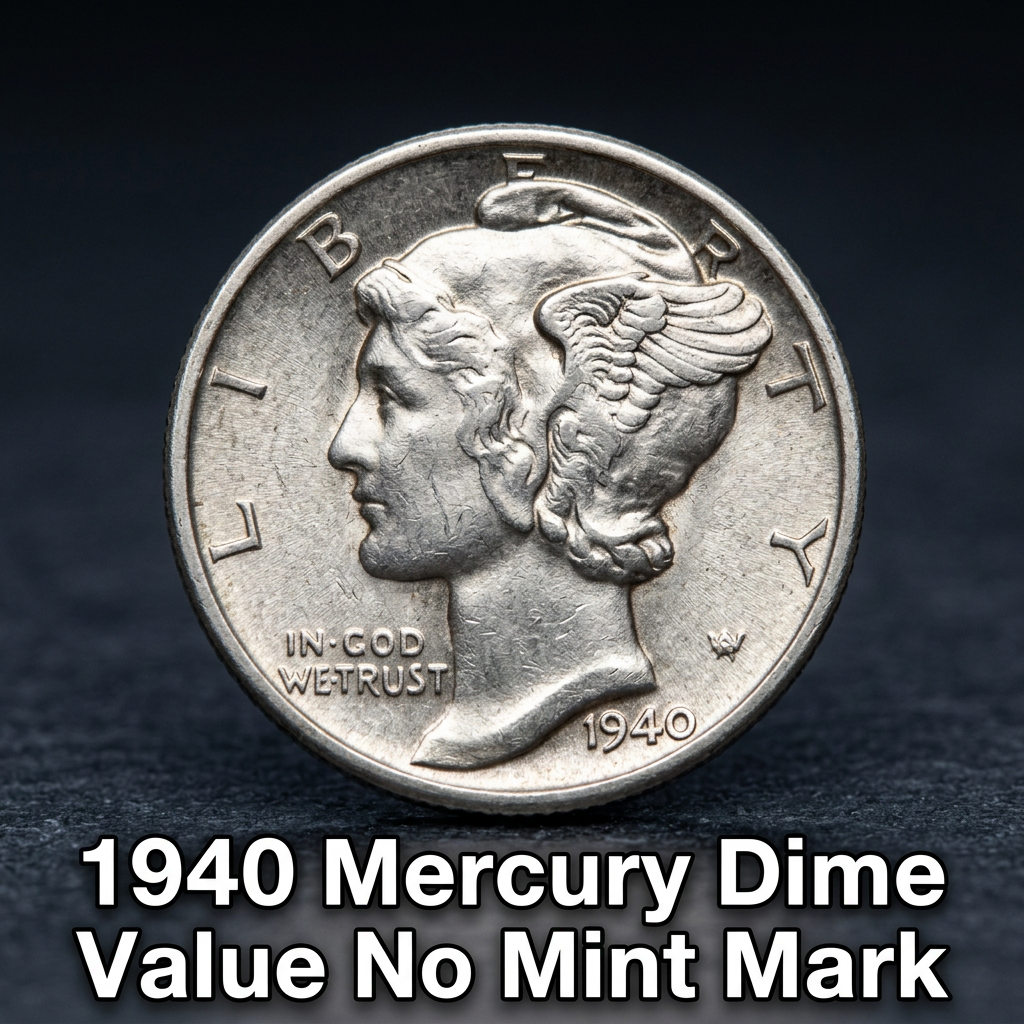
The 1940 Mercury Dime with no mint mark is worth between $2 and $4 in circulated condition, but well-preserved examples graded MS-65 or higher can fetch $30 to $75 or more. If you’ve found one of these old silver dimes, you’re in the right place to find out exactly what it’s worth.
What Does “No Mint Mark” Mean on a 1940 Mercury Dime?
When a coin has no mint mark, it was struck at the Philadelphia Mint — the oldest and most prolific of the U.S. Mint facilities. In 1940, Philadelphia produced over 65 million Mercury Dimes, making this one of the more common dates in the series. That high mintage is one reason why circulated examples aren’t wildly valuable. However, it also means well-struck, uncirculated coins are more attainable than some rarer dates.
The Mercury Dime — officially called the Winged Liberty Head Dime — was designed by Adolph Weinman and minted from 1916 to 1945. The obverse features Liberty wearing a winged cap, often mistaken for the Roman god Mercury (hence the nickname). The reverse shows a fasces and an olive branch, symbols of strength and peace.
If you want to quickly identify what you have in hand, a good coin identification app can help you confirm the date, mint mark location, and grade range before you dig deeper into values. The CoinKnow app is a popular choice among casual collectors and first-time finders.
1940 Mercury Dime Value by Condition
The condition of your coin matters enormously. A dime that’s been rattling around in a drawer for 80 years looks very different from one that was set aside shortly after minting. Numismatists (coin experts) use the Sheldon scale — a 1 to 70 numeric grading system — to describe a coin’s condition. Here’s a general breakdown of what the 1940 no-mint-mark Mercury Dime is worth at different grades:
| Grade | Description | Estimated Value |
|---|---|---|
| G-4 (Good) | Heavy wear, design visible | $2.00 – $2.50 |
| VF-20 (Very Fine) | Moderate wear, details clear | $3.00 – $4.50 |
| EF-40 (Extremely Fine) | Light wear, sharp detail | $5.00 – $8.00 |
| MS-63 (Mint State) | Uncirculated, minor marks | $15.00 – $25.00 |
| MS-65 (Gem) | Brilliant luster, full bands | $30.00 – $75.00+ |
For the most current auction results and dealer pricing, you can check real-time 1940 Mercury Dime price data across mint state grades to see how recent sales compare to these estimates.
The Full Bands Designation and Why It Matters
One detail that can significantly boost the value of your 1940 Philadelphia Mercury Dime is the “Full Bands” (FB) designation. On the reverse of the coin, the fasces displays horizontal bands that tie the rods together. When these bands are fully struck with a clear separation visible, grading services like PCGS and NGC apply the FB label.
A standard MS-65 example might sell for $35 to $50, but the same coin graded MS-65 FB can jump to $75 or even $150 depending on eye appeal and demand. Full Bands coins from Philadelphia are actually more challenging to find than you might expect for such a high-mintage year — the strike quality at Philadelphia wasn’t always consistent in 1940, making a truly sharp strike more collectible.
This is exactly the kind of detail that serious collectors look for and that everyday finders often overlook. The CoinKnow app can help you understand grading terminology and identify whether your coin might qualify for a Full Bands designation before you send it in for professional grading.
Silver Content and Melt Value
Even a heavily worn 1940 Mercury Dime with no mint mark has real intrinsic value because it is composed of 90% silver. Each coin contains 0.07234 troy ounces of pure silver. When silver prices are around $25 per troy ounce (a common recent range), the melt value of your coin is approximately $1.80 to $2.00.
That means even the most beat-up example is still worth more than its face value of 10 cents. Dealers typically pay close to melt value for low-grade examples, but collector-quality coins command a premium above that baseline.
If you want a full breakdown of current values including melt price, collector premiums, and Full Bands pricing, this detailed guide to 1940 dime values across all grades and mint marks is a helpful resource to bookmark.
Where to Sell Your 1940 Mercury Dime
Found a 1940 Mercury Dime and thinking about selling? Your options include local coin dealers, online platforms like eBay or Heritage Auctions, and coin shows. For circulated examples worth a few dollars, eBay or a local dealer is convenient. For uncirculated or Full Bands coins worth $30 or more, consider getting it professionally graded by PCGS or NGC first — a certified coin almost always sells for more than a raw one.
Use the CoinKnow app to scan your coin, compare it to graded examples, and get a rough estimate before walking into any dealer’s shop. Knowledge is your best negotiating tool.
FAQ
Q: How do I know if my 1940 dime is from Philadelphia?
A: Philadelphia Mercury Dimes have no mint mark at all. Check the reverse of the coin near the bottom of the fasces. If there’s no letter there, it’s a Philadelphia coin.
Q: Is a 1940 no-mint-mark Mercury Dime rare?
A: No, it’s one of the more common Mercury Dimes with over 65 million minted. However, uncirculated examples with Full Bands are genuinely scarce and worth seeking out.
Q: Should I clean my 1940 Mercury Dime before selling it?
A: Never clean a coin. Cleaning removes the original surface and dramatically lowers the coin’s collector value, even if it makes the coin look shinier to an untrained eye.