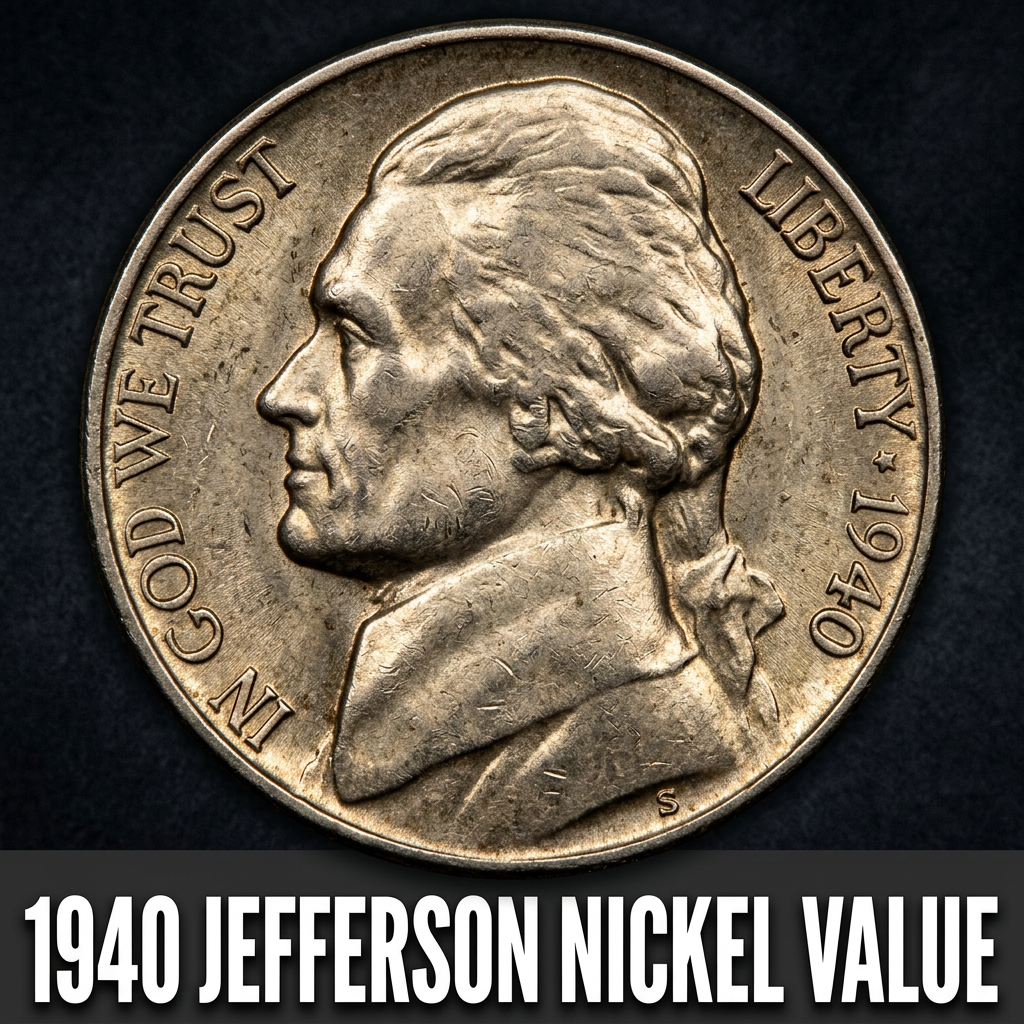
The 1940 Reverse of 1940 Jefferson Nickel is worth anywhere from $0.10 in heavily worn condition to over $100 or more in pristine uncirculated grades. If you found one of these nickels in a jar of old coins, you might be holding onto something worth a second look.
Not sure exactly what you’ve got? That’s where CoinKnow comes in. It’s a free app that helps everyday collectors identify coins quickly using their phone camera. You don’t need to be an expert to figure out what’s in your coin jar — CoinKnow does the heavy lifting for you.
What Is the 1940 Reverse of 1940 Jefferson Nickel?
The Jefferson Nickel series kicked off in 1938, replacing the classic Buffalo Nickel. By 1940, the design was still relatively new, and the U.S. Mint was producing coins at Philadelphia, Denver, and San Francisco. When collectors talk about the “Reverse of 1940,” they’re referring to a specific die variety that uses the original reverse design style associated with that year — as opposed to later modifications seen in subsequent years.
This distinction matters most to variety collectors and people chasing high-grade examples. For the average person, a 1940 Jefferson Nickel from circulation is still a coin with real history — over 80 years old and made from a 75% copper, 25% nickel composition. The coin features Thomas Jefferson’s portrait on the obverse and his home, Monticello, on the reverse.
Understanding what makes your coin special starts with identifying the mint mark. Philadelphia coins have no mint mark, Denver coins carry a “D,” and San Francisco coins show an “S.” Each mint struck millions of these nickels, but condition and mint origin play a big role in final value.
How Much Is the 1940 Reverse of 1940 Jefferson Nickel Worth?
Value depends heavily on grade and mint mark. Circulated examples in average condition are common and typically worth face value to a few dollars. However, well-struck, high-luster uncirculated coins can fetch significant premiums — especially Full Steps examples, which show crisp, complete steps on Monticello’s base.
For the most up-to-date pricing, you can check current 1940 Jefferson Nickel MS grade values and auction records to see what buyers are actually paying today.
Here’s a general value breakdown:
| Mint Mark | Good (G-4) | Fine (F-12) | MS-60 | MS-65 Full Steps |
|---|---|---|---|---|
| 1940 (P) No Mint Mark | $0.25 | $0.50 | $8 | $75–$150+ |
| 1940-D | $0.25 | $0.50 | $10 | $100–$200+ |
| 1940-S | $0.25 | $0.75 | $12 | $150–$300+ |
The Importance of Full Steps on the 1940 Jefferson Nickel
Among Jefferson Nickel collectors, Full Steps (FS) designation is a big deal. The steps of Monticello on the reverse are notoriously difficult to strike fully, even on brand-new coins. When all five or six steps show clearly with no weakness or interruption, the coin earns a Full Steps designation from grading services like PCGS or NGC.
A 1940 Jefferson Nickel in MS-65 without Full Steps might sell for $10–$25. The same coin with an MS-65 Full Steps label can jump to $75, $150, or even higher depending on demand. That’s a massive difference, and it’s why condition is everything with this series.
If you have an uncirculated-looking 1940 nickel, examine the steps carefully under good light or a magnifying glass. Even a beginner can learn to spot strong vs. weak step detail. You can also read a full breakdown of what your 1940 Jefferson Nickel is worth based on grade and variety before deciding whether to sell or hold.
Tips for Finding Out What Your 1940 Nickel Is Worth
If you’re new to coins, the process can feel overwhelming. Here’s a simple approach: first, identify the mint mark on your coin (check the right side of Monticello on the reverse). Next, assess the condition honestly — is it scratched and flat, or does it still show luster and detail? Then, look up current prices using trusted references.
CoinKnow is an excellent starting point. The app lets you scan your coin and get an instant overview of what it might be, which is handy when you’re sorting through a pile of old change and don’t know where to begin. It’s beginner-friendly, fast, and free.
For deeper dives, consider submitting high-grade coins to professional grading services. A slab from PCGS or NGC adds credibility and often increases resale value significantly, especially for Full Steps examples.
Frequently Asked Questions
Q: Is a 1940 Jefferson Nickel with no mint mark worth more than one with a D or S?
A: Not necessarily. Philadelphia coins have no mint mark and were struck in the largest quantities, so they tend to be the most common. Denver and San Francisco issues are often slightly scarcer in top grades, making them more valuable in high mint state conditions, especially with Full Steps.
Q: What does “Reverse of 1940” actually mean for this nickel?
A: It refers to a specific reverse hub design used by the Mint in 1940. In later years, the Mint modified the reverse hub, creating subtle differences collectors use to attribute varieties. The Reverse of 1940 is the original design style and appears on coins struck before the hub was changed.
Q: Should I clean my 1940 Jefferson Nickel before selling it?
A: Absolutely not. Cleaning a coin — even gently — removes the original surface and destroys its numismatic value. A cleaned coin will almost always sell for less than an unclean one in the same grade. Leave it as-is and let a buyer or grader assess it in its natural state.