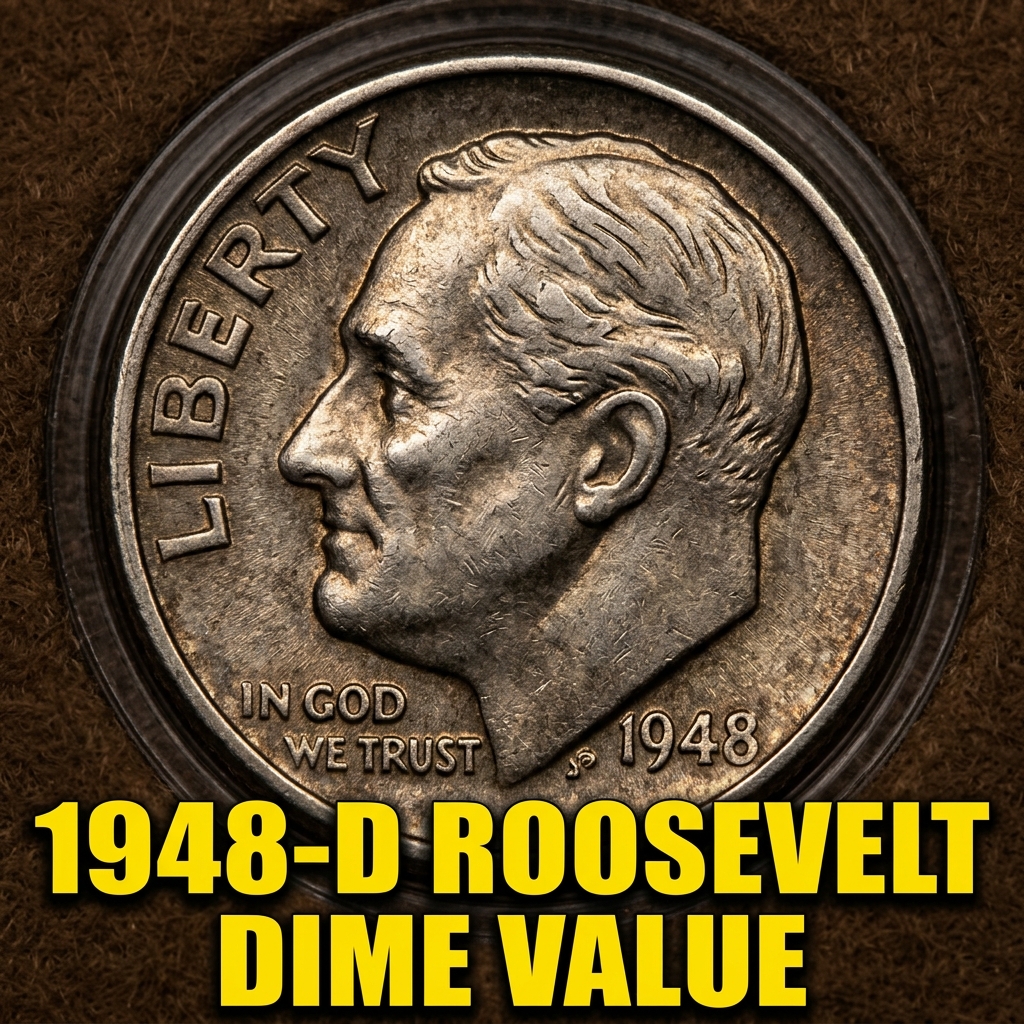
The 1948-D Roosevelt Dime is worth anywhere from around $2 in heavily worn condition to over $50 or more in uncirculated mint state grades — and high-end examples graded MS-67 or above can fetch hundreds of dollars at auction. If you found one of these little silver coins tucked away in an old jar or inherited collection, you might be sitting on more than just a dime.
What Makes the 1948-D Roosevelt Dime Special
The 1948-D Roosevelt Dime was struck at the Denver Mint and carries the small “D” mintmark on the reverse, just above the “E” in “ONE.” This was only the third year the Roosevelt dime series had been in production, having launched in 1946 following the death of President Franklin D. Roosevelt. That early series status, combined with the coin’s 90% silver content, gives it a built-in baseline value even in worn shape.
If you’re not sure whether the coin you’re holding is actually a 1948-D or another date, a good coin identification app can help you quickly match the design, mintmark, and details to confirm exactly what you have. Many people discover interesting coins without realizing what they’ve got, so it’s always worth double-checking before you sell or trade.
The Denver Mint produced approximately 52,841,000 dimes in 1948, making the 1948-D a relatively common issue by mintage standards. However, condition is everything in coin collecting, and finding one in truly uncirculated condition after 75+ years is less common than you might think.
1948-D Roosevelt Dime Value by Grade
Coin values vary significantly depending on the grade, which measures how much wear and damage the coin has experienced over its lifetime. Here’s a general breakdown of what the 1948-D Roosevelt Dime is worth across different grades:
| Grade | Description | Estimated Value |
|---|---|---|
| Good (G-4) | Heavy wear, major details visible | $2.00 – $2.50 |
| Fine (F-12) | Moderate wear, clear lettering | $2.50 – $3.50 |
| Extremely Fine (EF-40) | Light wear on high points | $3.50 – $6.00 |
| About Uncirculated (AU-55) | Slight friction, strong luster | $6.00 – $12.00 |
| Mint State (MS-63) | Uncirculated, minor marks | $15.00 – $30.00 |
| Gem Mint State (MS-65+) | Sharp strike, full bands desirable | $40.00 – $200.00+ |
For the most current and detailed 1948-D Roosevelt Dime price data across MS grades, it’s worth checking updated auction records and price guides regularly, as silver values and collector demand can shift the market.
The Silver Value Factor
One thing that every owner of a 1948-D Roosevelt Dime should know: this coin contains 90% silver and 10% copper. With a total weight of 2.5 grams, the silver content (“melt value”) fluctuates with the current silver spot price. As of recent silver prices hovering around $27–$30 per troy ounce, the raw melt value of a 1948-D dime sits around $1.60 to $1.80.
That means even heavily worn examples are worth more than face value simply for their silver content. This is a great reason to never spend old pre-1965 dimes as regular change — they’re worth far more melted down or sold to a collector than ten cents at the register.
CoinKnow is a helpful tool if you want to quickly estimate silver melt values alongside collector premiums. It keeps things simple and accessible for everyday users who aren’t professional numismatists.
Full Bands and Why They Matter for 1948-D Dimes
If you’re looking at a high-grade 1948-D dime, you’ll often see the designation “FB” or “Full Bands” mentioned in listings. This refers to the torch on the reverse of the coin — specifically, whether the horizontal bands around the torch are fully struck and separated. A 1948-D with Full Bands in MS-65 grade can be worth two to three times more than the same grade without Full Bands.
The Denver Mint strike quality in 1948 was generally solid, but Full Bands examples are still considered desirable and command a significant premium. If you think your coin might qualify, it’s a smart idea to have it professionally graded by PCGS or NGC.
You can get a solid overview of the complete 1948 dime value across all mint marks and grades to understand where the 1948-D fits within the broader series. The CoinKnow app also lets you compare coins side by side, which is handy when you’re trying to figure out whether Philadelphia, Denver, or San Francisco issues are worth more in your specific grade.
Tips for Selling or Keeping Your 1948-D Dime
If your coin is worn and grades below MS-60, the value is modest — but it’s still a collectible silver coin worth keeping or selling to a dealer at a small premium over melt. If it looks uncirculated with original luster and no major marks, consider getting it professionally graded. The cost of grading ($20–$40 per coin through major services) can be easily recouped if the coin grades MS-65 or higher.
Selling options include local coin shops, online auction platforms like eBay, and dedicated coin shows. Always get multiple offers before selling — Roosevelt dimes from the late 1940s have a loyal collector base, and the right buyer may pay more than you expect. CoinKnow can give you a quick market snapshot before you decide.
Frequently Asked Questions
Q: How do I know if my 1948 dime is the Denver “D” mint version?
A: Look at the reverse (tails side) of the coin. Just above the “E” in “ONE DIME,” you should see a small “D” mintmark. If there’s no mintmark, it was made in Philadelphia. An “S” mintmark means San Francisco.
Q: Is a 1948-D Roosevelt Dime worth more than a 1948 Philadelphia dime?
A: In lower grades, the values are very close. In high mint state grades, the 1948 Philadelphia issue (no mintmark) is sometimes more sought after for Full Bands examples, but differences are usually small. The 1948-S San Francisco issue generally commands the highest premium in gem condition.
Q: Should I clean my 1948-D dime before selling it?
A: No — never clean a coin if you want to preserve its collector value. Cleaning removes the natural patina and creates microscopic scratches that experienced collectors and dealers can spot immediately. A cleaned coin can lose 50% or more of its value compared to an original-surface example in the same grade.