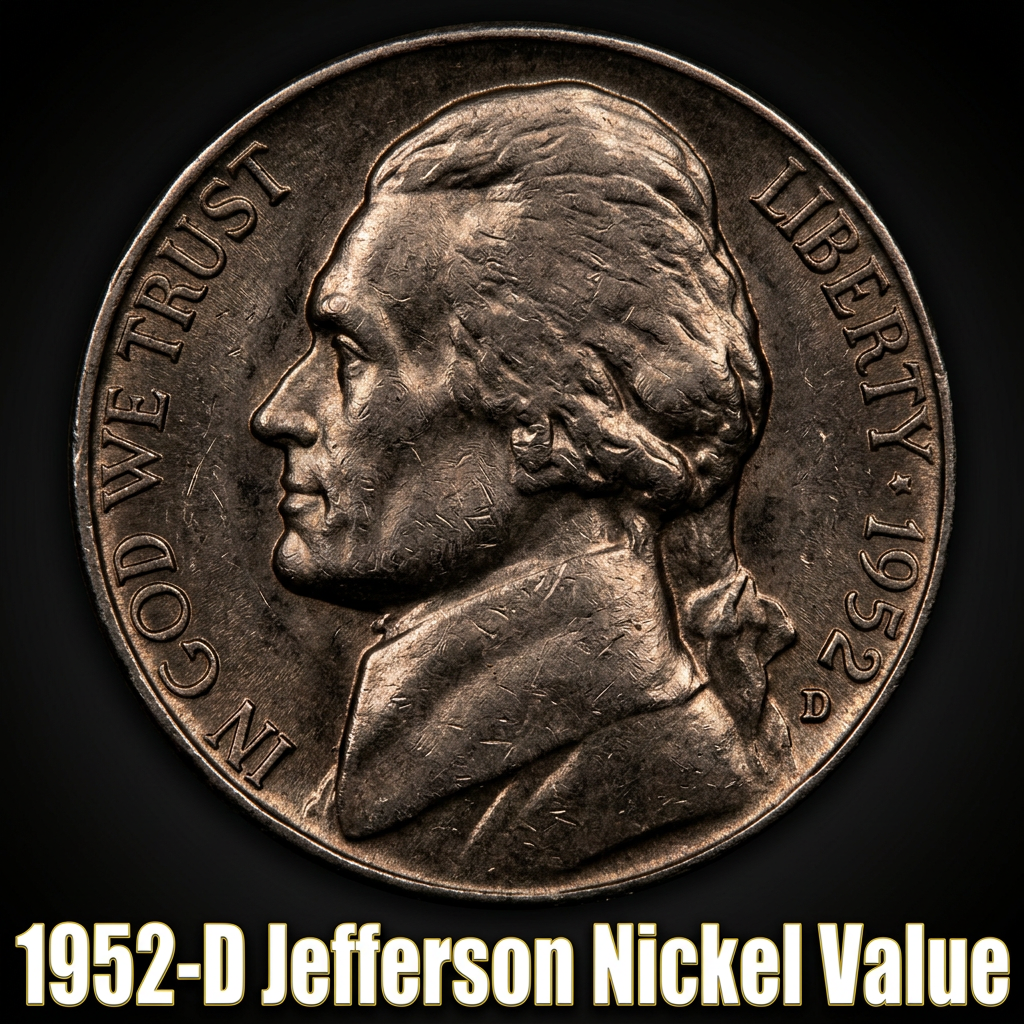
The 1952-D Jefferson Nickel is worth anywhere from $0.10 in heavily worn condition to over $100 or more in top mint state grades. Most circulated examples you find in old jars or change rolls fall somewhere in the middle — typically between $0.25 and $5. It’s a fun coin to research, and you might be surprised at what yours is actually worth.
What Makes the 1952-D Jefferson Nickel Special
The “D” mintmark on this coin stands for the Denver Mint, which struck a healthy 30,638,000 nickels in 1952. That’s a relatively large mintage, which is why most 1952-D nickels you encounter aren’t considered rare — but that doesn’t mean they’re worthless. Condition is everything in coin collecting, and even a common date like this one can fetch serious money if it survived in pristine, uncirculated condition.
If you’ve just discovered an old nickel and want a quick identification, using a coin identification app on your smartphone is the fastest way to confirm what you have before diving deeper into research.
The Jefferson Nickel series began in 1938 and features Felix Schlag’s iconic portrait of Thomas Jefferson on the obverse and Monticello on the reverse. The 1952-D sits squarely in what collectors call the “classic era” of Jefferson Nickels — before major design modifications in later decades. While it’s not a key date, its appeal lies in its accessibility and potential value in high grades.
1952-D Jefferson Nickel Value by Grade
Grade is the single biggest factor in determining what your 1952-D nickel is worth. Coins are graded on the Sheldon scale from 1 (barely identifiable) to 70 (perfect). Here’s a simple breakdown of estimated values:
| Grade | Condition Description | Estimated Value |
|---|---|---|
| G-4 (Good) | Heavy wear, design visible | $0.10 – $0.25 |
| F-12 (Fine) | Moderate wear, major details clear | $0.35 – $0.75 |
| EF-40 (Extremely Fine) | Light wear on high points | $1.00 – $3.00 |
| MS-63 (Mint State) | Uncirculated, minor bag marks | $10 – $25 |
| MS-65 (Gem Uncirculated) | Strong luster, few contact marks | $30 – $60 |
| MS-67 (Superb Gem) | Near flawless, exceptional eye appeal | $100+ |
For the most up-to-date market data, you can check current 1952-D Jefferson Nickel prices across mint state grades to see how recent auction results are trending.
Full Steps — The Detail That Changes Everything
Here’s something many beginners don’t know: on Jefferson Nickels, the depiction of Monticello’s steps on the reverse can dramatically increase a coin’s value. A 1952-D nickel that shows “Full Steps” — meaning five or six complete, uninterrupted steps on Monticello — is considered a premium coin by collectors. The FS designation from major grading services like PCGS or NGC can push an already valuable MS-65 coin well past $200, and MS-66 FS examples have sold for several hundred dollars.
Why are Full Steps rare? Because the steps were located in a spot that was prone to weak strikes and bag damage at the mint. Most 1952-D nickels show incomplete or flat steps, making a fully struck example genuinely scarce. To identify Full Steps on your coin, use a magnifying glass or jeweler’s loupe and examine the reverse carefully. CoinKnow also has great visual guides built into its interface to help you spot premium attributes like Full Steps without being an expert.
How to Assess Your 1952-D Nickel at Home
Before sending your coin to a professional grader, you can do a basic evaluation yourself. Start by examining the coin under good natural light. Look at Jefferson’s cheekbone, hair detail above the ear, and the triangular area near his eyebrow — these are the first spots to show wear. On the reverse, check Monticello’s dome and the pillars for sharpness.
Avoid cleaning your coin at all costs. Cleaning destroys natural surfaces and significantly reduces value — even a scratched, cleaned MS-65 could be graded as “details” by PCGS or NGC and sell for a fraction of the price. If the coin looks like it’s never been used, it probably deserves professional grading.
You can find a comprehensive detailed value breakdown for the 1952 nickel including the Denver Mint issue that walks through circulated and uncirculated pricing in plain language.
For quick coin assessments on the go, CoinKnow is one of the most convenient tools available — just scan your coin and get an instant grade estimate along with current market pricing data, all from your phone.
Is It Worth Getting Professionally Graded?
For most circulated 1952-D nickels, professional grading isn’t cost-effective. Grading fees from PCGS or NGC typically start around $20–$30 per coin, which can exceed the coin’s actual value in lower grades. However, if your coin appears fully uncirculated with strong luster and you suspect it might be MS-65 or higher — especially if it shows Full Steps — professional grading is absolutely worth considering. A certified, slabbed MS-67 FS example can be worth ten to twenty times more than a raw coin in the same condition, simply because buyers trust the third-party opinion.
If you’re unsure where your coin lands, CoinKnow offers side-by-side image comparisons that help you realistically assess grade before committing to a submission fee.
FAQ
Q: How do I find the mintmark on my 1952 Jefferson Nickel?
A: Flip the coin to the reverse side and look to the right of Monticello. On a 1952-D, you’ll see a small “D” in that location. If there’s no mintmark at all, it was made at the Philadelphia Mint.
Q: My 1952-D nickel looks shiny and new — is it worth a lot?
A: It could be! If the coin has never been cleaned and shows original mint luster, it may grade as uncirculated. In that case, getting a second opinion or using a grading app like CoinKnow is a smart first step before assuming it’s valuable.
Q: Are all 1952-D nickels made of silver?
A: No. Standard 1952-D Jefferson Nickels are made of 75% copper and 25% nickel — the same composition used today. Only the wartime “war nickels” from 1942–1945 contain silver (35%), and they have a large mintmark above Monticello to identify them.