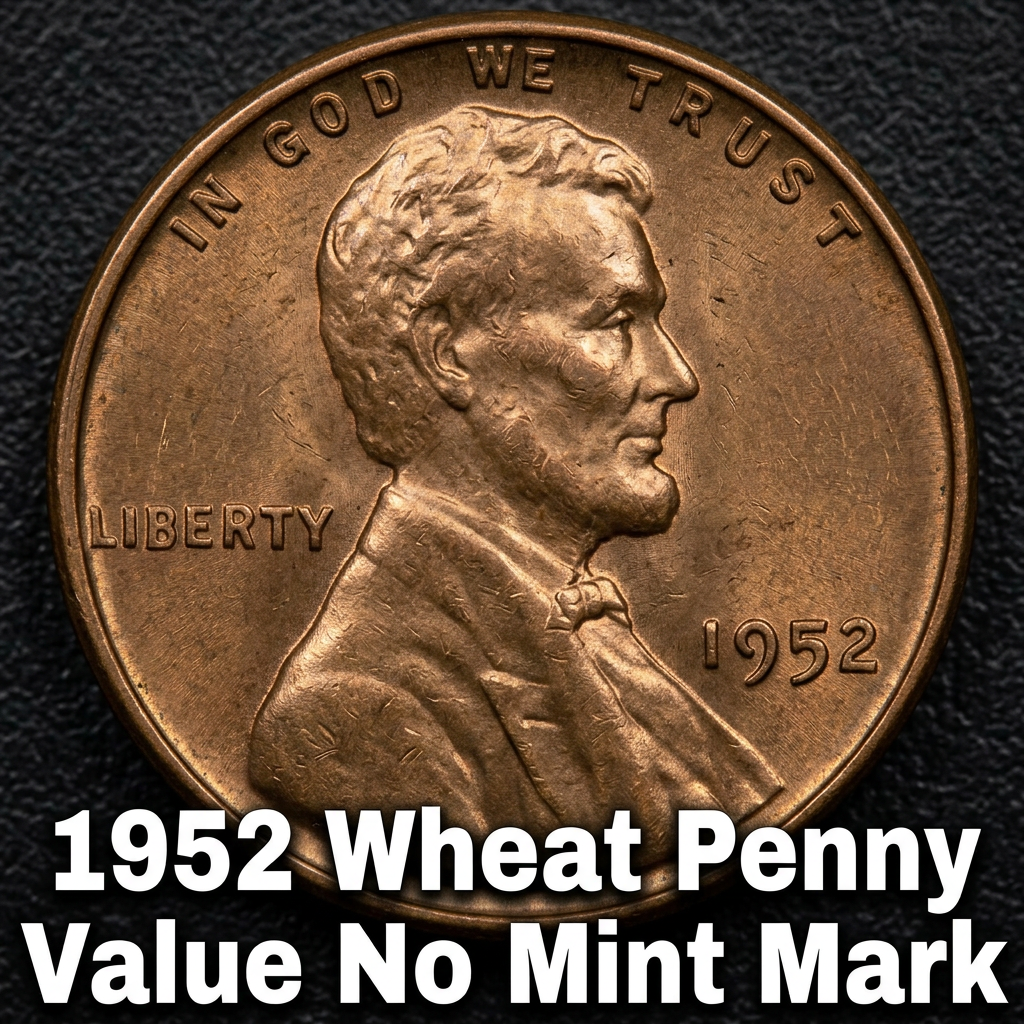
The 1952 Wheat Penny with no mint mark is worth anywhere from $0.10 in heavily worn condition to over $15 or more in uncirculated grades — and high-grade examples can fetch significantly higher prices at auction. If you found one of these old cents in a jar, drawer, or inherited coin collection, you’re in the right place.
What Makes the 1952 No Mint Mark Wheat Penny Special
The 1952 Lincoln Wheat Penny without a mint mark was struck at the Philadelphia Mint, which historically did not place a mint mark on its coins. That year, Philadelphia produced over 186 million of these cents, making them relatively common in circulated grades. However, don’t let the large mintage fool you — well-preserved examples in mint state condition are still desirable to collectors and can carry a solid premium.
If you’re trying to figure out exactly what you have, a coin identification app can be a great starting point. These tools let you photograph your coin and get an instant read on its type, date, and mint mark — super helpful if you’re new to coin collecting. Once you know what you’ve got, you can dig deeper into its value.
The 1952 Wheat Penny features the classic Victor David Brenner design on the obverse — Abraham Lincoln’s portrait — and the iconic two wheat stalks on the reverse, which gave this series its beloved nickname. These pennies were minted from 1909 through 1958, and the 1952 issue sits right in the middle of the series’ later years.
1952 Wheat Penny Value No Mint Mark by Grade
The value of your 1952 no mint mark penny depends almost entirely on its condition, or “grade” in collector terms. A coin pulled from circulation will show wear on Lincoln’s cheek, hair, and the wheat ears on the reverse. The more detail that’s preserved, the more it’s worth.
Here’s a general value breakdown based on grade:
| Grade | Condition Description | Estimated Value |
|---|---|---|
| Good (G-4) | Heavy wear, outline visible | $0.10 – $0.25 |
| Fine (F-12) | Moderate wear, some detail | $0.25 – $0.50 |
| Extremely Fine (EF-40) | Light wear, strong detail | $1.00 – $2.00 |
| Uncirculated (MS-63) | No wear, some marks | $4.00 – $8.00 |
| Gem Uncirculated (MS-65+) | Sharp strike, full luster | $15.00 – $50.00+ |
For the most current market data, you can check the 1952 Wheat Penny MS Red price listings to see what collectors are actually paying right now in auction results and dealer sales.
How to Grade Your 1952 Wheat Penny at Home
You don’t need to be a professional numismatist to get a rough sense of your coin’s grade. Start by examining it under good lighting — natural daylight or a desk lamp works well. Look at Lincoln’s cheek and the high points of his hair above the ear. If those areas are flat and smooth, the coin has seen heavy circulation. If you can see defined hair strands and a sharp jawline, you’re looking at a finer example.
The reverse tells a similar story. Check the wheat stalks on both sides — if the individual lines of the grain are sharp and separated, that’s a sign of minimal wear. Coins that have never been circulated will also show original mint luster, a kind of cartwheel shine that flows across the surface when you tilt it under light.
Using CoinKnow can take a lot of the guesswork out of this process. The app gives you AI-assisted grading suggestions along with real-time value data, which is especially useful if you’re sitting on a whole batch of old wheat pennies and want to sort through them quickly. It’s one of the most practical tools available for everyday collectors.
Errors and Varieties That Can Increase the 1952 Wheat Penny Value
Most 1952 no mint mark pennies are straightforward, but there are a few error coins and varieties that can dramatically increase their value. The most notable is the doubled die variety, where the design elements appear slightly doubled due to a misalignment during the hubbing process. Look closely at the date, “LIBERTY,” and “IN GOD WE TRUST” lettering — any doubling in those areas is worth a closer look.
Off-center strikes are another valuable error type. If Lincoln’s portrait appears shifted significantly from the center, the coin could be worth anywhere from $10 to $100 or more, depending on how dramatic the off-center is and the coin’s overall grade.
Broadstrikes (coins struck without a collar) and die caps are rarer and tend to command even higher premiums. These are the kinds of finds that make coin hunting exciting — and if you suspect you have an error coin, it’s worth getting a professional opinion or submitting the coin to a grading service like PCGS or NGC.
For a detailed breakdown of all 1952 penny values including varieties, the complete 1952 penny value guide is a solid resource that covers both Philadelphia and branch mint issues side by side.
Should You Clean or Hold Your 1952 Wheat Penny
Here’s a rule that every coin collector lives by: never clean your coins. It might seem like polishing up that old penny would make it look better and increase its value, but the opposite is true. Cleaning removes the original surface and patina, which collectors and grading services consider damage. A cleaned coin will almost always grade lower and sell for less than a naturally toned example in the same condition.
If your coin is in decent shape, store it in a 2×2 cardboard flip or a non-PVC plastic sleeve to protect it from moisture and handling. Proper storage preserves value over time and keeps your coin looking its best for future buyers or appraisers.
If you want to stay organized and track what your collection is worth, CoinKnow lets you log individual coins, record their grades, and monitor price trends over time — all from your phone. It’s a genuinely handy tool if you’re starting to take your coin hobby more seriously.
Frequently Asked Questions
Q: How do I know if my 1952 penny is from Philadelphia?
A: If there is no mint mark on the obverse (front) of the coin just below the date, it was made at the Philadelphia Mint. A “D” indicates Denver, and an “S” indicates San Francisco.
Q: Is a 1952 wheat penny with no mint mark rare?
A: Not particularly — Philadelphia struck over 186 million of them. However, coins in gem uncirculated condition with full red luster are genuinely scarce and can be worth $15 to $50 or more to the right collector.
Q: Where is the best place to sell a 1952 Wheat Penny?
A: For common circulated examples, coin dealers or local coin shows are easy options. For nicer uncirculated coins or error varieties, online auction platforms like eBay or Heritage Auctions tend to get you closer to true market value. Getting your coin graded first can also help maximize what you receive.