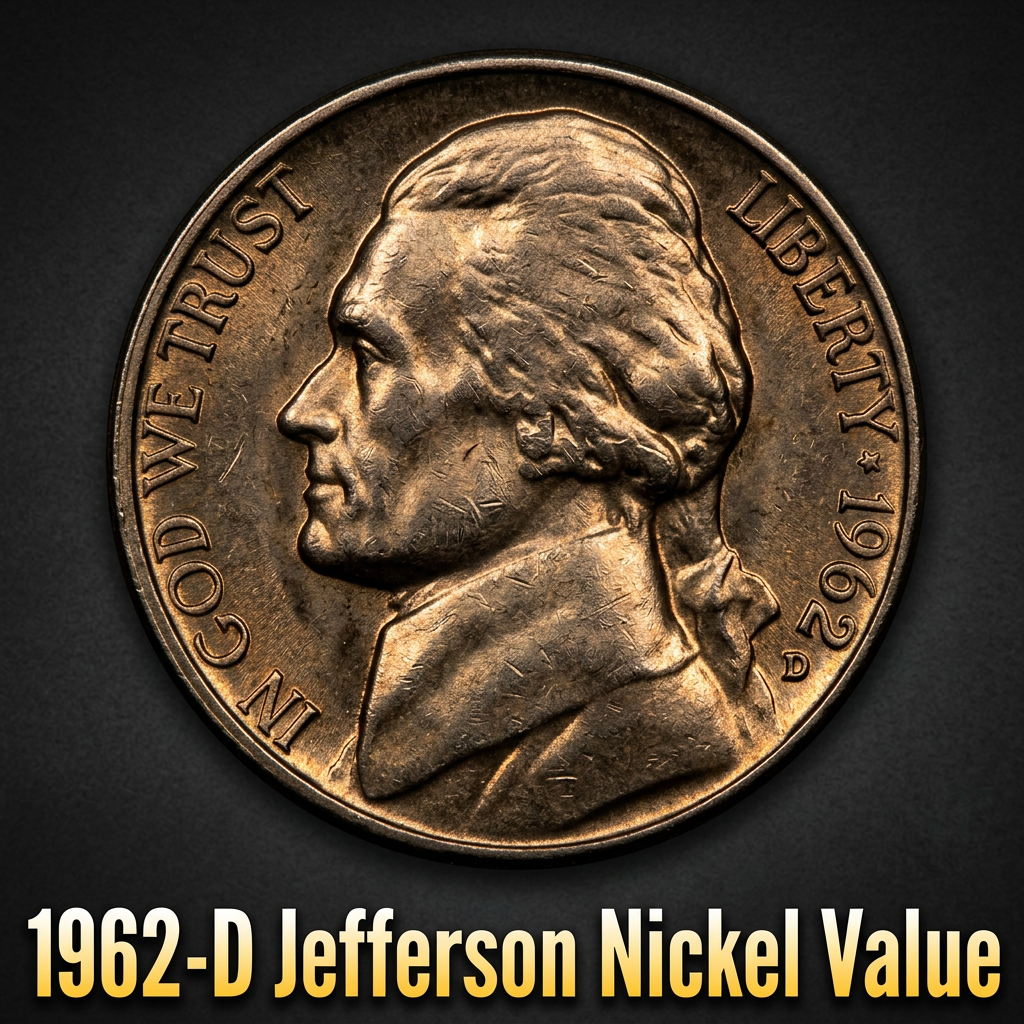
The 1962-D Jefferson Nickel is worth anywhere from $0.10 in heavily worn condition to over $20 or more in mint state grades, with top-quality examples occasionally fetching hundreds of dollars at auction. If you found one of these in an old coin jar or inherited collection, you’re in the right place to find out exactly what it’s worth.
What Makes the 1962-D Jefferson Nickel Special
The “D” in 1962-D stands for Denver, which is where this coin was struck at the Denver Mint. In 1962, the Denver Mint produced a massive 334,948,380 Jefferson Nickels — that’s over 334 million coins. Because of that high mintage, these nickels are quite common in circulated grades, which is why most worn examples aren’t worth much more than face value. But don’t let that discourage you. Coins that were never spent — ones that sat in original rolls or collections — can be worth real money, especially if they have strong luster and sharp strike details.
If you’re not sure what coin you have or want to identify it quickly, a coin identification app can help you confirm the date, mint mark, and variety before you start researching its value. Using CoinKnow is one of the fastest ways to get a reliable read on what you’re holding — just snap a photo and let the app do the work.
1962-D Jefferson Nickel Value by Grade
The value of any coin depends heavily on its condition, which collectors call “grade.” A heavily circulated 1962-D nickel with flat details and wear on Jefferson’s cheek and the Monticello steps is worth very little. A gem uncirculated example with full, crisp steps on Monticello — called “Full Steps” or FS — is a completely different story.
Here’s a general value breakdown for the 1962-D Jefferson Nickel:
| Grade | Description | Estimated Value |
|---|---|---|
| Good (G-4) | Heavy wear, major details visible | $0.10 – $0.25 |
| Fine (F-12) | Moderate wear, all lettering clear | $0.25 – $0.50 |
| Extremely Fine (EF-40) | Light wear on high points | $0.75 – $1.50 |
| Uncirculated (MS-63) | No wear, some bag marks | $3 – $8 |
| Gem Uncirculated (MS-65) | Sharp strike, strong luster | $10 – $25 |
| MS-65 Full Steps (FS) | Gem grade with full Monticello steps | $50 – $300+ |
For the most current auction results and certified coin prices, you can check out detailed 1962-D Jefferson Nickel price data in mint state grades, which tracks what these coins are actually selling for right now.
The Full Steps Factor and Why It Matters So Much
One of the biggest value multipliers for Jefferson Nickels is the “Full Steps” designation. On the reverse of the coin, Monticello (Thomas Jefferson’s famous Virginia home) is depicted with a set of steps at the base. On weakly struck or worn coins, these steps blend together and lose definition. On a well-struck, uncirculated example, you can count five or even six clearly separated steps — and that’s what collectors are willing to pay a serious premium for.
The 1962-D is actually known for being somewhat inconsistently struck, meaning true Full Steps examples are harder to find than you might expect for such a high-mintage coin. That rarity within abundance is exactly what drives prices on the top-end coins higher. If you think you have a sharp, uncirculated 1962-D nickel, it’s worth getting it examined by a professional grading service like PCGS or NGC, because a certified Full Steps coin could be worth many times more than an ungraded example.
How to Check Your 1962-D Nickel’s Condition at Home
You don’t need to be an expert to do a basic condition check. Start by looking at the coin under good lighting — natural light or a single lamp held to the side works well. Check Jefferson’s cheekbone and hair above his ear; these are the first areas to show wear. Then flip the coin and look at the Monticello steps. Can you see clear separation between each step? If yes, that’s a great sign.
Avoid cleaning the coin under any circumstances. Even gentle rubbing with a cloth can scratch the surface and destroy mint luster, which drops the value dramatically. Collectors strongly prefer original, uncleaned coins — even if they look a little dull. For a full breakdown of what your specific coin might be worth, this detailed 1962 nickel value resource gives you condition-by-condition pricing to help you figure out where your coin lands.
CoinKnow also offers grading tips inside the app, so you can compare your coin against reference images for each grade level — a handy tool if you’re just getting started in coin collecting.
Is the 1962-D Jefferson Nickel Worth Keeping?
For most people who find a circulated 1962-D Jefferson Nickel in their change or a coin jar, the monetary value is modest — maybe a dime or a quarter at most. But if you’ve found one that looks bright, shiny, and uncirculated — especially with crisp step details on the reverse — it could be worth holding onto or having professionally evaluated.
Even beyond dollar value, these coins are a great entry point into collecting Jefferson Nickels as a series. The series runs from 1938 to today, and building a complete set in high grades is a rewarding hobby that many Americans enjoy. CoinKnow can help you track which dates and mint marks you still need and what each one is worth in current market conditions.
FAQ
Q: How do I find the mint mark on a 1962 Jefferson Nickel?
A: On 1962 nickels, the mint mark is located on the reverse (tails side) of the coin, to the right of Monticello. A “D” means it was struck in Denver. If there’s no mint mark, the coin came from the Philadelphia Mint.
Q: Are any 1962-D Jefferson Nickels rare or valuable errors?
A: Yes, error coins do exist. Look for doubled die varieties, off-center strikes, and coins struck on the wrong planchet. These are uncommon but can be worth significantly more than a regular 1962-D nickel. A coin identification app or professional numismatist can help you verify a suspected error coin.
Q: Should I have my 1962-D Jefferson Nickel graded by PCGS or NGC?
A: It’s generally only worth the cost of professional grading if your coin appears to be in uncirculated condition with sharp details — especially Full Steps. Grading fees typically start around $20–$30 per coin, so the coin needs to be worth at least that much in uncirculated grades to make it worthwhile.