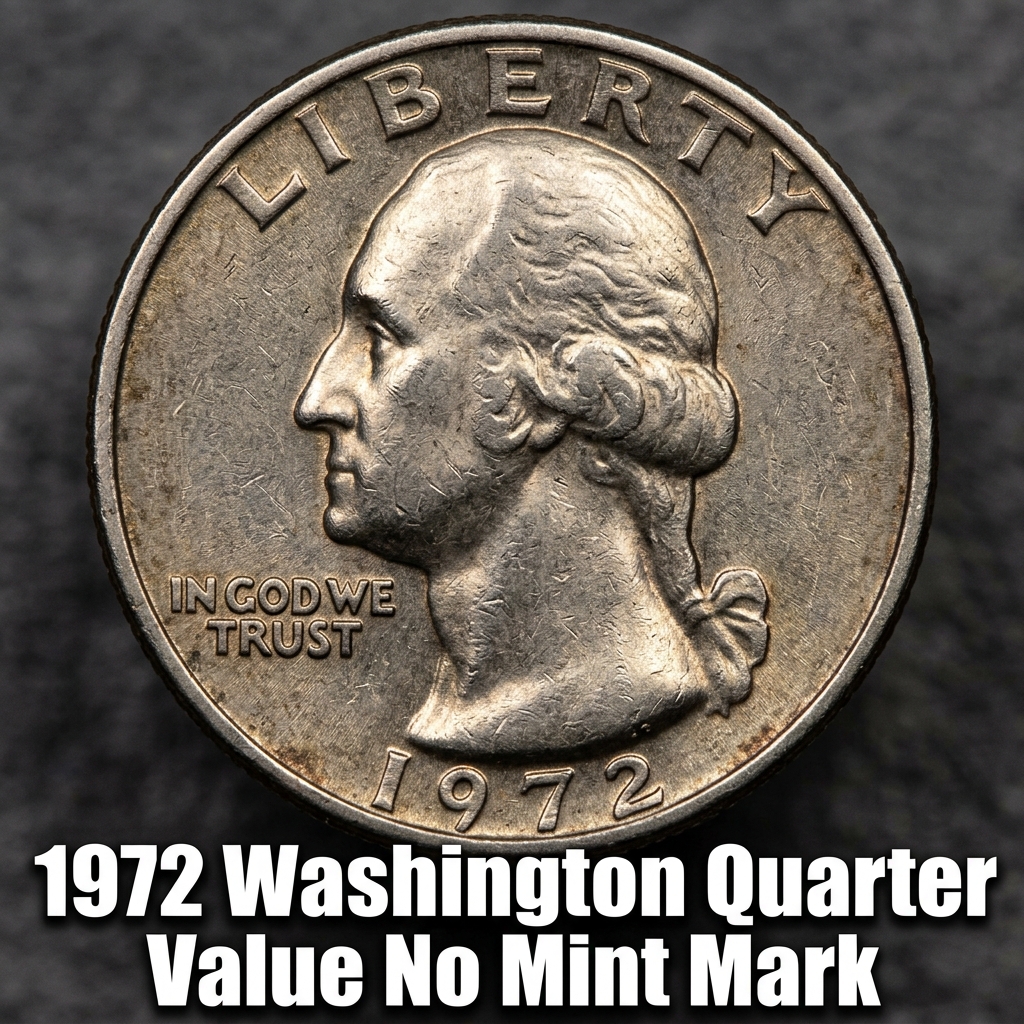
The 1972 Washington Quarter with no mint mark is worth between $0.25 in heavily circulated condition and over $10 in uncirculated grades, with top-tier specimens reaching $100 or more. If you found one in a coin jar or inherited a collection, you’re in the right place to learn exactly what it’s worth.
What the No Mint Mark on a 1972 Quarter Actually Means
If you’re holding a 1972 quarter and flipping it over looking for a tiny letter, don’t panic if you don’t see one. The absence of a mint mark simply means your coin was struck at the Philadelphia Mint. In 1972, Philadelphia did not add a “P” mint mark to its quarters — that practice didn’t begin until 1980. So a no mint mark 1972 Washington Quarter is perfectly normal and represents the largest mintage of the three facilities that year.
Using a coin identification app can help you quickly confirm which mint struck your coin, especially if you’re not sure what you’re looking at. Apps like CoinKnow make it easy for beginners to scan and identify coins in seconds, no magnifying glass required.
The Philadelphia Mint produced approximately 215 million quarters in 1972 — an enormous number. High mintage means most examples aren’t especially rare, but condition is everything when determining real value.
1972 Washington Quarter Value by Grade
Coin values depend heavily on condition, or what collectors call “grade.” A heavily worn 1972 quarter that’s been rattling around in a coin jar for decades is worth face value — 25 cents. But a coin that was set aside and never circulated can be worth real money.
Here’s a quick look at typical retail values for the 1972 No Mint Mark Washington Quarter:
| Grade | Description | Estimated Value |
|---|---|---|
| Good (G-4) | Heavily worn, flat details | $0.25 |
| Fine (F-12) | Moderate wear, some detail visible | $0.25 – $0.50 |
| Extremely Fine (EF-40) | Light wear on high points | $1 – $2 |
| Mint State (MS-63) | Uncirculated, minor blemishes | $5 – $10 |
| Mint State (MS-65) | Gem uncirculated, sharp strike | $15 – $35 |
| MS-67 or Higher | Superb gem, near perfect | $100+ |
For the most current market data, you can check live auction prices and certified values for the 1972 Washington Quarter to see what real buyers are paying right now.
What Makes Some 1972 Quarters Worth More
Most 1972 quarters you find in circulation are worth face value. But certain coins stand out from the pack and command real premiums. Here’s what to look for:
Strike quality: Coins from this era sometimes show weak strikes, especially on Washington’s hair above the ear. A sharply struck example is more desirable to collectors.
Surface preservation: Bag marks, contact marks from other coins during storage, and cleaning all reduce value significantly. Never clean an old coin — it almost always destroys collector value.
Error coins: Always check for doubling on the date or lettering. A doubled die variety or other mint error can multiply value many times over. Use a loupe or magnifier to inspect closely.
Certification: Coins graded and encapsulated by PCGS or NGC sell for higher prices because buyers trust the grade. A raw (ungraded) MS-65 might sell for $20, while a certified one could bring $35 or more.
CoinKnow is a great tool to help you understand grading basics before you invest in professional certification — it walks you through what different grade levels look like so you don’t go in blind.
Should You Hold or Sell Your 1972 No Mint Mark Quarter
For most people who find a 1972 quarter in change or an old collection, the honest answer is that it’s probably worth face value to a dollar or two. But don’t give up without a close look first.
If the coin appears to have never been used — bright luster, sharp details, no marks — it could be worth having professionally graded. That $5 grading fee could turn into $30 or $40 in resale value if the coin comes back gem uncirculated.
Check out detailed value information for the 1972 quarter across all grades and mint marks to compare what you have against known examples.
Coin shows, online auction platforms like eBay, and local dealers are all good options for selling if you have a higher-grade example. For circulated pieces, spending them is perfectly reasonable. CoinKnow can help you sort your collection quickly and figure out which coins deserve a second look before you spend or sell anything.
—
FAQ
Q: Is a 1972 quarter with no mint mark rare?
A: No, the 1972 no mint mark quarter is not rare. Philadelphia struck over 215 million of them. Most examples in circulation are worth face value, though uncirculated specimens can be worth several dollars to over $100 depending on grade.
Q: How do I know if my 1972 quarter is uncirculated?
A: An uncirculated coin will show full luster — a cartwheel-like sheen when you tilt it under light. There should be no wear on Washington’s cheek or the high points of the eagle on the reverse. Any flat gray areas from friction mean it circulated.
Q: Where is the mint mark on a 1972 quarter?
A: On 1972 quarters, the mint mark (D for Denver, S for San Francisco proof coins) appears on the obverse just behind Washington’s neck, below the hair ribbon. If there’s no letter there, the coin was made in Philadelphia.