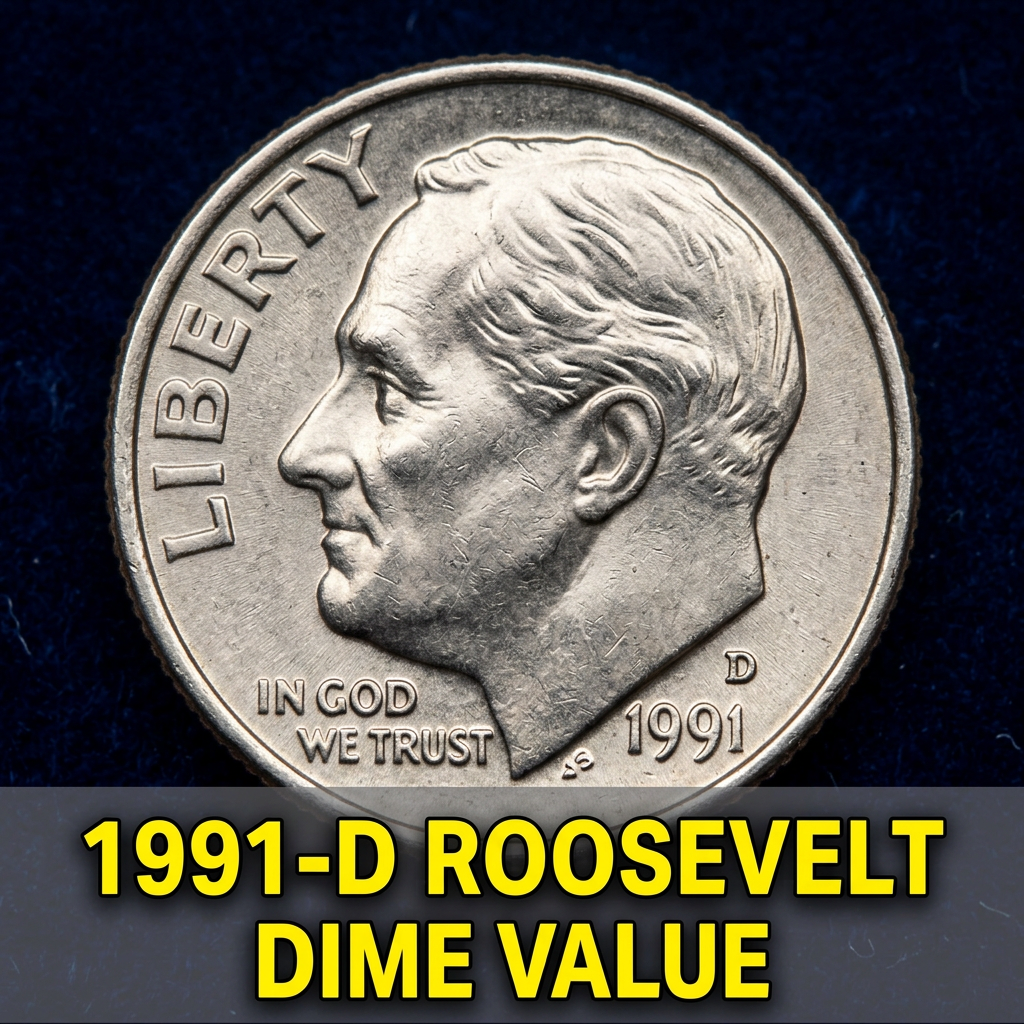
The 1991-D Roosevelt Dime is worth between $0.10 and $10 for most circulated examples, but well-preserved uncirculated specimens can fetch $15 to $30 or more depending on grade. If you found one of these coins in your change jar or an old collection, here’s what you need to know before deciding what to do with it.
What Is the 1991-D Roosevelt Dime?
The 1991-D Roosevelt Dime was struck at the Denver Mint, indicated by the small “D” mintmark on the obverse just above the date. It’s part of the long-running Roosevelt Dime series that began in 1946 to honor President Franklin D. Roosevelt. These coins are composed of a copper-nickel clad sandwich — no silver — which is typical of all Roosevelt dimes made after 1964. In 1991, Denver produced over 630 million of these dimes, making them extremely common in circulation. Because of that high mintage, most examples you’ll find in pocket change are worth only face value. However, coins that were never spent and kept in pristine condition are a different story. If you’re unsure whether your coin is a regular strike or something more special, using a coin identification app can help you quickly sort things out without needing to visit a dealer right away.
How Much Is a 1991-D Dime Worth in Different Grades?
Coin value is heavily tied to condition, also called “grade” in numismatic terms. A heavily worn 1991-D dime with flat details and little luster is essentially worth face value — 10 cents. But as condition improves, so does the price. Coins graded MS-65 or higher by professional services like PCGS or NGC can command a noticeable premium among collectors who focus on clad Roosevelt dimes.
Here’s a quick value breakdown based on grade:
| Grade | Description | Estimated Value |
|---|---|---|
| Good (G-4) | Heavy wear, major details visible | $0.10 |
| Fine (F-12) | Moderate wear, clear lettering | $0.10 – $0.25 |
| Extremely Fine (EF-40) | Light wear on high points | $0.25 – $1 |
| MS-63 | Uncirculated, some contact marks | $2 – $5 |
| MS-65 | Gem uncirculated, minimal marks | $10 – $20 |
| MS-67 or higher | Superb gem, very rare at this level | $25 – $100+ |
For the most current auction results and certified coin pricing, you can check detailed 1991 Roosevelt Dime price data across mint state grades to see where recent sales have landed.
Does the Denver Mint Make the 1991-D More Valuable Than Other Versions?
In 1991, three types of Roosevelt dimes were produced: the Philadelphia (no mintmark), the Denver (D mintmark), and the San Francisco Proof (S mintmark). The 1991-D had a higher mintage than the Philadelphia issue that year, so it’s not considered scarcer by default. However, collector demand and eye appeal can still push certain examples higher. Among registry set collectors — people who compete to own the highest-graded coins in a series — a spotless 1991-D in MS-68 could be worth hundreds of dollars. These ultra-high grades are rare and exciting finds, but for the average person, most 1991-D dimes are still everyday pocket change. The CoinKnow app is a great tool for checking mintage figures and comparing your coin’s condition to graded examples instantly.
Are There Any Errors or Varieties Worth Looking For?
Error coins are where things get really interesting. While the 1991-D is a common date overall, error varieties do occasionally appear and can dramatically increase value. Types to look for include doubled die obverse errors (where lettering or Roosevelt’s portrait shows slight doubling), off-center strikes, and die cap errors. A significant off-center strike — say, 50% off-center — can be worth $50 to $150 even in circulated condition. Doubled die errors showing clear doubling on “LIBERTY” or the date are worth carefully examining. These aren’t guaranteed to be valuable without verification, so getting a second opinion matters. You can find a full breakdown of the 1991 dime’s value including error coin examples that will help you figure out if your coin might be something special. CoinKnow also helps users identify potential error coins by comparing photos to known varieties in its database.
How to Get the Best Price for Your 1991-D Dime
If your coin is circulated, the honest answer is that it’s worth face value unless it’s part of a larger lot. Dealers generally won’t pay premiums for common clad coins without significant grade or error interest. But if your 1991-D is beautifully uncirculated, consider getting it graded by PCGS or NGC — professional certification adds credibility and often increases what buyers will pay. You can also sell through platforms like eBay, where collectors search for specific grades and mintmarks. Coin shows are another option, and going in informed — using resources like CoinKnow — will help you negotiate confidently.
—
Frequently Asked Questions
Q: Is the 1991-D Roosevelt Dime made of silver?
A: No. The 1991-D dime is made of a copper-nickel clad composition. Roosevelt dimes were only struck in 90% silver from 1946 through 1964. After that, silver was removed from circulating dimes entirely.
Q: How can I tell if my 1991-D dime is uncirculated?
A: Look for full mint luster — a shiny, cartwheel-like reflection when you tilt the coin under a light source. Circulated coins will show flat, dull surfaces where metal has been worn away from contact. Any visible wear on the high points of Roosevelt’s cheek or the torch on the reverse means it’s been circulated.
Q: What is the most valuable 1991-D Roosevelt Dime ever sold?
A: High-grade certified examples in MS-68 Full Bands (a designation indicating sharp strike quality on the torch bands) have sold for over $100 at major auction houses. Coins at MS-69 are exceptionally rare for this date and could command much higher prices if they ever come to market.