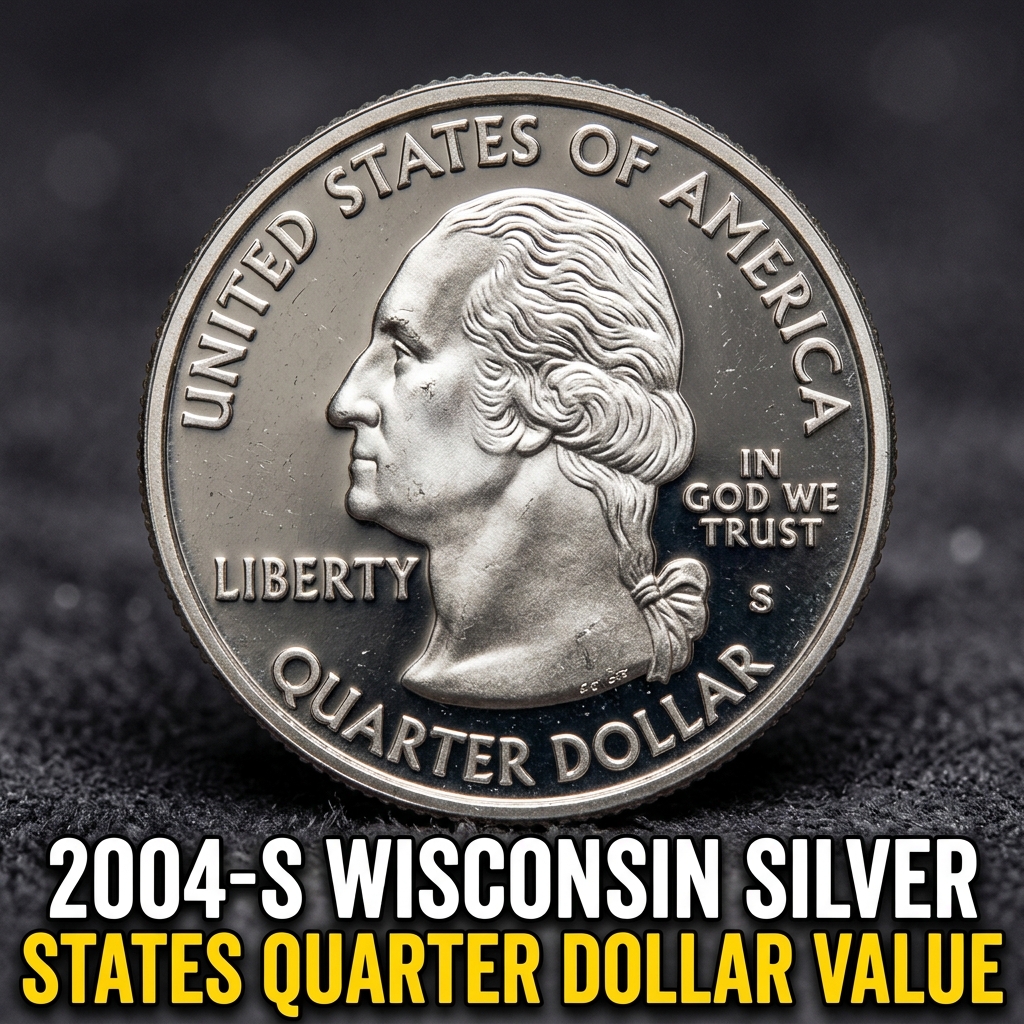
The 2004-S Wisconsin Silver State Quarter is worth anywhere from $5 in lightly circulated condition to over $15 or more in pristine proof grades, making it a surprisingly interesting find for everyday collectors. If you’ve stumbled across one of these shiny quarters, you’re in the right place to learn exactly what it could fetch.
Whether you found it tucked in an old coin jar or inherited a collection, using a reliable coin identification app is one of the smartest first steps you can take to confirm what you have before buying or selling.
What Makes the 2004-S Wisconsin Silver Quarter Special
The 2004-S Wisconsin State Quarter was struck at the San Francisco Mint specifically for proof sets. Unlike the regular circulation quarters you’d find in pocket change, the “S” mintmark tells you this coin was made with extra care — polished dies, slower striking speeds, and mirror-like fields. But here’s what really sets some of these coins apart: silver. The United States Mint released a special Silver Proof Set that year, and the quarters inside contained 90% silver and 10% copper — the same composition used in pre-1965 coinage. A standard clad proof version exists too, but the silver version carries a clear premium in today’s market. Collectors and everyday sellers alike need to know which version they’re holding before pricing their coin. The silver ones are heavier (6.25 grams vs. 5.67 grams), and a quick scale test can confirm it if you don’t have documentation from the original mint set.
2004-S Wisconsin Silver Quarter Values by Grade
Value depends heavily on the coin’s condition, and proof coins are graded on a slightly different scale than business-strike coins. Here’s a simple breakdown of current market values:
| Grade | Description | Estimated Value |
|---|---|---|
| PR-65 | Gem Proof, minor blemishes | $8 – $12 |
| PR-67 | Superb Gem Proof | $12 – $18 |
| PR-69 DCAM | Deep Cameo, near perfect | $18 – $30 |
| PR-70 DCAM | Perfect Deep Cameo | $40 – $80+ |
The “DCAM” label — short for Deep Cameo — refers to that dramatic frosted-device-on-mirror-field appearance that makes proof coins so visually stunning. Coins graded PR-70 DCAM are the rarest and command the highest prices.
The Wisconsin Extra Leaf Varieties and Why They Matter
Here’s where things get exciting. In 2004, eagle-eyed collectors discovered that some Wisconsin quarters — primarily from the Denver Mint — showed an extra leaf on the ear of corn in the design. These are known as the “High Leaf” and “Low Leaf” varieties. While these error coins came from the Denver (D) mint rather than San Francisco, the discovery sparked enormous interest in the entire 2004 Wisconsin quarter series. If you’re looking at current market pricing data for 2004 State Quarters across different mint marks and grades, you’ll quickly notice how much condition and variety can swing the final number. The silver proof “S” mint coin doesn’t carry the leaf error, but riding on the wave of collector attention, even standard silver proofs from that year enjoy stronger demand than many other years in the 50 State Quarters program.
How to Check If Your Quarter Is Silver
Not every 2004-S Wisconsin quarter is silver. The Mint produced both clad and silver versions for proof sets. Here’s a quick way to tell the difference:
– Edge color: Clad coins show a copper-colored stripe along the edge. Silver proof coins have a solid silver-gray edge.
– Weight: Silver quarters weigh 6.25 grams; clad versions weigh 5.67 grams.
– Packaging: Silver proof sets usually came in a distinct box labeled “Silver Proof Set.”
If you want a more comprehensive look at what your specific coin is worth today, the detailed 2004 quarter value guide at CoinValueApp breaks things down by mint mark, variety, and grade — very helpful if you’re trying to make a selling decision. You can also scan your coin with CoinKnow, a popular app that helps everyday people identify coins and get instant value estimates right from their phones.
Should You Sell or Hold the 2004-S Wisconsin Silver Quarter
If your coin is still in its original mint packaging and unhandled, keep it that way. Proof coins lose significant value the moment they’re removed from their holders and touched with bare hands. For most collectors, a PR-69 DCAM in an NGC or PCGS slab is the sweet spot — certified, attractive, and liquid in the secondary market. If you’re new to selling coins, CoinKnow can help you understand the grading language before you approach a dealer, so you don’t leave money on the table. The 2004-S Wisconsin Silver State Quarter isn’t going to retire you, but it’s a meaningful piece of American coinage history — and knowing its true value is always worth the few minutes it takes to research.
—
Frequently Asked Questions
Q: How do I know if my 2004-S Wisconsin quarter is silver or clad?
A: Check the edge of the coin. A silver quarter will have a uniform silver-gray edge with no copper stripe. You can also weigh it — silver quarters weigh 6.25 grams compared to 5.67 grams for clad versions.
Q: Is the 2004-S Wisconsin Silver Quarter rare?
A: It’s not extremely rare — the Mint produced millions of silver proof sets — but high-grade examples graded PR-69 DCAM or PR-70 DCAM by a third-party grading service like PCGS or NGC are much scarcer and command real premiums.
Q: Where is the best place to sell a 2004-S Wisconsin Silver Quarter?
A: eBay is a great starting point for checking recent sold prices. Coin shows and reputable dealers are good options for higher-grade coins. Apps like CoinKnow can also help you get a quick valuation before you decide where to sell.