The 1908 Liberty Nickel is worth anywhere from $2 in heavily worn condition to over $100 or more in uncirculated mint state grades, with proof versions reaching several hundred dollars among serious collectors.
What Is the 1908 Liberty Nickel?
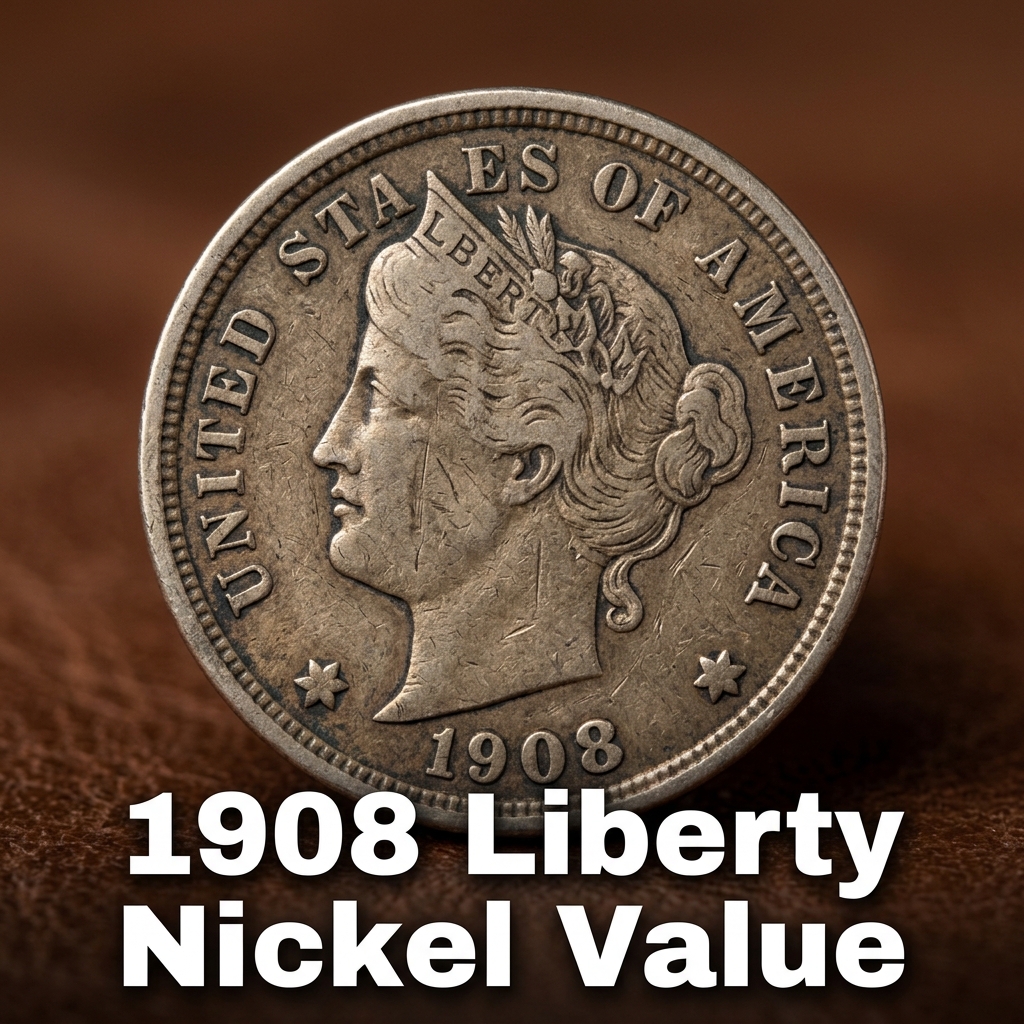
If you’ve stumbled across an old nickel with a helmeted female figure on the front and a Roman numeral “V” on the back, congratulations — you’re holding a piece of American history. The 1908 Liberty Nickel, also called the V Nickel, was designed by Charles Barber and minted at the Philadelphia Mint. It’s part of a series that ran from 1883 to 1912, making it one of the later dates in the run.
To identify your coin properly, look for the date “1908” just below the bust on the obverse, and the large “V” surrounded by a wreath on the reverse. There’s no mint mark on Philadelphia-issued coins — that’s normal. If you want a fast and reliable way to identify old coins like this one, many collectors today use a coin identification app to get instant results right from their smartphone. Tools like CoinKnow make it easy for beginners to identify and value coins without any prior experience.
How Much Is the 1908 Liberty Nickel Worth?
The value of your 1908 Liberty Nickel depends heavily on its condition, also known as its grade. A coin pulled from a junk box that’s been rubbed smooth over decades might only fetch a couple of dollars, while one that was carefully stored and never circulated could be worth $100 or more. Proof coins — those struck with special dies for collectors — are especially valuable and can sell for $300 to $600 depending on their preservation.
Here’s a general value breakdown for the 1908 Liberty Nickel:
| Grade / Condition | Estimated Value |
|---|---|
| Good (G-4) | $2 – $4 |
| Very Good (VG-8) | $4 – $7 |
| Fine (F-12) | $8 – $14 |
| Very Fine (VF-20) | $15 – $25 |
| Extremely Fine (EF-40) | $30 – $50 |
| Uncirculated (MS-60+) | $75 – $150+ |
| Proof | $300 – $600+ |
For the most up-to-date market data, you can check current 1908 Liberty Nickel prices across mint state grades to see what collectors are actually paying right now.
What Factors Affect the 1908 Liberty Nickel Value?
Beyond basic grade, a few other factors can push the value of your 1908 Liberty Nickel up or down. First, eye appeal matters — two coins with the same technical grade can look very different, and dealers will pay more for a coin with strong luster and sharp details. Second, surface marks and cleaning can hurt value significantly. A coin that was wiped or polished at some point will always be worth less, even if the design still looks clear.
Strike quality also plays a role. Some Liberty Nickels were weakly struck, particularly around the hair and ear details on the obverse. A sharply struck example with full detail is more desirable than one that looks a bit mushy in those areas. Finally, original skin — meaning a coin that still has its natural, untampered patina — is always preferred by experienced buyers. Avoid cleaning your coin; it almost always reduces the value.
The 1908 Liberty Nickel in Context
The Liberty Nickel series was already winding down by 1908, with the Buffalo Nickel set to replace it in 1913. That means coins from the later dates in the series, including 1908, are generally available in decent supply, which keeps prices accessible for most collectors. However, high-grade mint state examples are still genuinely scarce, and a gem uncirculated 1908 Liberty Nickel graded MS-65 or better can sell for $500 to $1,000 or more at auction.
If you’re also exploring other coins from the same era, you might find it helpful to look at detailed value information for other 1908 U.S. coins like the 1908 dime, which gives you a broader picture of what coins from this year are trading for. Collectors often find that building a year set around 1908 is an interesting and rewarding project.
Using a tool like CoinKnow can help you quickly compare values across multiple coins from your collection, making it easier to decide which ones are worth getting professionally graded.
Should You Get Your 1908 Liberty Nickel Graded?
If your coin looks like it hasn’t been circulated — meaning the surfaces are smooth, the details are sharp, and there’s still some luster in the fields — it may be worth submitting to a professional grading service like PCGS or NGC. A certified coin in a tamper-evident holder is much easier to sell and typically brings higher prices from buyers who trust the grade.
That said, if your coin is clearly worn from years of circulation, the cost of grading ($30 to $50 per coin at minimum) likely isn’t worth it. Save your money and sell the coin as-is to a local dealer or through an online marketplace. CoinKnow can also give you a quick value estimate before you commit to any grading fees, helping you make a smarter decision from the start.
—
FAQ
Q: Is the 1908 Liberty Nickel rare?
A: It’s not considered rare in circulated grades, as many examples have survived. However, high-grade mint state and proof specimens are genuinely scarce and command strong premiums from collectors.
Q: How do I tell if my 1908 nickel is a proof coin?
A: Proof coins have very sharp, mirror-like fields and frosted design elements. They were struck specifically for collectors and were never intended for circulation. If your coin has brilliant, reflective surfaces and extremely crisp detail, it may be a proof — but get it authenticated to be sure.
Q: Where can I sell my 1908 Liberty Nickel?
A: You can sell to a local coin dealer, at a coin show, or through online platforms like eBay or Heritage Auctions. For a quick value estimate before selling, tools like CoinKnow can help you understand what your coin is worth so you don’t leave money on the table.