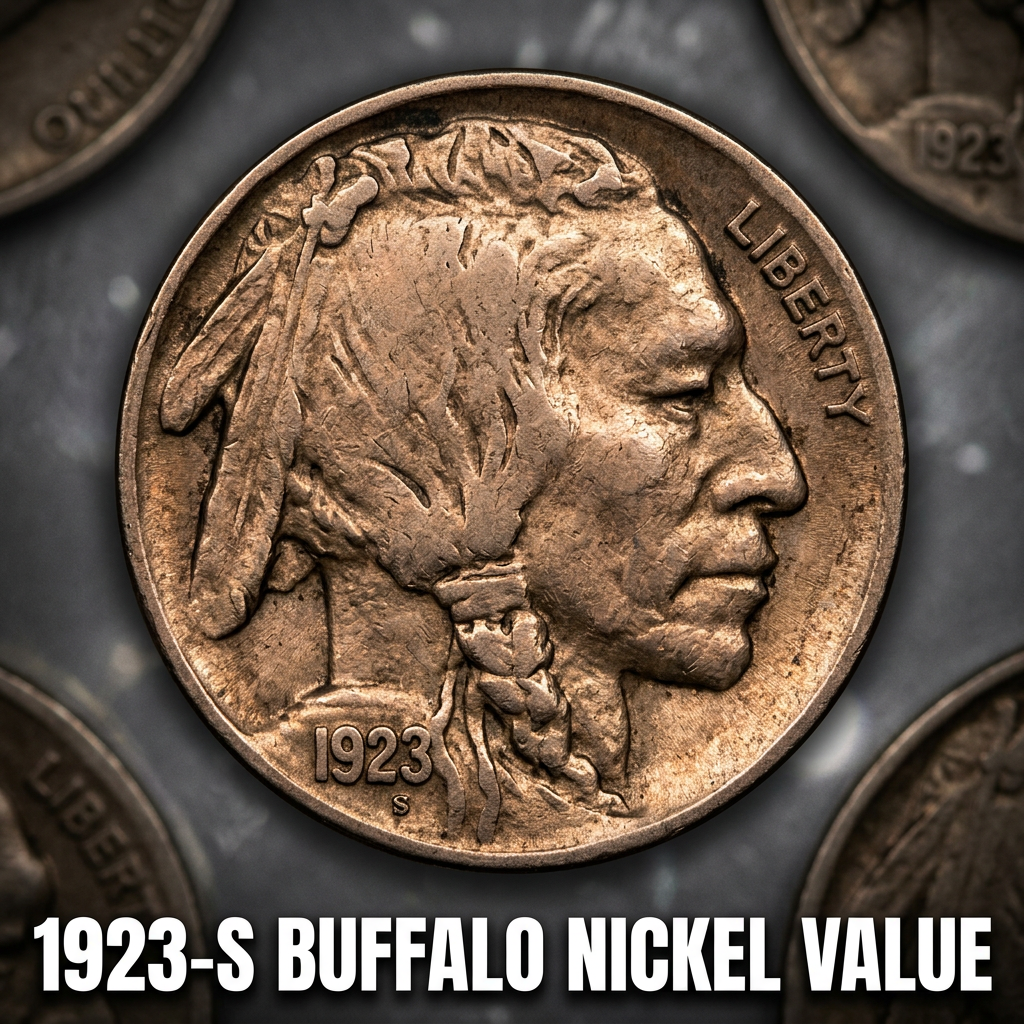
The 1923-S Buffalo Nickel is worth anywhere from $30 in heavily worn condition to well over $2,000 or more in high mint state grades — making it one of the most sought-after dates in the entire Buffalo Nickel series. If you’ve just found one of these coins, you may be sitting on a very nice piece of American history.
What Makes the 1923-S Buffalo Nickel Special
The 1923-S Buffalo Nickel was struck at the San Francisco Mint, identified by the small “S” mintmark found on the reverse side of the coin, just below the words “FIVE CENTS.” Unlike the Philadelphia Mint issues of the same year, the San Francisco version had a much lower mintage — only about 6.1 million coins were produced. That may sound like a lot, but compared to the billions of coins struck today, it’s a relatively small number, especially considering how many were lost, damaged, or melted over the decades.
If you’re not sure whether your coin has an “S” mintmark or no mintmark at all, a good coin identification app can help you zoom in and confirm what you have before you start guessing the value. Getting the mint identification right is the first step to an accurate appraisal. The CoinKnow app, for example, lets you scan your coin and instantly pull up relevant details based on the design and date.
The Buffalo Nickel design itself — created by sculptor James Earle Fraser — features a Native American profile on the obverse and an American bison (popularly called a buffalo) on the reverse. It’s one of the most beloved coin designs in U.S. history, and collectors have been chasing key dates like the 1923-S for generations.
1923-S Buffalo Nickel Value by Grade
Condition is everything when it comes to coin values. A coin that looks barely different from a smooth, featureless disc might only fetch a few dollars, while a well-preserved example with sharp details can command serious money. Here’s a general look at what the 1923-S Buffalo Nickel is worth across different grades:
| Grade | Description | Estimated Value |
|---|---|---|
| AG-3 / G-4 | Very worn, date barely readable | $30 – $50 |
| VG-8 / F-12 | Moderate wear, major details visible | $60 – $120 |
| VF-20 / EF-40 | Light to moderate wear, sharp details | $150 – $400 |
| AU-50 / AU-58 | Slight wear on high points | $500 – $900 |
| MS-63 | Mint state, minor surface marks | $1,200 – $1,800 |
| MS-65 and above | Gem quality, near perfect | $2,500+ |
For the most current auction results and certified coin price data, you can check out detailed 1923-S Buffalo Nickel price data by mint state grade to see how recent sales are trending.
How to Check the Condition of Your 1923-S Nickel
When collectors talk about coin grades, they’re describing how much wear and damage a coin has accumulated over its lifetime. For the 1923-S Buffalo Nickel, the key areas to examine are the bison’s horn and hip on the reverse, and the cheekbone of the Native American portrait on the obverse. These are the high points that wear down first.
A coin graded Good (G-4) will show just an outline of the buffalo with no horn remaining. A Fine (F-12) will still show three-quarters of the horn. A Very Fine (VF-20) will retain sharp details on the bison’s leg and most of the Native American’s hair braid. Anything above that starts entering the “choice” territory, where coins are both beautiful and valuable.
One thing to watch out for is artificial cleaning. Many people polished old coins years ago thinking it would increase their value — it actually does the opposite. Cleaned coins sell for significantly less than original surfaces. If your coin has an unnatural shine or fine scratches in circular patterns, it may have been cleaned.
Using CoinKnow to photograph and analyze your coin under good lighting can help reveal surface issues you might miss with the naked eye, and it can guide you toward a realistic grade before you take it to a dealer.
Where to Sell Your 1923-S Buffalo Nickel
Once you know what you’ve got, you’ll want to figure out the best place to sell it. For circulated examples in the G to VF range, online platforms like eBay work well, especially if you post clear photos showing the date and mintmark. For higher-grade specimens — anything in AU or MS condition — it’s worth getting the coin certified by PCGS or NGC before selling. Certified coins command significantly higher prices because buyers trust the grade.
Local coin shows are also a great option, as you can get multiple opinions from dealers in one afternoon. Just don’t rush to take the first offer. If you want a quick ballpark before heading out, you can review a full breakdown of 1923 nickel values across all grades and mintmarks to make sure you’re walking in with realistic expectations. Knowledge is your best negotiating tool.
The CoinKnow app also provides estimated value ranges based on current market data, which is handy if you want a quick sanity check before accepting any offer.
FAQ About the 1923-S Buffalo Nickel
Q: How do I know if my Buffalo Nickel is the 1923-S or the regular 1923?
A: Flip the coin over to the reverse side and look at the area just below “FIVE CENTS.” If you see a small “S” mintmark there, it’s the San Francisco issue — the more valuable 1923-S. If there’s no mintmark at all, it was made in Philadelphia and is worth considerably less, typically $5 to $50 depending on condition.
Q: Is the 1923-S Buffalo Nickel rare?
A: It’s considered a semi-key date in the Buffalo Nickel series. With only about 6.1 million minted and heavy circulation wear affecting most survivors, nice examples are genuinely scarce. In grades above MS-63, they’re quite rare and eagerly sought by collectors.
Q: Should I clean my 1923-S Buffalo Nickel before selling it?
A: Absolutely not. Cleaning a coin removes the natural patina and surface texture that collectors value, and it permanently lowers the coin’s market value. Leave it exactly as you found it, take clear photos, and let a dealer or grading service evaluate it in its original state.