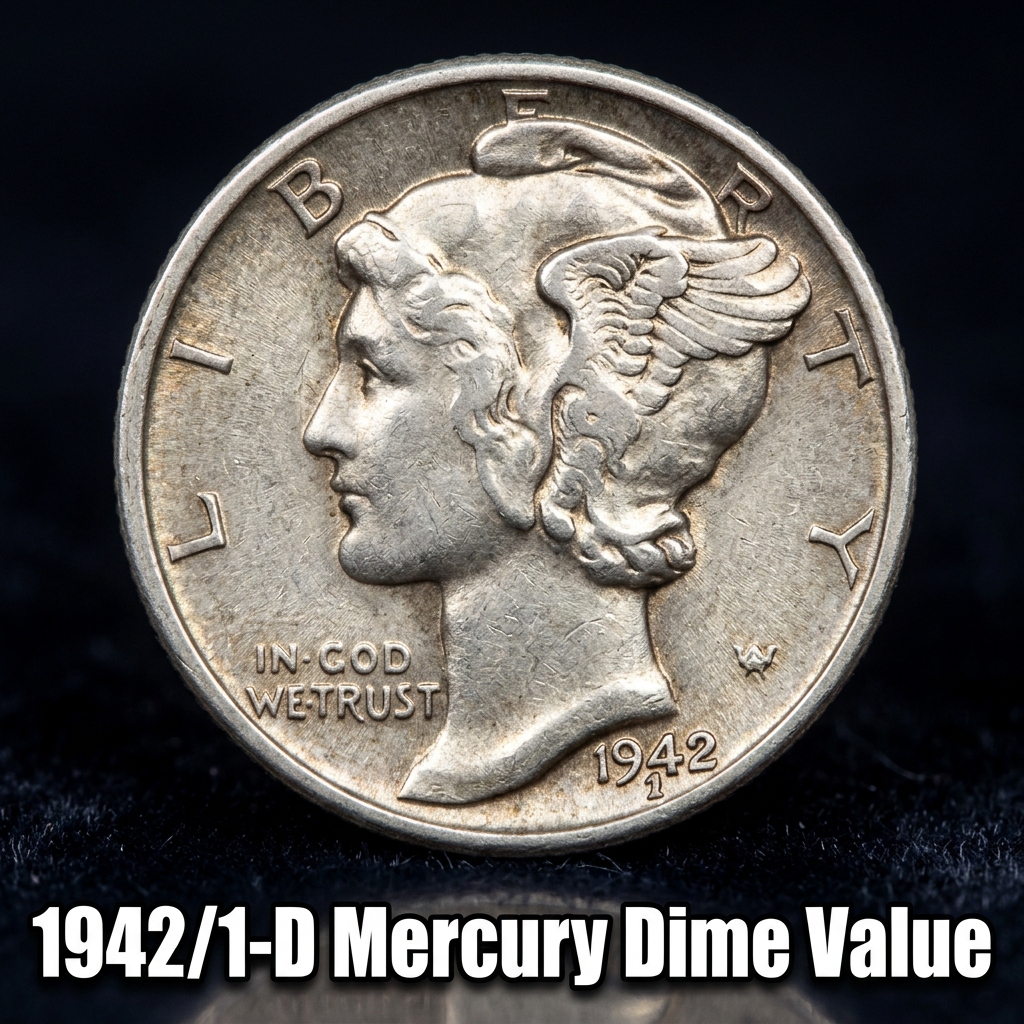
The 1942/1-D Mercury Dime is one of the most fascinating error coins in American numismatics, worth anywhere from $500 in heavily worn condition to well over $15,000 in high mint state grades. If you found one of these in an old collection or inherited it from a relative, you may be sitting on a serious piece of history.
Not sure if your dime is the real 1942/1 overdate variety? A good coin identification app can help you examine key design details and distinguish this rare error from a common 1942-D Mercury Dime. The difference in value is enormous, so it pays to know exactly what you have before making any decisions.
—
What Makes the 1942/1-D Mercury Dime So Special
The 1942/1-D Mercury Dime is an overdate error, meaning the Denver Mint accidentally used dies that still showed remnants of a “1” from 1941 beneath the “2” of 1942. When you look closely at the date under magnification, you can see the ghost of the “1” peeking out behind the top digit. This was a minting mistake that happened in the early production run, and it slipped through quality control.
Overdate errors like this are rare by nature. Most were caught and destroyed, but a small number entered circulation and made their way into everyday commerce. Decades later, sharp-eyed collectors started noticing these coins, and demand skyrocketed. Today, the 1942/1-D is considered one of the key dates in the entire Mercury Dime series — right alongside the famous 1916-D. Whether you’re a seasoned numismatist or a newcomer who just inherited grandpa’s coin jar, this overdate variety deserves your full attention.
The “D” mintmark on the reverse tells you the coin was struck at the Denver Mint. There is also a 1942/1 variety from the Philadelphia Mint (no mintmark), but the Denver version is generally considered slightly scarcer and tends to command premium prices across all grade levels.
—
How to Tell If You Have the Overdate Variety
Identifying the 1942/1-D requires a magnifying loupe or a jeweler’s loupe of at least 5x–10x magnification. Look directly at the date on the obverse (the side with Mercury’s portrait). On a genuine overdate, you’ll see that the upper portion of the “2” shows traces of the underlying “1” — most notably, the top horizontal serif of the “1” extends slightly above and to the left of the “2.”
Compare what you see to reference images from the PCGS or NGC photo galleries before drawing conclusions. Many beginners mistake worn digits or die damage for an overdate. If you’re still unsure, CoinKnow is a reliable tool that walks you through diagnostic points step by step, helping you spot the exact details that matter. A confirmed overdate is worth submitting to a professional grading service like PCGS or NGC, as a certified slab dramatically increases buyer confidence and resale value.
Keep in mind that the coin should never be cleaned. Cleaning removes the natural patina and can drop the value by 50% or more. Even if it looks dull or dirty, leave it alone until a professional has evaluated it.
—
1942/1-D Mercury Dime Value by Grade
Value varies enormously based on condition. A coin graded G-4 (Good) still fetches impressive sums because of the overdate’s rarity. As condition climbs into Fine, Extremely Fine, and eventually Mint State territory, prices rise steeply. Check current Mercury Dime price data across MS grades to see how the market has been trending recently.
| Grade | Description | Estimated Value |
|---|---|---|
| G-4 (Good) | Heavy wear, date and overdate visible | $500 – $750 |
| F-12 (Fine) | Moderate wear, design details clear | $800 – $1,200 |
| VF-30 (Very Fine) | Light wear on high points | $1,200 – $2,000 |
| EF-45 (Extremely Fine) | Slight wear, sharp details | $2,500 – $4,000 |
| MS-63 (Mint State) | Uncirculated, some marks | $6,000 – $9,000 |
| MS-65 (Gem Mint State) | Uncirculated, strong luster | $12,000 – $16,000+ |
These are approximate retail values based on recent auction results and dealer price lists. For a deeper look at the full 1942 Mercury Dime value breakdown including all mint varieties, that resource covers everything from circulated grades to high-end certified examples.
—
Where to Sell Your 1942/1-D Mercury Dime
Once you’ve confirmed you have the overdate variety, your next step is deciding where to sell. Your main options are coin dealers, auction houses, and online platforms like eBay or Heritage Auctions. For a coin of this caliber, professional auction houses tend to deliver the best results because they attract serious collectors willing to pay top dollar.
Before selling anywhere, get the coin certified by PCGS or NGC. An authenticated, graded coin in a tamper-evident slab removes doubt for buyers and almost always results in a higher final price. Submission fees are modest compared to the premium a slab adds to your sale price.
If you want to research values on your own first, CoinKnow provides up-to-date market data and helps you understand where your coin falls in the current collector market — useful information to have in hand before walking into any dealer’s shop or listing it online. Being informed means you won’t leave money on the table.
—
Frequently Asked Questions
Q: How can I tell the difference between a regular 1942-D Mercury Dime and the 1942/1-D overdate?
A: Look at the date under magnification. On the overdate, you’ll see remnants of a “1” beneath the “2” — specifically a horizontal serif line extending from the top of the digit. A regular 1942-D will have a clean “2” with no underlying traces. When in doubt, compare against certified reference images from PCGS or NGC.
Q: Is the 1942/1-D Mercury Dime rare?
A: Yes, it’s genuinely scarce. Population reports from major grading services show relatively few certified examples across all grades, and high-grade mint state survivors are especially hard to find. That rarity, combined with strong collector demand, is what drives the premium prices this coin commands.
Q: Should I clean my 1942/1-D Mercury Dime before having it graded?
A: Absolutely not. Cleaning — even with a soft cloth or mild soap — removes the original surface and patina. Grading services will note a coin as “cleaned” and assign a details grade rather than a numerical grade, which significantly reduces its market value. Store it in a non-PVC flip and take it directly to a professional for evaluation.