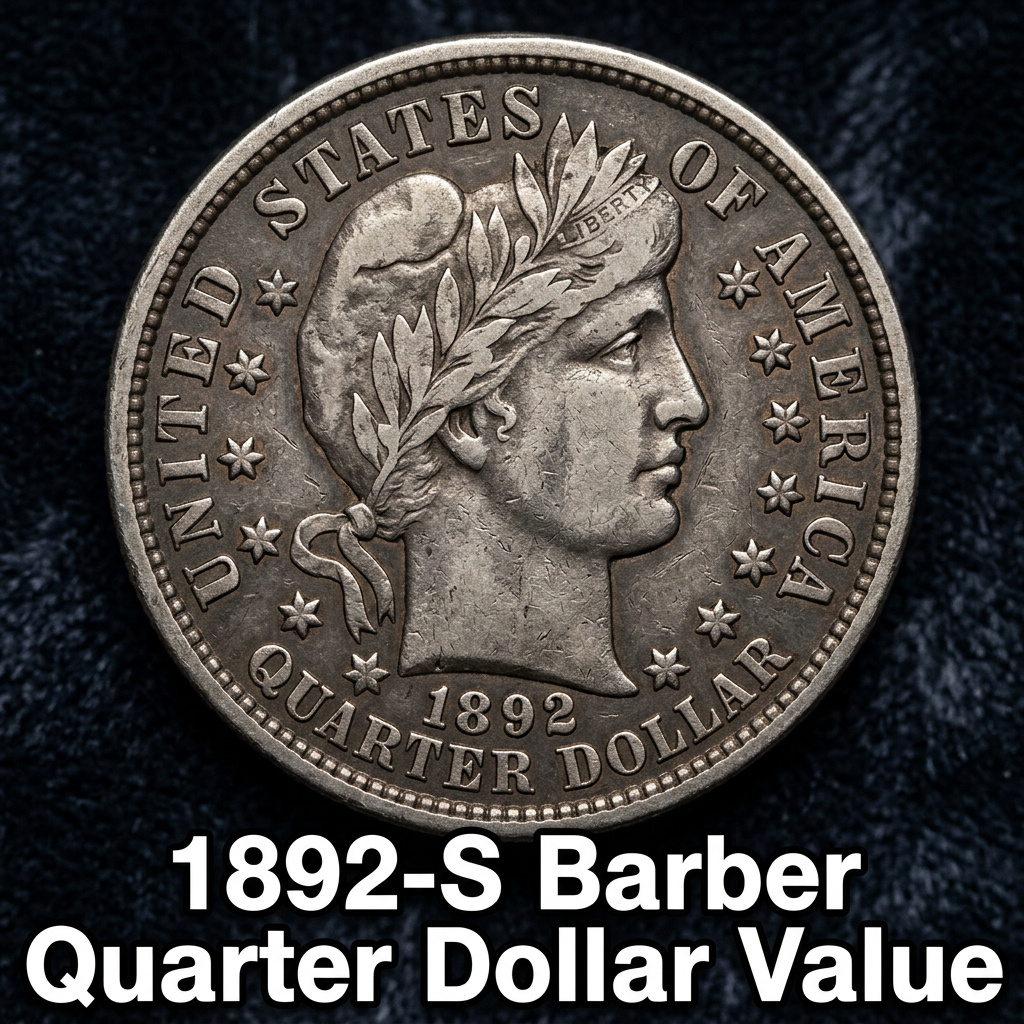
The 1892-S Barber Quarter Dollar is worth anywhere from $20 in heavily worn condition to over $3,000 or more in higher mint state grades. If you’ve recently found one of these old silver coins tucked away in a drawer or inherited coin collection, you’re holding a genuine piece of American history — and potentially some real money.
What Is the 1892-S Barber Quarter?
The 1892-S Barber Quarter was struck at the San Francisco Mint and represents the very first year this iconic coin series was produced. Designed by Charles E. Barber, the Chief Engraver of the United States Mint, this quarter features Lady Liberty wearing a Greco-Roman helmet on the obverse and a heraldic eagle on the reverse. The “S” mintmark on the reverse indicates it was minted in San Francisco.
The 1892 issue is historically significant because it launched the entire Barber coinage series, which ran from 1892 to 1916. The San Francisco version had a mintage of 964,079 coins — respectable but not enormous by modern standards. That relatively modest mintage, combined with the fact that most of these coins circulated heavily in everyday commerce, means finding one in decent condition today is genuinely exciting. If you’re unsure whether your coin is authentic or want help identifying it, a coin identification app can be a quick and reliable starting point before you consult a professional dealer.
1892-S Barber Quarter Value by Grade
The value of your 1892-S Barber Quarter depends heavily on its grade — essentially how much wear it shows. Coin collectors use a standardized scale called the Sheldon scale, which runs from 1 (barely identifiable) to 70 (perfect uncirculated). Here’s a general breakdown of what the 1892-S is worth across common grades:
| Grade | Description | Estimated Value |
|---|---|---|
| G-4 (Good) | Heavy wear, major design visible | $20 – $30 |
| VG-8 (Very Good) | Moderate wear, some detail remains | $35 – $55 |
| F-12 (Fine) | Even wear, clear lettering | $70 – $100 |
| VF-20 (Very Fine) | Light wear on high points | $130 – $200 |
| EF-40 (Extremely Fine) | Slight wear, sharp details | $300 – $450 |
| MS-60 (Mint State) | No wear, but may have contact marks | $800 – $1,500 |
| MS-65 (Gem Uncirculated) | Strong luster, minimal marks | $3,000+ |
Keep in mind that coin values shift with market demand and auction results. For a deeper look at related silver coinage from this era, you can also explore detailed 1892 silver dollar value information to better understand how silver content and year affect pricing across the board.
What Makes the 1892-S Barber Quarter Special to Collectors
Collectors have always appreciated the first-year issues of any series, and the 1892-S Barber Quarter is no exception. Because the San Francisco Mint struck fewer of these compared to the Philadelphia issue (which produced over 8 million coins), the “S” mintmark version is more desirable in the marketplace.
Additionally, the 1892 Barber Quarter series has two recognized varieties — the “Type 1” and “Type 2” reverses — which adds an interesting layer for variety collectors. Experts note that many 1892-S coins show characteristic striking weakness in certain areas due to the dies used at the San Francisco facility. This means even coins that grade “Very Fine” on paper might show weakness in Liberty’s hair detail or the eagle’s feathers. Always look closely or get a professional opinion before selling.
CoinKnow is a great resource for casual collectors and first-time sellers who want quick, trustworthy coin valuations from their phone without the intimidation of walking into a coin shop cold.
How to Check the Condition of Your 1892-S Barber Quarter
If you’ve pulled an 1892-S Barber Quarter out of an old jar or collection, here’s how to quickly assess what you might have. Start by looking at Liberty’s head on the obverse — if her hair above the ear and along the top of the cap shows sharp detail, you’re likely looking at a Fine grade or better. On heavily circulated coins, the hair blends into the helmet and the word “LIBERTY” on the headband may be faint or partially missing.
Check the mintmark on the reverse — it’s located just below the eagle, above the letters “DO” in “DOLLAR.” A clear, strong “S” is a good sign of overall coin preservation. Never clean your coin. Cleaning destroys the natural surface patina that collectors prize, and a cleaned coin is almost always worth significantly less than an original, unaltered example — even if it looks shiny to you.
Using CoinKnow to photograph and identify your coin before handling it further is a smart move that many everyday coin finders swear by.
Should You Sell or Hold Your 1892-S Barber Quarter?
That depends on your goals. If you found this coin by accident and don’t collect coins, selling to a reputable dealer or through a major auction house could put anywhere from $25 to several hundred dollars in your pocket depending on condition. If the coin grades EF or better, it may be worth getting it professionally graded by PCGS or NGC first — that certification can meaningfully increase buyer confidence and sale price.
If you’re starting to get the bug for coin collecting, the 1892-S Barber Quarter is a wonderful entry into the world of classic American silver coinage. The Barber series is very collectible, with coins from every year and mint available to build a complete set.
CoinKnow can help you track your finds, look up values, and even connect you with a broader community of coin enthusiasts who share your newfound passion.
—
FAQ
Q: Is the 1892-S Barber Quarter made of silver?
A: Yes. The 1892-S Barber Quarter is composed of 90% silver and 10% copper, just like all U.S. quarters made before 1965. Its silver melt value alone fluctuates with the spot price of silver but generally ranges from $4 to $5 in today’s market.
Q: How do I know if my coin is the 1892-S and not a different mint?
A: Look at the reverse side of the coin, just below the eagle’s tail feathers and above the “DO” in “DOLLAR.” An “S” mintmark means it was made in San Francisco. No mintmark indicates Philadelphia, and a “O” mintmark points to New Orleans.
Q: Is my 1892-S Barber Quarter worth getting professionally graded?
A: If your coin appears to be in Very Fine condition or better — meaning you can see clear detail in Liberty’s hair and the coin has no visible damage or cleaning — professional grading by PCGS or NGC is absolutely worth considering. Graded coins typically sell for more and are easier to sell to serious collectors.