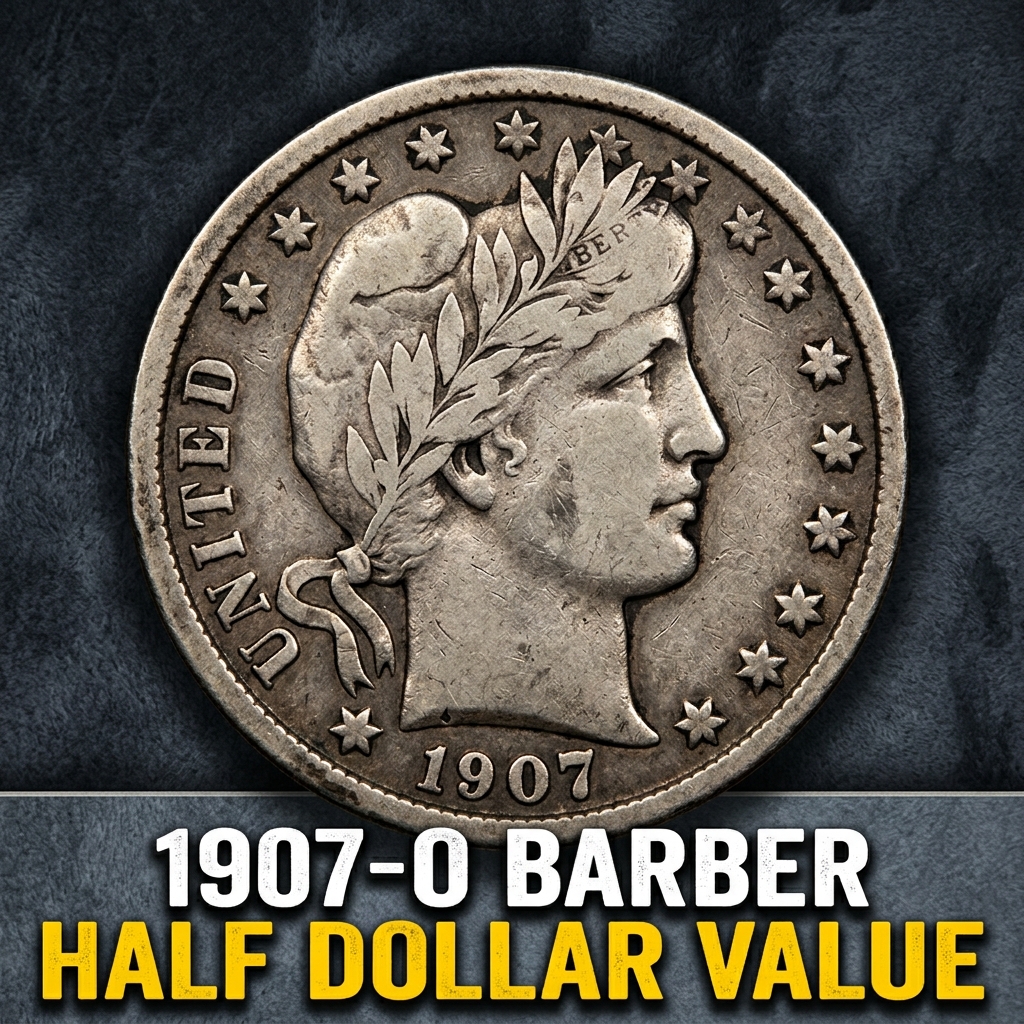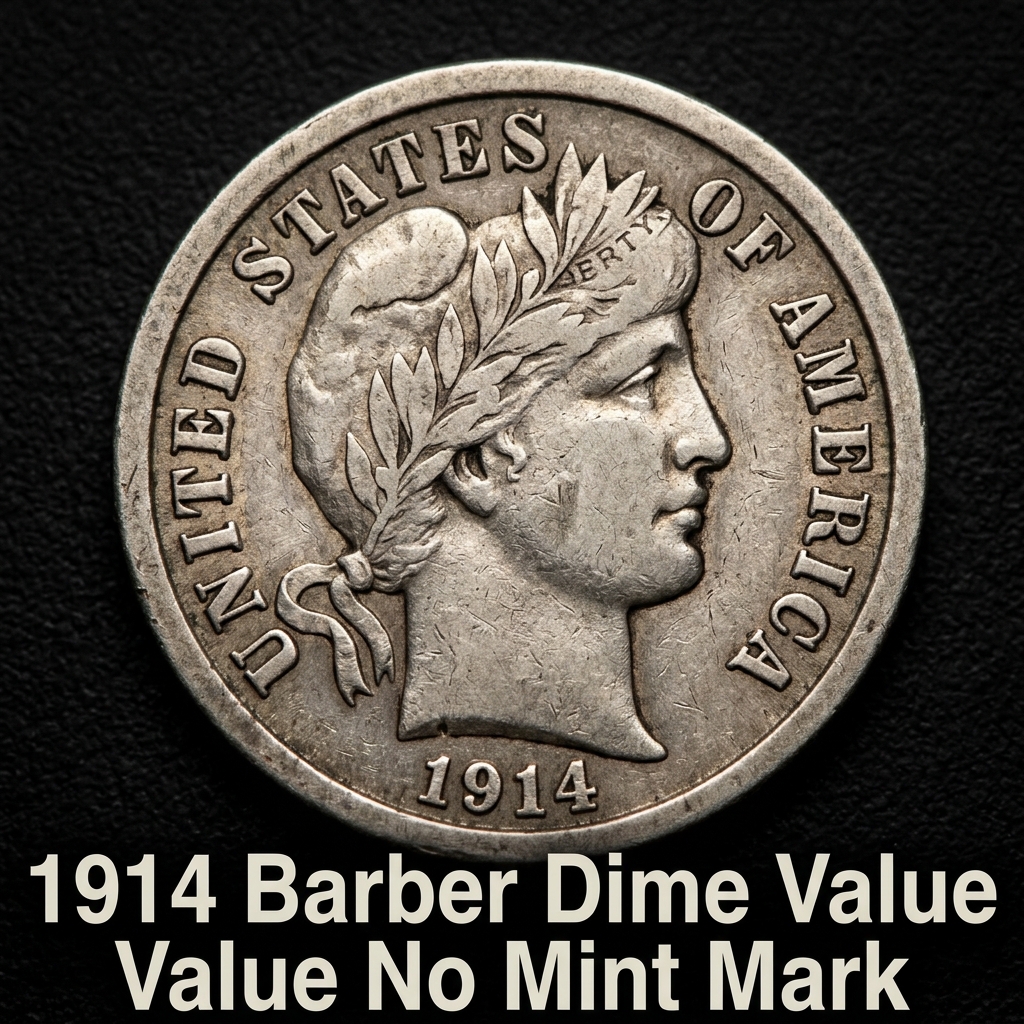
The 1914 Barber Dime with no mint mark is worth anywhere from $4 to $6 in heavily worn condition, rising to $30 or more in fine grade, and potentially hundreds of dollars in uncirculated mint state. If you found one of these silver dimes in an old jar or inherited collection, you’re holding a piece of early American history.
What Makes the 1914 No Mint Mark Barber Dime Special
The 1914 Barber Dime without a mint mark was struck at the Philadelphia Mint, which was the standard practice at the time — Philadelphia coins carried no mint mark to distinguish them. Charles E. Barber designed this dime, and it bears his classic Liberty Head portrait on the obverse, complete with a laurel wreath and the word “LIBERTY” inscribed on her headband. The reverse features a wreath surrounding the denomination. These dimes were minted in 90% silver, giving them intrinsic metal value in addition to their numismatic worth.
The Philadelphia Mint produced 17,360,655 Barber Dimes in 1914, making the no mint mark version one of the more common dates in the series. That said, finding one in good condition is still a treat, especially since most of these coins were heavily used in everyday commerce. If you’re not sure what you’ve found, a coin identification app can help you quickly confirm the design and date before you dig deeper into the value.
1914 Barber Dime Value by Grade
The condition of a coin — its grade — is the biggest factor in determining its value. Coin collectors use a standardized 70-point scale, and even moving up a few grade levels can dramatically change what a Barber Dime is worth. Here’s a general breakdown of what you can expect for the 1914 no mint mark issue:
| Grade | Description | Estimated Value |
|---|---|---|
| Good (G-4) | Heavy wear, outline visible | $4 – $6 |
| Very Good (VG-8) | Moderate wear, some detail | $7 – $10 |
| Fine (F-12) | Even wear, LIBERTY partly visible | $12 – $20 |
| Very Fine (VF-20) | Light wear on high points | $25 – $35 |
| Extremely Fine (EF-40) | Slight wear, strong details | $45 – $65 |
| Mint State (MS-63) | Uncirculated, minor blemishes | $150 – $300+ |
For a deeper look at how these values have shifted and where the market stands right now, check out this detailed 1914 Barber Dime value guide with current pricing data.
How to Check the Condition of Your 1914 Barber Dime
If you’re new to coin collecting, grading can seem intimidating — but for casual purposes, a few basic checks go a long way. Start by looking at the word “LIBERTY” on Liberty’s headband. On a coin graded Good, the letters will be barely visible or worn flat. On a Fine example, most letters are readable. On a Very Fine, all letters are clear and sharp. That single word acts like a quick grading shortcut for Barber Dimes.
Also examine the wreath on the reverse and the rim around the edge. A well-defined rim suggests less wear and a higher grade. Avoid cleaning your coin — cleaned coins are heavily discounted by collectors and can lose 50% or more of their value. Use CoinKnow to photograph and assess your coin’s condition using AI-driven image analysis before you decide to sell or hold. CoinKnow has helped thousands of everyday collectors get a fast, accurate read on what they’ve got.
Silver Melt Value and Why It Matters
Even a heavily worn 1914 Barber Dime has a floor value tied to its silver content. The coin weighs 2.5 grams and is 90% silver, meaning it contains about 0.0723 troy ounces of pure silver. At current silver prices hovering around $27–$30 per troy ounce, the raw melt value of your dime is roughly $2.00 to $2.20. That means even the most beat-up example is worth something — and anything in better shape is worth significantly more than its metal alone.
This silver floor is why Barber Dimes are popular with both coin collectors and precious metal stackers. It’s a nice safety net if you’re considering selling. Use CoinKnow to track live silver prices alongside your coin’s numismatic value in one place.
Where to Sell a 1914 Barber Dime
If you’re ready to sell, you have several good options. Local coin dealers are the fastest route — bring your coin in, get an offer, and walk out with cash. Online platforms like eBay or Heritage Auctions allow you to reach a broader audience, especially if your coin is in higher grades. PCGS or NGC certified coins always fetch better prices because buyers trust the grading. If your coin is uncirculated or exceptionally well-preserved, professional grading is worth the investment.
FAQ
Q: How do I know if my 1914 dime is a Barber Dime and not something else?
A: Look at the front of the coin. If you see a woman’s head wearing a laurel wreath with the inscription “LIBERTY” on her headband and the date 1914 at the bottom, it’s a Barber Dime. The back should show a wreath and the words “ONE DIME.”
Q: Is a 1914 Barber Dime with no mint mark rare?
A: Not particularly. The Philadelphia Mint struck over 17 million of them in 1914, making it one of the more common dates in the Barber series. Its value comes mostly from its silver content, condition, and age rather than rarity.
Q: Should I clean my 1914 Barber Dime before selling it?
A: Absolutely not. Cleaning a coin — even with water and soap — can scratch the surface and destroy its numismatic value. Collectors strongly prefer original, uncleaned surfaces. Leave the coin as you found it and let a dealer or grading service evaluate it in its natural state.