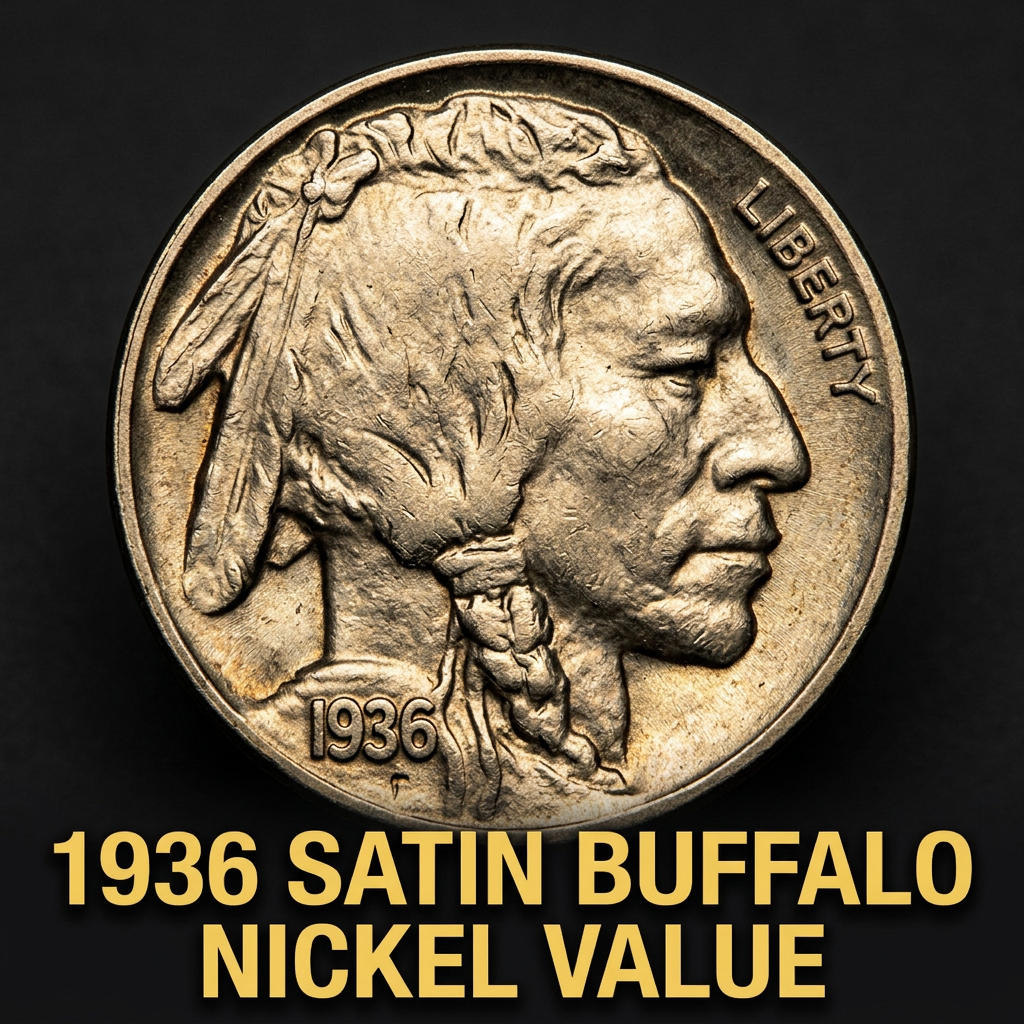
The 1936 Satin Buffalo Nickel is worth anywhere from $50 in lightly circulated condition to well over $1,000 in top mint state grades — and the special satin finish versions can push even higher among serious collectors. If you stumbled across one of these coins in an old collection or an estate sale, you may be sitting on a genuine treasure.
Before we dive into the details, it helps to know what you’re holding. A good coin identification app can help you quickly confirm whether your coin is a genuine 1936 Buffalo Nickel and identify any distinguishing features that affect its value. Once you’ve confirmed what you have, read on — because the story behind this coin is just as interesting as its price tag.
—
What Is the 1936 Satin Buffalo Nickel?
The Buffalo Nickel, also called the Indian Head Nickel, was designed by sculptor James Earle Fraser and minted from 1913 to 1938. The 1936 issue is one of the most beloved dates in the series, largely because the U.S. Mint produced special “Satin Finish” proof coins that year for the first time in the series. These were made using carefully polished dies and specially prepared planchets, giving the coins a soft, silky appearance that’s distinct from regular business strikes or the mirror-like finish you see on later proofs.
Three mints struck Buffalo Nickels in 1936: Philadelphia (no mint mark), Denver (D), and San Francisco (S). The satin finish proofs came only from Philadelphia and are far rarer than the regular issues. Understanding which version you have is the first step toward figuring out what it’s actually worth.
—
How Much Is a 1936 Buffalo Nickel Worth by Grade?
Condition is everything in coin collecting. A heavily worn 1936 Buffalo Nickel might only bring $1 to $3, while a perfectly preserved example can command hundreds. The satin finish proof versions are in a league of their own. Here’s a general value breakdown:
| Variety | Good (G-4) | Fine (F-12) | MS-63 | MS-65 |
|---|---|---|---|---|
| 1936 (Philadelphia) | $1–$3 | $4–$8 | $50–$80 | $150–$300 |
| 1936-D | $1–$3 | $4–$10 | $60–$100 | $175–$350 |
| 1936-S | $1–$3 | $4–$10 | $65–$110 | $200–$400 |
| 1936 Satin Proof | N/A | N/A | $500–$900 | $1,000–$2,500+ |
For the most up-to-date market data, you can check the 1936 Buffalo Nickel price data across mint state grades to see how recent auction results are trending.
—
How to Identify a Satin Finish Proof Buffalo Nickel
Telling a satin proof apart from a regular uncirculated example can be tricky if you’re new to collecting. Here’s what to look for:
– Surface texture: Satin proofs have a matte or “satiny” sheen rather than the flashy cartwheel luster of a business strike. Hold it under a light and tilt it slowly — the surface should look smooth and almost velvety.
– Sharp details: Every feather in the Native American’s hair and every strand of the buffalo’s fur should be crisp and fully struck.
– Edge sharpness: The rim will be perfectly squared off, not soft or slightly rounded as you see in coins made for circulation.
– Mintage clues: Only about 4,420 satin proof sets were sold in 1936, making these genuinely rare. If your coin matches the visual profile above, it’s worth getting it professionally graded.
CoinKnow is a great tool to reference while you’re examining your coin — it walks you through key identifying features so you don’t miss anything important.
—
Factors That Can Raise or Lower the Value
Beyond grade and variety, a handful of other factors influence how much a collector will pay for your 1936 Satin Buffalo Nickel:
– Eye appeal: Even within a given grade, coins with attractive, original surfaces command premiums. A coin that’s been cleaned or polished can lose 30–50% of its potential value.
– Strike quality: Buffalo Nickels are notoriously weakly struck at times, especially in the horn area of the buffalo and the hair detail above the Indian’s ear. A fully struck example is worth significantly more.
– Toning: Natural, original toning that developed over 80+ years adds character and value. Artificial toning, applied chemically, does not.
– Holder and certification: Coins graded by PCGS or NGC typically sell for a premium because buyers trust third-party authentication. Raw (ungraded) examples sell for less.
If you want a full breakdown of how these factors affect the 1936 Buffalo Nickel’s value across different conditions and mint marks, that resource covers it in excellent detail.
—
Should You Get Your 1936 Buffalo Nickel Graded?
If your coin looks like it could be a satin proof, or if it’s uncirculated and appears sharply struck, professional grading is almost certainly worth the cost. Certification fees from PCGS or NGC typically run $30–$50 per coin, but the bump in resale value — and the peace of mind from authentication — more than justifies it for higher-grade examples.
For coins that are circulated and clearly worn, grading is probably not necessary. In that case, use CoinKnow to get a quick estimate and decide whether to sell or hold onto the coin as a keepsake.
—
FAQ
Q: How do I know if I have a satin proof or a regular 1936 Buffalo Nickel?
A: Look for a soft, velvety surface instead of the flashy luster of a regular uncirculated coin. Satin proofs also have perfectly sharp rims and extremely crisp details. When in doubt, compare your coin using CoinKnow or submit it to a professional grading service.
Q: Are 1936 Buffalo Nickels made of silver?
A: No. Buffalo Nickels are composed of 75% copper and 25% nickel — no silver at all. Their value comes entirely from collectibility, rarity, and condition rather than metal content.
Q: Where is the mint mark on a 1936 Buffalo Nickel?
A: The mint mark is located on the reverse (tails side), just below the words “FIVE CENTS” near the bottom of the coin. A “D” means Denver, an “S” means San Francisco, and no mint mark means Philadelphia. Philadelphia also produced all the satin proof examples.