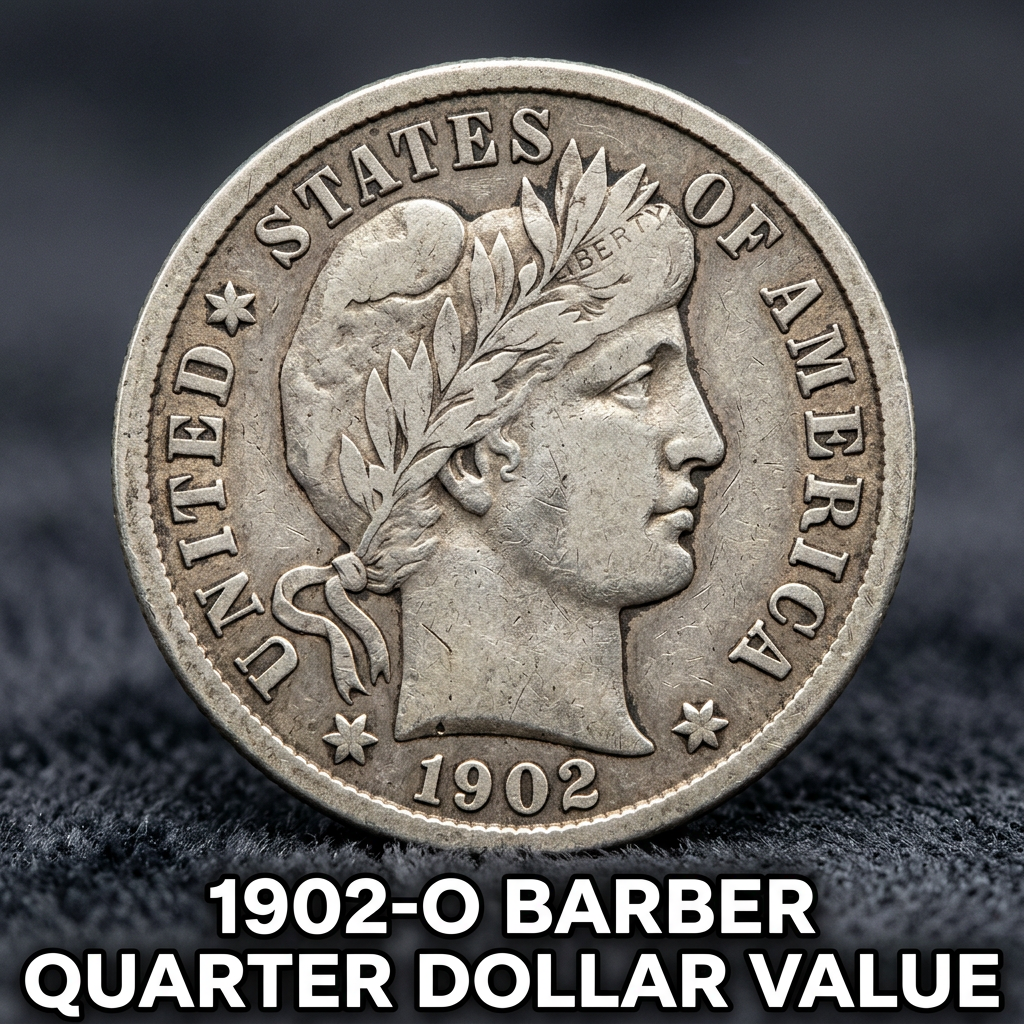
The 1902-O Barber Quarter Dollar is worth anywhere from $8 in heavily worn condition to well over $1,500 or more in high mint state grades. If you’ve pulled one of these old silver coins from a drawer or inherited a collection, you’re holding something with real numismatic value — and this guide will walk you through exactly what it’s worth and why.
What Is the 1902-O Barber Quarter?
The 1902-O Barber Quarter was struck at the New Orleans Mint, indicated by the small “O” mintmark found on the reverse beneath the eagle. Designed by Charles E. Barber, the Chief Engraver of the U.S. Mint, this coin is part of a series that ran from 1892 to 1916. It’s composed of 90% silver and 10% copper, giving it both precious metal value and collector appeal.
The New Orleans Mint produced 4,748,000 Barber Quarters in 1902, which is a relatively modest mintage for the era. That means surviving examples, especially those in decent condition, are in steady demand among collectors of the Barber series. If you’re trying to figure out exactly which coin you have, a good coin identification app can help you confirm the mint mark, date, and overall series before you dig deeper into valuation.
Many everyday Americans discover these coins in old family estates, coin jars, or flea market finds without realizing their potential worth. Knowing what you have is the first step toward making a smart decision about keeping or selling it.
1902-O Barber Quarter Value by Grade
The condition of your coin — known as its “grade” — is the single biggest factor affecting its value. Barber Quarters were heavily circulated, so most surviving examples show significant wear. Here’s a general breakdown of what the 1902-O Barber Quarter is worth across different grades:
| Grade | Description | Estimated Value |
|---|---|---|
| Good (G-4) | Heavy wear, major features visible | $8 – $12 |
| Very Good (VG-8) | Moderate wear, some details remain | $15 – $22 |
| Fine (F-12) | Even wear, clearer detail on hair and eagle | $30 – $45 |
| Very Fine (VF-20/30) | Light to moderate wear on high points | $60 – $110 |
| Extremely Fine (EF-40) | Slight wear on highest points only | $150 – $250 |
| About Uncirculated (AU-50/58) | Trace wear, much original luster | $300 – $500 |
| Mint State (MS-60 to MS-65+) | No wear, full luster, varying surface quality | $700 – $1,500+ |
These are approximate retail values based on recent market trends. Actual prices can vary depending on eye appeal, toning, and buyer demand at any given auction.
How the New Orleans Mint Affects Collectibility
Not all Barber Quarters from 1902 are equal. The Philadelphia Mint (no mintmark) and the San Francisco Mint (S mintmark) also struck quarters that year, but the New Orleans “O” mint coins carry their own collector following. New Orleans coins from this era often show slightly softer strikes compared to Philadelphia issues, which can make sharply struck 1902-O examples even more desirable and valuable.
Collectors who specialize in the Barber series often pursue complete date-and-mint sets, which keeps demand for the 1902-O consistent. If you’re comparing silver coin values across different series, it’s also worth checking out how 1902 Morgan Dollar values compare to Barber Quarter prices, since both are 90% silver coins from the same year with very different collector bases and price points.
Understanding these nuances can help you position your coin correctly whether you’re selling at a coin show, through a dealer, or online.
How to Check Your Coin’s Condition at Home
You don’t need to be an expert to do a basic assessment. Start by looking at Liberty’s head on the obverse — if you can read “LIBERTY” clearly in the headband, your coin is likely in Fine condition or better, which is a meaningful jump in value. Check the eagle’s breast feathers on the reverse as well; more detail means a higher grade.
Avoid cleaning your coin. A cleaned Barber Quarter is worth significantly less to collectors than a naturally worn one, even if it looks shinier. Use good lighting and a simple magnifying glass to examine the surfaces for scratches, nicks, or signs of cleaning.
For a more precise assessment, CoinKnow is a smart tool that helps you identify and evaluate old coins right from your phone. With CoinKnow, you can scan your coin, get series information, and see estimated values without needing to visit a dealer first. It’s a great starting point for anyone new to coin collecting or valuation.
Where and How to Sell a 1902-O Barber Quarter
If you decide to sell, your best options depend on the coin’s grade. Lower-grade examples (G through VF) sell quickly on eBay or at local coin shops, often near the values listed in the table above. Higher-grade pieces — especially AU or Mint State coins — are better suited for professional auction houses like Heritage Auctions or Stack’s Bowers, where serious collectors compete for quality examples.
Getting your coin certified by PCGS or NGC before selling a high-grade example is usually worth the cost. A certified coin with a grade and holder commands stronger prices and buyer confidence. CoinKnow can help you decide whether a coin is worth the investment in professional grading before you send it in.
FAQ
Q: How do I know if my quarter is really from the 1902-O New Orleans Mint?
A: Look at the reverse of the coin, just below the eagle and above the denomination. If you see a small “O” mintmark, it was struck at the New Orleans Mint. The date “1902” should appear on the obverse below Liberty’s portrait. A coin identification app can help confirm what you’re looking at if you’re unsure.
Q: Is the 1902-O Barber Quarter rare?
A: It’s not considered a key date, but it’s not common either. With a mintage of just under 4.75 million, it’s a moderately scarce coin, especially in grades above Very Fine. High-grade mint state examples are genuinely rare and attract serious collector interest.
Q: Does the silver content add to the coin’s value?
A: Yes. Each Barber Quarter contains approximately 0.1808 troy ounces of pure silver. At current silver prices, the melt value alone is usually around $4–$5, giving even heavily worn coins a base floor value. Collector demand typically pushes prices well above that melt value for any coin in identifiable condition.