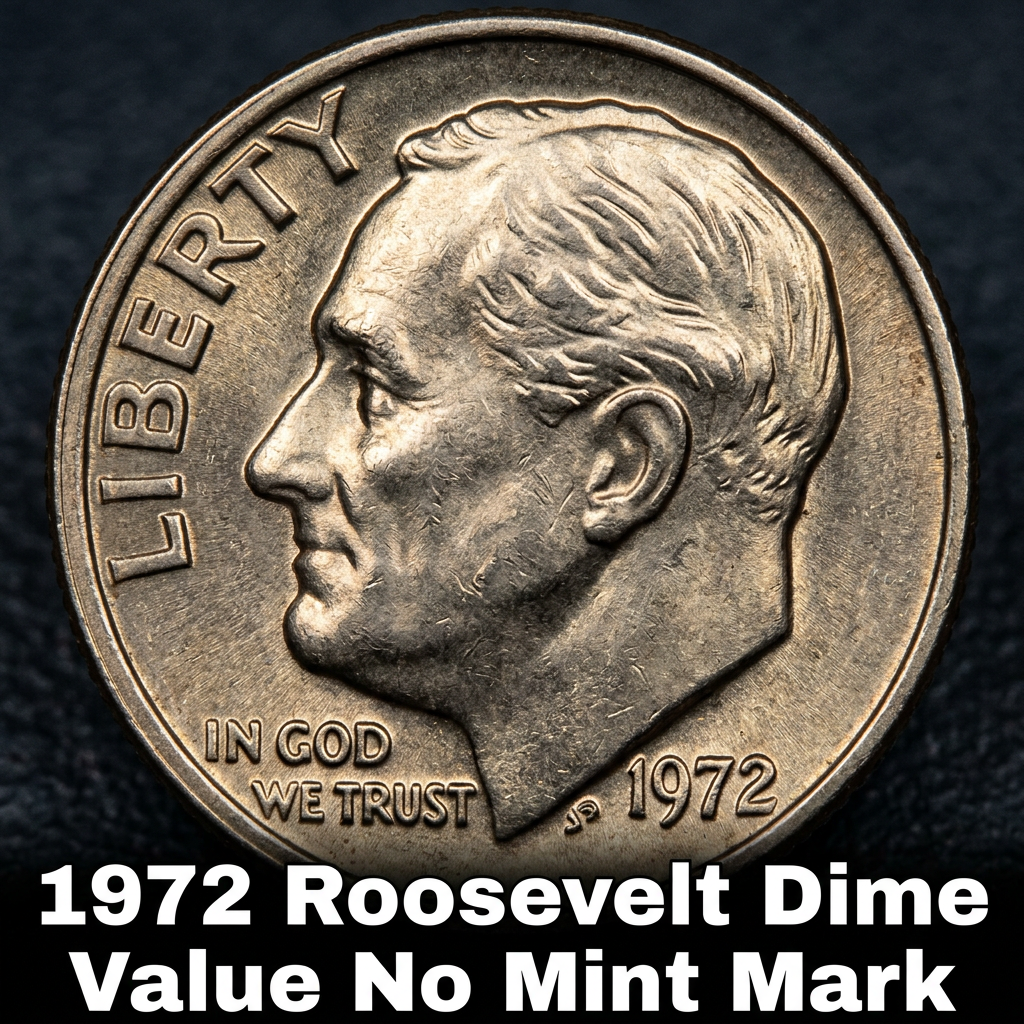
The 1972 Roosevelt Dime with no mint mark is worth anywhere from face value in heavily circulated condition to around $5 or more in uncirculated grades, with top mint state examples occasionally fetching $15 to $30 or higher at auction. If you found one in a pocket change or an old jar, here’s everything you need to know.
What Does “No Mint Mark” Mean on a 1972 Dime?
When you flip over your 1972 Roosevelt Dime and don’t see a small letter near the date, you have a Philadelphia Mint coin. The Philadelphia Mint traditionally did not place a mint mark on its coins during this era. That small detail matters a lot to collectors. In 1972, three mints produced dimes: Philadelphia (no mint mark), Denver (D), and San Francisco (S — proof only). The no-mint-mark version is the most common of the three, but that doesn’t mean it’s without value. For anyone who just found an old coin and wants to make sense of it, a coin identification app can help you quickly confirm the mint mark, date, and variety before you dig deeper into its worth. Knowing exactly what you have is always the smart first step before assuming it’s just a pocket change throwaway.
1972 Roosevelt Dime No Mint Mark Value by Grade
The condition of your coin — what collectors call its “grade” — is the single biggest factor in determining value. A 1972 dime that has been passed through hundreds of hands for decades will show heavy wear on Roosevelt’s portrait and along the torch on the reverse. These circulated coins are generally worth face value, around 10 cents, unless you find a buyer who values them slightly above melt. Once you move into uncirculated territory, the numbers get more interesting.
For a detailed breakdown of 1972 Roosevelt Dime mint state price data across multiple grades, certified auction records show real market activity you can rely on.
| Grade | Condition Description | Estimated Value |
|---|---|---|
| G-4 (Good) | Heavy wear, outline visible | $0.10 – $0.25 |
| VF-20 (Very Fine) | Moderate wear, details clear | $0.25 – $0.50 |
| MS-63 (Uncirculated) | No wear, some bag marks | $2 – $5 |
| MS-65 (Gem Uncirculated) | Strong luster, minor marks | $8 – $15 |
| MS-67 (Superb Gem) | Near perfect surfaces | $25 – $75+ |
How Many Were Made and Why That Affects Value
The Philadelphia Mint struck approximately 431,540,000 Roosevelt Dimes in 1972 with no mint mark. That’s over 431 million coins — an enormous mintage that explains why most examples sit at or near face value. High mintage means the coin is easy for collectors to find, which keeps prices low for average grades. However, rarity at the top end still matters. A 1972 no-mint-mark dime graded MS-67 Full Bands (meaning the bands on the torch are sharply struck and fully separated) is genuinely scarce and can command real premiums. Full Bands designation from PCGS or NGC can push values well beyond what typical MS-67 examples sell for. If you believe your coin has exceptional strike quality, getting it professionally graded could be worth the cost.
Errors and Varieties Worth Looking For
Not every 1972 dime is the same. Error coins can dramatically change the value picture even for a common-date coin. On the 1972 dime, collectors have documented doubled die varieties, off-center strikes, and broadstruck errors. A doubled die error — where the coin’s design shows slight doubling on lettering or design elements — can make an otherwise ordinary coin worth $25 to $100 or more depending on the strength of the doubling and the coin’s grade. To spot these at home, use a 5x to 10x loupe and examine the lettering in “LIBERTY,” “IN GOD WE TRUST,” and the date. CoinKnow is a great tool that lets you photograph your coin and instantly check it against known varieties and errors — a huge time saver compared to searching through old reference books.
Where to Sell or Get a Better Value Estimate
If you’ve decided your 1972 Roosevelt Dime no mint mark might be worth selling, you have several good options. Online platforms like eBay allow you to compare recent sold listings for the exact grade and variety you own. Local coin dealers are another option, though they will typically pay 50–70% of retail value to leave room for resale profit. For a convenient at-home starting point, the complete 1972 dime value guide at CoinValueApp walks you through circulated and uncirculated values with easy-to-read charts. CoinKnow also offers a built-in marketplace feature where you can connect with collectors who are actively looking for specific coins — which sometimes gets you a better price than a general auction platform. For any coin worth more than a few dollars, professional grading through PCGS or NGC adds credibility and can significantly increase buyer confidence.
Frequently Asked Questions
Q: Is a 1972 dime with no mint mark worth keeping?
A: In circulated condition, it’s generally worth only face value. However, if it appears uncirculated or shows possible errors like doubling, it may be worth a few dollars to significantly more. It never hurts to examine it closely before spending it.
Q: How do I know if my 1972 dime is mint state?
A: Look at the high points of the design — Roosevelt’s cheekbone, jaw, and hair above the ear on the obverse, and the tops of the torch flame on the reverse. If those areas show no wear or dullness, your coin may be uncirculated. CoinKnow can help you compare your coin to graded examples side by side.
Q: What is a 1972 Roosevelt Dime Full Bands (FB) designation?
A: Full Bands refers to the horizontal bands on the torch shown on the reverse of the dime. When the strike is sharp enough that these bands are fully separated and clearly defined, certified grading services award the Full Bands designation. This is relatively uncommon on 1972 Philadelphia dimes and adds meaningful collector premium to the coin’s value.