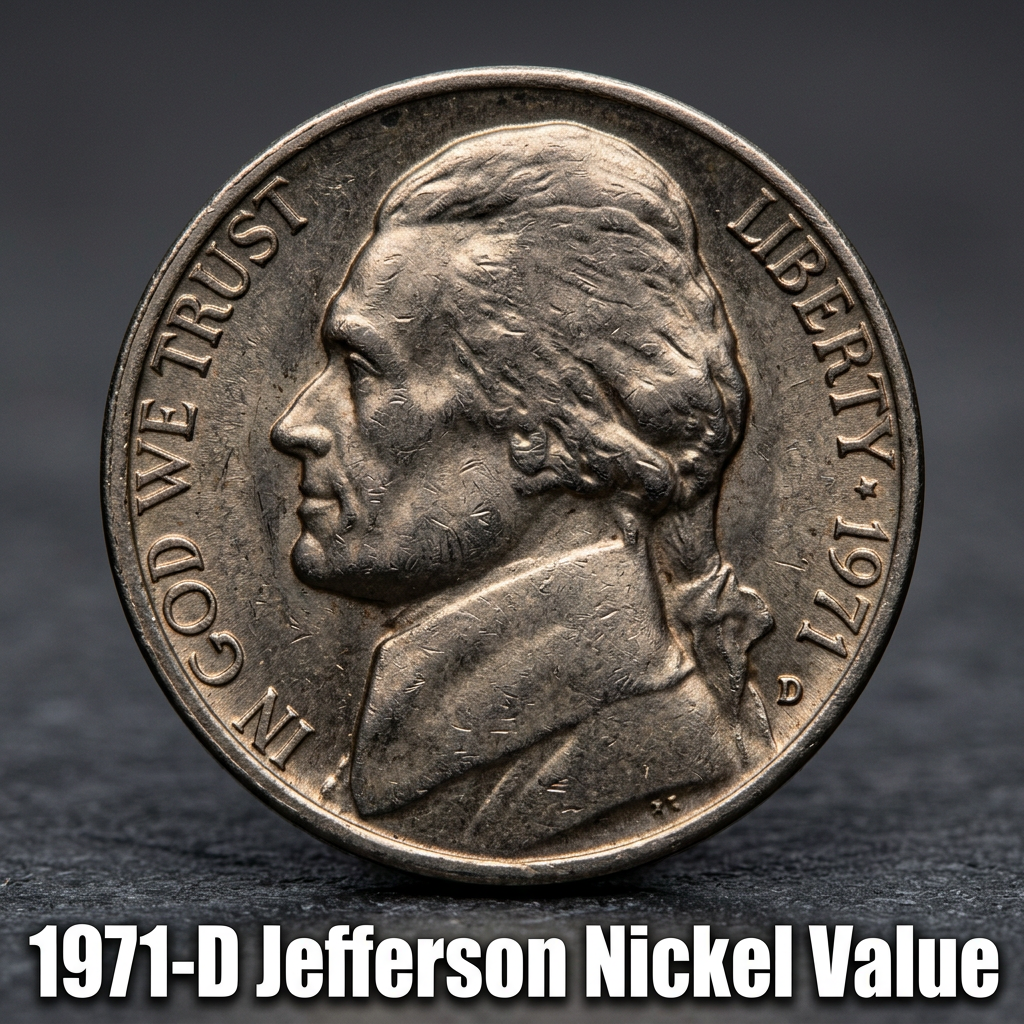
The 1971-D Jefferson Nickel is worth anywhere from 5 cents in heavily worn condition to around $15 or more in pristine uncirculated grades — and a few exceptional examples have sold for significantly higher at auction. If you just found one in a coin jar or old collection, here’s everything you need to know about its value.
What Is the 1971-D Jefferson Nickel?
The “D” in 1971-D tells you this coin was struck at the Denver Mint, one of the two facilities that produced Jefferson Nickels that year (the other being Philadelphia). In 1971, the U.S. Mint was still adjusting after removing silver from its coinage in the mid-1960s, and these five-cent pieces were made of the standard copper-nickel clad composition. Denver produced a massive run of over 316 million nickels that year, which is one reason most circulated examples aren’t rare. That said, high-grade examples with strong luster and sharp details can still command a nice premium among collectors. If you’re not sure which mint made your coin, a coin identification app can help you read the mintmark and confirm exactly what you have. The mintmark on a 1971-D nickel sits just to the right of Monticello on the reverse side — a small “D” that’s easy to miss if you’re not looking for it.
1971-D Jefferson Nickel Value by Condition
Condition is the single biggest factor in determining what your 1971-D nickel is worth. Coins that have been circulating in pockets and cash registers for decades will show wear on the high points — Jefferson’s cheekbone, his hair details, and the steps on Monticello. Here’s a general value breakdown:
| Grade / Condition | Estimated Value |
|---|---|
| Good (G-4) | Face value (~$0.05) |
| Fine (F-12) | $0.10 – $0.25 |
| Extremely Fine (EF-40) | $0.50 – $1.00 |
| Uncirculated (MS-63) | $1.50 – $4.00 |
| Choice Uncirculated (MS-65) | $6.00 – $15.00 |
| Gem Uncirculated (MS-66+) | $20.00 and up |
For the most current auction results and certified coin prices, you can check 1971-D Jefferson Nickel price data in mint state grades to see what collectors are actually paying right now.
What Makes a 1971-D Nickel Worth More
Most 1971-D nickels you’ll find are well-worn and worth only face value — but a few factors can bump that number up considerably. Full Steps (FS) designation is one of the most important. If the steps on the Monticello building on the reverse are fully struck and clearly defined (usually five or six complete steps), a professional grading service like PCGS or NGC may award an FS designation, which can multiply the coin’s value several times over. Strike quality also matters — some 1971-D nickels came out of the mint weakly struck, with mushy details. A sharply struck example in original mint luster is far more desirable. Coins that have never been cleaned, polished, or tampered with are also worth more. Collectors strongly prefer original surfaces over coins that someone tried to “shine up” at home. CoinKnow is a great tool for learning how to spot these quality differences and understand what graders look for before you decide whether to submit your coin for professional authentication.
How to Sell or Get Your 1971-D Nickel Appraised
If you believe you have an uncirculated or Full Steps example, it’s worth getting a second opinion before selling it for a few cents. Local coin dealers can give you a quick verbal assessment, though they’ll typically offer wholesale prices. Online platforms like eBay allow you to see recent sold listings for comparable coins, giving you a realistic sense of retail value. For anything you suspect might grade MS-65 or higher, professional grading through PCGS or NGC is worth considering — the certified holder protects the coin and tends to make buyers more confident. You can also explore a detailed breakdown of the 1971 nickel’s value across all grades and mint marks to compare your coin against known benchmarks. And if you’re building a collection or trying to identify other old coins you’ve found, CoinKnow offers a handy reference to help you track values and learn the grading basics at your own pace.
Is the 1971-D Nickel Rare?
In circulated condition, the 1971-D Jefferson Nickel is not considered rare. With over 316 million minted, it’s one of the more common dates in the Jefferson Nickel series. However, rarity is relative in coin collecting. A circulated 1971-D is common; a fully struck, original-skin MS-66 Full Steps example is genuinely hard to find. If you’re new to collecting and want to understand how mintage numbers affect value across different years and mint marks, CoinKnow is a solid starting point for building that knowledge.
Frequently Asked Questions
Q: How do I know if my 1971-D nickel is uncirculated?
A: An uncirculated coin shows no signs of wear on the high points — Jefferson’s cheekbone and the folds of his hair should still have their original mint luster and sharp edges. Even tiny flat spots from circulation will reduce the grade. Comparing your coin under good lighting to a reference photo can help.
Q: Are there any error 1971-D nickels worth looking for?
A: Yes. Doubled die errors, off-center strikes, and die cap errors have been documented on 1971-D nickels. These are rare but can be worth anywhere from $25 to several hundred dollars depending on the severity and visibility of the error. A magnifying glass and a good reference guide — or a coin identification app — can help you spot these anomalies.
Q: Should I clean my 1971-D nickel before selling it?
A: No. Never clean a collectible coin. Even gentle cleaning with soap and water can leave microscopic hairline scratches that destroy the original surface and drop the coin’s grade — and its value. Collectors and dealers always prefer original, uncleaned coins, even if they look a little dull or toned.